One improperly categorized document will result in unwanted government fees for Canada’s filing, so preparation really counts in this case. Any person considering Canada trademark registration must understand the process because the procedures in Canada are different from those of the US and EU.
What Are the Steps Involved in Trademark Registration in Canada?
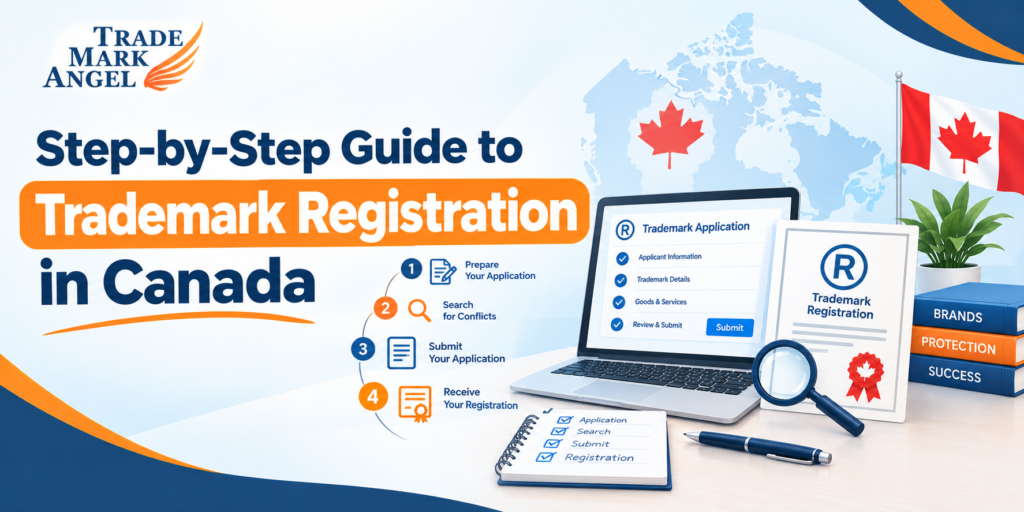
Trademarks are registered in Canada in a predetermined order, and more and more businesses are adopting this order every year. In a particular year, the Canadian Intellectual Property Office received 68,672 trademark applications, according to the IP Canada Report by the Government. The following steps explain this process.
● Step 1: Conducting a Thorough Trademark Search
The initial search through the CIPO database can help determine whether there is a similar mark. This means that the search itself may save months of wasted examination time.
● Step 2: Selection of the Trademark and Related Goods or Services
Use of the right words in describing goods and services will prevent expensive reclassification in the future. Moreover, distinctiveness is a quality that makes an application pass through the examination process quickly.
● Step 3: Selection of Suitable Trademark Classifications
Canada utilizes the Nice Classification System for 45 different classes; hence, accuracy is vital right from the beginning. Additionally, wrong classification could attract additional fees from the government during the examination process.
● Step 4: Preparation of Application Form and Trademark Information
Each Canada trademark registration application requires information about the applicant, the mark, and the specimen of use. Thus, having all these documents ready from the start can help expedite the whole process.
● Step 5: Filing the Application at the Trademarks Office of Canada
File trademark canada applications are normally made by sellers or brand owners via CIPO’s website. After submitting their applications, they are assigned a filing date and evaluated for completeness.
● Step 6: Examination Process and Dealing With the Objections
Evaluation of CIPO examiners for applications is done on the basis of distinctiveness and also with regard to conflicts with other trademarks. In case of objections, applicants typically have an allotted period in which to respond.
● Step 7: Handling the Publication, Opposition, and Registration
The registered marks are listed for two months, and this gives any third party the opportunity to oppose the application. After this period of time, if the mark is not opposed, it will be registered with a certificate that lasts for ten years.
What Should You Know Before Filing a Canadian Trademark Application?
There are some simple facts that can help you save both time and money.
- Canada follows the first-to-file system, which means early filing is really important.
- Fees will be charged on a per-class basis; if goods are improperly classified, additional fees may be incurred later.
- On average, the process to register a trademark in Canada takes about sixteen to twenty-four months.
- Descriptive or surname trademarks have little chance of being accepted.
- Without performing the preliminary search, you increase your chances of getting rejected.
Knowing all these realities at the very beginning will make everything much easier.
Conclusion
Canadian trademark registration favors proactive research, accurate classification, and patience throughout the several-month-long examination process. Proper preparations at each step minimize the risk of potentially expensive setbacks.