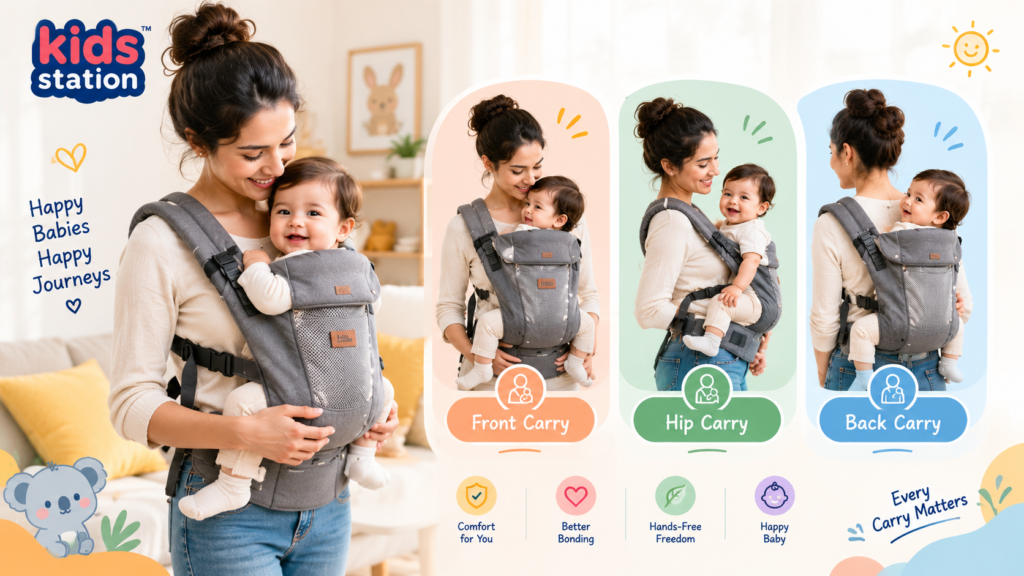
A Baby Hug Carrier can make everyday parenting easier by allowing parents to keep their baby close while keeping their hands free. Whether you are moving around the house, going for a short walk, shopping, or travelling, a suitable baby carrier can provide convenient support when used correctly.
What Is a Baby Hug Carrier?
A Baby Hug Carrier is a wearable baby carrier designed to hold a baby close to the parent’s body. It generally uses adjustable straps and supportive panels to help distribute the baby’s weight more comfortably.
Parents may consider a baby hug carrier when they want an alternative to carrying their baby in their arms for longer periods.
Why Do Parents Use a Baby Hug Carrier?
A Baby Hug Carrier can be useful during many everyday activities.
Keeps Baby Close
Close carrying allows parents to stay physically connected with their baby while continuing simple daily activities.
Helps Keep Hands Free
A carrier can leave both hands available for light tasks, walking, or holding other essentials.
Useful for Travel
A baby carrier can be convenient for short trips, shopping areas, parks, and places where using a stroller may not be practical.
Supports Everyday Mobility
Instead of carrying a baby continuously in the arms, parents can use a suitable carrier for age-appropriate carrying periods.
How to Choose a Baby Hug Carrier
Choosing the right Baby Hug Carrier should be based on the baby’s age, size, development, and the carrier’s design.
Look for:
- Adjustable shoulder straps
- Secure waist or support straps where applicable
- Adequate head and neck support for younger babies
- A supportive and comfortable seat
- Strong, secure buckles and fasteners
- Breathable and baby-friendly fabric
- Easy adjustment for different parents
- Clear instructions for safe use
Is a Baby Hug Carrier Suitable for Newborns?
Not every Baby Hug Carrier is suitable for newborns. Parents should always check the manufacturer’s recommended age, weight range, and positioning instructions before using a carrier with a newborn.
Newborns need proper head, neck, airway, and hip positioning. If a carrier does not provide the required support, it should not be used for a newborn.
How to Use a Baby Hug Carrier Safely
Before putting the baby into a Baby Hug Carrier, read the product instructions carefully and adjust the carrier according to the baby’s size.
Keep these basic safety points in mind:
- Make sure the baby’s face and nose remain visible.
- Keep the baby’s airway clear.
- Support the baby’s head and neck when required.
- Keep the baby positioned according to the carrier instructions.
- Check all buckles, straps, and fasteners before use.
- Avoid covering the baby’s face with fabric.
- Do not use a carrier while performing activities that could cause injury.
- Check the baby regularly during carrying.
Baby Hug Carrier vs Regular Baby Carrier
The terms Baby Hug Carrier and baby carrier are sometimes used interchangeably, depending on the product or brand. The important factors are not just the name but the carrier’s construction, fit, safety features, recommended age, weight capacity, and carrying positions.
Parents should select a carrier based on the baby’s current needs rather than choosing only by appearance or name.
Baby Hug Carrier for Daily Activities
A Baby Hug Carrier can be useful for parents who want to keep their baby close during everyday routines. It may be suitable for activities such as walking around the home, taking a short outdoor walk, visiting a nearby store, or travelling.
For longer carrying periods, parents should regularly check the baby’s position and comfort.
What Age Can Babies Use a Carrier?
The appropriate age depends on the specific carrier. Some carriers are designed for younger babies, while others are intended for babies who have developed stronger head and neck control.
Always follow the manufacturer’s age and weight recommendations. A carrier should never be used beyond its stated limits.
Baby Hug Carrier Safety Checklist
Before every use, check:
- Are all straps correctly adjusted?
- Are the buckles securely fastened?
- Is the baby’s face visible?
- Is the baby’s airway clear?
- Is the baby positioned according to the instructions?
- Is the baby within the recommended weight range?
- Does the carrier show any signs of damage?
A quick safety check can help make babywearing more comfortable and secure.
Choosing a Baby Carrier for Your Lifestyle
The best carrier depends on how and where you plan to use it. Parents who frequently travel may prefer a lightweight and adjustable design, while parents using a carrier at home may focus more on comfort and ease of adjustment.
Consider the baby’s age, carrying duration, climate, parent’s body comfort, and the available carrying positions before making a choice.
Baby Hug Carrier at Kids Station
Kids Station focuses on practical baby-care and parenting essentials designed for everyday family needs. Parents exploring a Baby Hug Carrier can consider important factors such as comfort, adjustability, age suitability, support, and safe positioning before choosing a carrier.
Frequently Asked Questions
Is a Baby Hug Carrier safe for babies?
A suitable carrier can be used safely when it is appropriate for the baby’s age and size and is fitted and used according to the manufacturer’s instructions.
Can I use a Baby Hug Carrier for a newborn?
Only if the specific carrier is designed and approved for newborn use. Always check its minimum age, weight range, and newborn positioning instructions.
Is a Baby Hug Carrier good for travelling?
A baby carrier can be convenient for short trips and travel because it allows parents to carry the baby while keeping their hands relatively free.
What should I check before buying a Baby Hug Carrier?
Check the recommended age and weight, adjustability, head and neck support, secure fasteners, comfort, fabric, carrying positions, and safety instructions.
Can babies sleep in a baby carrier?
Parents should follow the carrier’s instructions and maintain close supervision. A carrier should not be treated as a substitute for a safe sleep space.
Final Thoughts
A Baby Hug Carrier can be a practical option for parents who want convenient hands-free carrying while keeping their baby close. The right choice depends on the baby’s age, size, developmental stage, and the carrier’s design.
Always prioritise correct positioning, clear airways, secure fastening, and the manufacturer’s usage instructions when using any baby carrier.