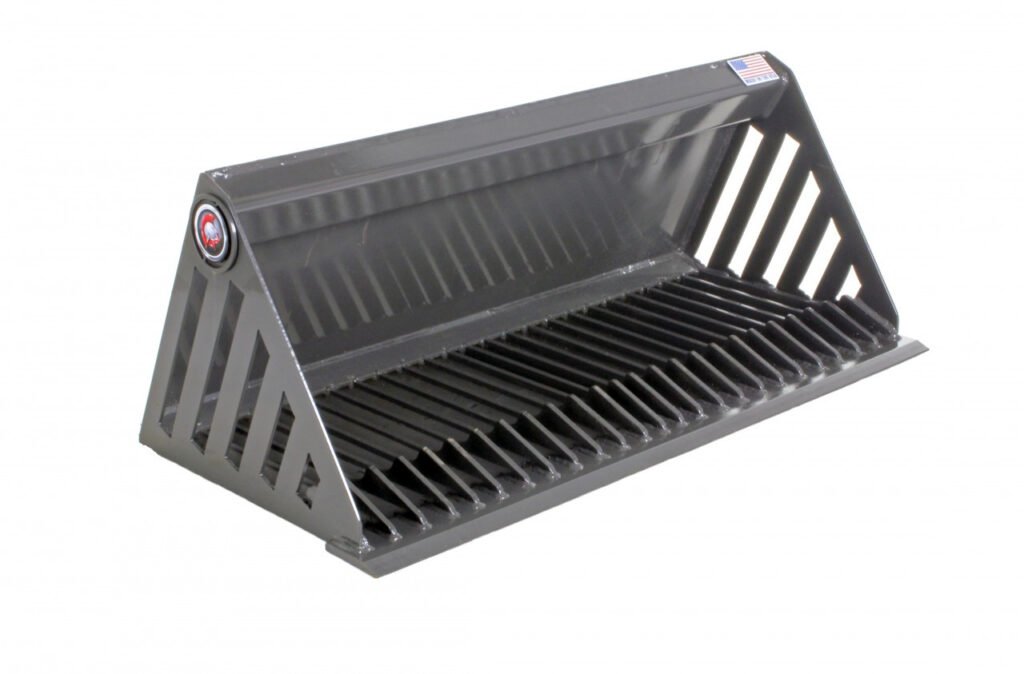
Pull up to any clearing job and look at what’s riding on the trailer. Nine times out of ten there’s a rock bucket in the mix. Not buried under everything else either, it’s right there, easy to grab. Contractors don’t do that by accident.
If you’ve been searching for a rock bucket for sale, you’ve probably already figured out why. Land clearing never goes the way the estimate says it will. You think it’s brush and topsoil, then the first pass turns up stumps, roots, buried chunks of concrete, and rocks the size of a microwave. A regular dirt bucket just scoops all of it up together and now you’ve got a mess. A rock bucket lets the good soil fall through and keeps the junk. Simple as that.
The Problem With Using a Standard Bucket
Honestly, plenty of guys try it anyway. Save a swap, save five minutes. Then they spend the afternoon hand-picking debris out of a pile, or worse, they push all that junk into a fill area and deal with it later. Later always costs more.
A solid bucket also holds everything, so you’re hauling dirt you didn’t need to haul. Extra weight, extra trips, extra fuel. It adds up quicker than people think, especially on bigger lots where you’re moving material all day.
How a Rock Bucket Actually Works
The design isn’t complicated. Heavy steel tines, spaced a few inches apart, with a frame behind them to hold the load. You scoop, you shake or tilt a little, and the loose dirt sifts out the bottom. What’s left in the bucket is the stuff you actually wanted to pull out. Rocks, roots, brush chunks, old chunks of asphalt, whatever.
Some have a flat back plate and some are open all the way through. The open ones sift faster but can lose smaller material you might want to keep. Worth thinking about before you buy, depending on what your ground usually looks like.
Why It Rides on the Trailer Every Single Day
Clearing contractors don’t pick one job type. One day it’s a lot cleanup for a builder, next day it’s pulling rock out of a pasture, then a drainage ditch somewhere. The rock bucket works in all of them, so it just stays hitched. Saves guessing games on the morning load-out.
It’s also forgiving. Tines take a beating and you can bend one back or replace it without scrapping the whole thing. That kind of durability matters when you’re running the machine hard five or six days a week.
Who Gets the Most Out of One
Contractors, obviously. But farmers use them a lot too, mostly for clearing rock out of fields before planting, or cleaning up fence lines and old pasture. Landscapers grab one for prepping beds and sifting rocky fill. Municipal crews use them for roadside cleanup and drainage work where debris gets mixed into soil. And regular equipment owners with some acreage often find it’s the one attachment they didn’t know they needed until they used one.
What to Look For When You’re Shopping
Don’t just chase the biggest one. Match the bucket to your machine’s lift capacity, because an oversized bucket loaded with rock is heavy, and you’ll feel it. Check how the tines are welded and what kind of steel they use, since cheap ones tend to crack right at the joints. Spacing matters too. Tighter tines catch smaller rock but clog quicker with wet clay, wider tines flow better but let more stuff through.
And think about your quick attach. If it doesn’t fit your machine properly, nothing else matters. Spartan Equipment makes their rock buckets to work with the common skid steer and loader mounts, and they’ve got different widths and tine setups depending on what you’re running.
Where It Fits in the Bigger Attachment Picture
If you were putting together a list of the best skid steer attachments for land work, the rock bucket would sit pretty high. Brush cutters, augers, grapples, those all matter. But a rock bucket does something none of them do, it cleans up after the rough stuff and gets the ground ready for whatever comes next. Seeding, grading, building, planting.
It’s also one of those attachments that pays off fast. Less hand labor, fewer dump trips, cleaner finished ground. A single big job can cover a good chunk of what you spent on it.
Keeping It Working Longer
Not much to it. Check the tines for bending or cracks before each job. Grease pivot points. Don’t use the bucket as a pry bar on huge boulders, as tempting as it is. Slam it into a rock the size of a car and you’ll find the limit pretty quickly, usually at the weld.
Rinse the clay out at the end of the day if you can, because dried mud packs between the tines and makes the next morning slower.
Wrapping It Up
Land clearing contractors keep a rock bucket on the trailer because it solves a problem they run into on almost every job. It saves time, saves labor and keeps the finished ground cleaner. If you’ve been weighing the best skid steer attachments to add this year, it’s hard to argue against this one.
And if you’re ready to pick one up, Spartan Equipment has 25% OFF SITEWIDE with code DIESEL25 running this October. Good timing before winter hits and everybody’s scrambling.