An office can feature modern furniture, attractive interiors, and a well-planned layout yet still feel outdated or uncomfortable because of poor lighting. Lighting plays an important role in shaping the workplace experience, influencing employee comfort, concentration, productivity, and the overall appearance of an office. As businesses continue to modernize their work environments, upgrading existing lighting systems has become an important consideration.
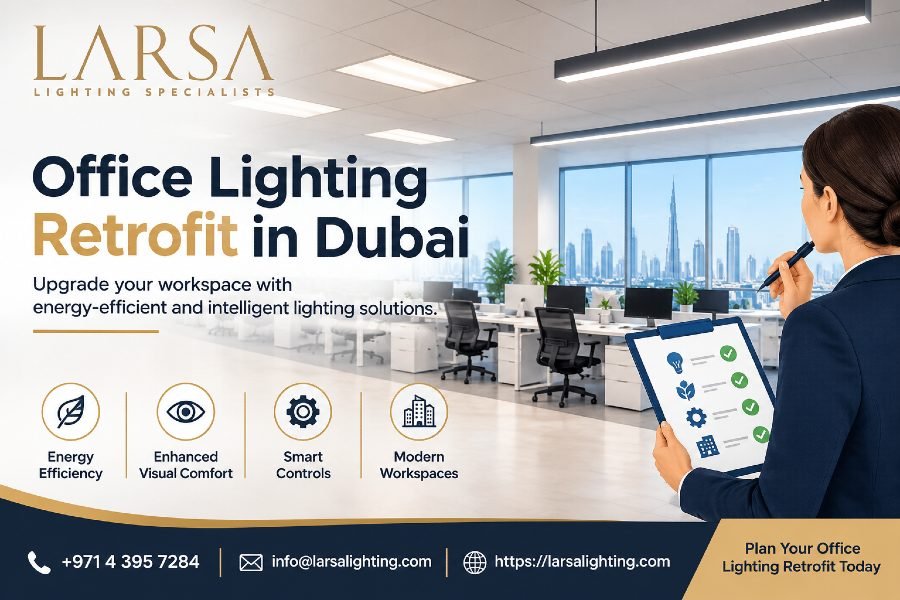
An Office Lighting Retrofit in Dubai offers an opportunity to improve more than energy efficiency. It allows businesses to address outdated fixtures, reduce glare, introduce smarter controls, and create a more balanced lighting environment. With careful planning, a retrofit can transform an existing workspace without requiring a complete interior renovation.
1. Assess Existing Lighting Conditions
Before selecting new fixtures, it is important to understand how the current lighting system performs. Simply replacing older fluorescent fittings with LED alternatives may not resolve underlying problems such as uneven illumination, uncomfortable brightness, or poor light distribution.
A professional assessment should consider ceiling heights, existing fixture positions, furniture arrangements, workstation layouts, natural daylight, and the types of activities performed in different areas.
For example, open-plan offices require consistent illumination across workstations, while meeting rooms need adaptable lighting for presentations and video conferences. Reception areas may benefit from a combination of general and accent lighting to create a welcoming first impression.
Identifying these requirements helps establish a clear direction for the retrofit and prevents unnecessary changes during installation.
2. Choose Energy-Efficient LED Lighting
One of the primary reasons businesses consider lighting upgrades is the opportunity to reduce electricity consumption. Older fluorescent and conventional lighting systems can consume more energy and require frequent maintenance compared with modern LED alternatives.
LED luminaires offer several advantages, including improved energy efficiency, longer operating life, and different light distribution options. They are available in various designs, making them suitable for suspended ceilings, exposed ceilings, corridors, private offices, and collaborative spaces.
For an effective retrofit, businesses should evaluate more than the wattage of a fixture. Luminous efficacy, light output, optical performance, color rendering, and expected operating hours should also influence product selection.
Choosing suitable LED solutions can help businesses manage operational expenses while maintaining consistent lighting quality throughout the workplace.
3. Prioritize Visual Comfort and Glare Control
A bright office does not necessarily provide a comfortable working environment. Excessive brightness, poorly positioned fixtures, and reflections on computer screens can cause visual discomfort and affect concentration.
Modern office lighting should provide sufficient illumination without creating unnecessary glare. Fixtures with suitable diffusers, microprismatic optics, and controlled light distribution can help create a more comfortable environment.
For workstation areas, lighting calculations should consider the actual working plane rather than relying on the apparent brightness of the ceiling. The position of monitors, desks, windows, and luminaires should also be evaluated.
A well-planned Office Lighting Retrofit in Dubai should balance illumination levels with visual comfort, particularly in offices where employees spend extended periods working on digital screens.
4. Introduce Smart Lighting Controls
Smart controls can make an upgraded office lighting system more adaptable and efficient. Instead of operating every fixture at full output throughout the day, businesses can use automated systems to respond to occupancy, daylight availability, and working schedules.
Several control options can improve everyday lighting management:
- Occupancy sensors: Automatically adjust lighting when meeting rooms, private offices, or support areas are unoccupied.
- Daylight harvesting: Reduce artificial lighting near windows when sufficient natural daylight is available.
- Scheduled controls: Adjust lighting according to business hours and after-hours requirements.
- Dimming systems: Allow users to modify brightness based on specific activities.
- Zoned lighting: Provide independent control over different office sections.
However, smart controls should remain simple to operate. Employees should be able to adjust lighting without complicated procedures, while facility managers should have convenient access to system settings.
5. Match Lighting Design With Office Interiors
A lighting retrofit is also an opportunity to improve the visual character of an office. Lighting fixtures should complement the architecture, furniture, ceiling design, and overall workplace identity.
Linear suspended luminaires can create a clean, contemporary appearance above workstations. Recessed downlights are useful for circulation areas and enclosed offices, while adjustable spotlights can highlight artwork, architectural features, and reception displays.
Accent lighting can also introduce visual depth through carefully illuminated walls, decorative elements, and branded features.
Color temperature deserves attention as well. Neutral white lighting is often suitable for focused work environments, while warmer tones may create a more relaxed atmosphere in breakout areas and executive lounges. Maintaining consistency between connected spaces helps prevent the interior from appearing visually fragmented.
6. Consider Long-Term Costs and Maintenance
The initial purchase price of lighting fixtures should not be the only factor influencing retrofit decisions. Businesses should also consider electricity consumption, maintenance requirements, replacement costs, product availability, and warranty coverage.
High-quality LED luminaires and compatible drivers can help reduce maintenance interruptions and support reliable operation over time. Standardizing selected fixture types can also simplify spare-parts management, especially in larger commercial offices.
Maintenance access is particularly important in spaces with suspended ceilings or integrated lighting installations. Drivers, control components, and other serviceable parts should remain accessible without unnecessary disruption.
A lifecycle cost assessment can help businesses compare different lighting solutions and understand their long-term financial value.
7. Plan Installation and Commissioning Carefully
Even a well-designed lighting system can produce disappointing results if installation is poorly coordinated. Before work begins, the project team should review ceiling layouts, electrical connections, fixture dimensions, emergency lighting, air-conditioning grilles, and other building services.
For occupied offices, installation can be scheduled in phases to minimize disruption to employees and daily operations. Meeting rooms, reception areas, and workstation zones can be upgraded according to an agreed installation programme.
After installation, commissioning should verify that fixtures, sensors, dimming functions, and control zones operate as intended. Lighting levels should also be checked against the approved design calculations.
Clear documentation covering product specifications, control settings, warranties, and maintenance procedures will help facility teams manage the system effectively.
Creating Better Workplaces Through Smarter Lighting
An office lighting upgrade should deliver measurable improvements in energy performance while making the workplace more comfortable, functional, and visually appealing. From selecting efficient LED fixtures to introducing intelligent controls, every decision should reflect the needs of the building and the people using it.
For businesses considering an Office Lighting Retrofit in Dubai, a coordinated approach involving lighting consultants, architects, electrical contractors, and facility managers can help achieve better results. Careful product selection, glare management, installation planning, and long-term maintenance considerations are essential to a successful project.
Larsa Lighting emphasizes the relationship between lighting technology, architectural design, and practical performance. A thoughtfully planned retrofit can help businesses create modern workspaces that support productivity, improve visual comfort, and manage operating costs more effectively.