CRM Software
Making informed business decisions is essential for sustainable growth, especially in today’s competitive marketplace. Organizations generate vast amounts of customer and sales data every day, but collecting data alone is not enough. The real value lies in transforming that information into meaningful insights that support smarter decisions. This is where CRM dashboards become an indispensable business tool.
A CRM dashboard provides a visual overview of key business metrics, enabling sales managers, business owners, marketing teams, and customer support representatives to monitor performance in real time. Instead of sorting through spreadsheets or lengthy reports, users can quickly identify trends, evaluate progress, and take immediate action. Modern CRM dashboards empower businesses to make faster, data-driven decisions that improve customer relationships, increase productivity, and drive revenue growth.
What Is a CRM Dashboard?
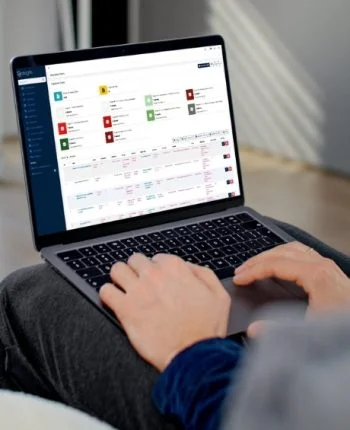
A CRM dashboard is a centralized interface within Customer Relationship Management software that displays important business information through charts, graphs, tables, and performance indicators. It consolidates data from multiple business processes into a single screen, making complex information easy to understand.
Rather than reviewing separate reports from sales, marketing, and customer service departments, decision-makers can monitor all critical metrics in one place. This centralized visibility helps businesses stay informed and respond proactively to changing customer needs and market conditions.
Why Data Visualization Matters
Raw data often contains valuable insights, but interpreting large datasets can be difficult and time-consuming. CRM dashboards solve this challenge by converting numerical data into visual reports that are easier to analyze.
Visual elements such as bar charts, line graphs, pie charts, and performance gauges help users recognize trends, compare results, and detect unusual patterns almost instantly. Better visualization leads to quicker understanding and more confident business decisions.
Real-Time Business Insights
One of the greatest advantages of CRM dashboards is access to real-time information. Traditional reporting methods often rely on outdated data that may no longer reflect current business conditions.
CRM dashboards update automatically whenever new customer interactions, sales activities, or support cases are recorded. Managers always have access to the latest information, allowing them to identify opportunities, resolve issues, and adjust strategies without unnecessary delays.
Better Sales Performance Monitoring
Sales managers need continuous visibility into team performance to achieve revenue targets. CRM dashboards provide instant access to key sales metrics such as new leads, active opportunities, deal values, conversion rates, monthly revenue, and sales pipeline progress.
Instead of waiting for weekly or monthly reports, managers can monitor performance daily and identify which sales representatives require additional support. This proactive approach improves accountability and helps teams stay focused on achieving business goals.
Improved Lead Management
Every business receives leads from multiple sources, including websites, social media, referrals, email campaigns, and advertising. CRM dashboards help businesses evaluate which lead sources generate the highest-quality prospects.
Managers can track lead volume, conversion percentages, response times, and sales outcomes from each marketing channel. These insights help businesses invest more effectively in marketing activities that deliver the highest return on investment while reducing spending on less productive campaigns.
Enhanced Customer Service Decisions
Customer satisfaction plays a significant role in long-term business success. CRM dashboards help customer service managers monitor important support metrics such as ticket resolution times, customer satisfaction scores, response rates, and unresolved issues.
When service quality begins to decline, managers can quickly identify the underlying causes and implement corrective actions. Faster issue resolution improves customer loyalty while strengthening the company’s overall reputation.
Forecasting Future Sales
Accurate sales forecasting is essential for budgeting, inventory planning, hiring decisions, and business expansion. CRM dashboards analyze historical performance alongside current sales opportunities to estimate future revenue.
Forecast reports help businesses anticipate seasonal trends, identify potential revenue gaps, and allocate resources more effectively. Better forecasting reduces uncertainty and supports more confident strategic planning.
Identifying Business Opportunities
CRM dashboards do more than monitor existing performance—they also reveal new growth opportunities. By analyzing customer purchasing behavior, buying frequency, product preferences, and engagement history, businesses can identify valuable cross-selling and upselling opportunities.
Managers can also recognize high-performing customer segments, emerging markets, and successful sales strategies. These insights support business expansion while maximizing customer lifetime value.
Supporting Marketing Decisions
Marketing teams rely on CRM dashboards to evaluate campaign performance and customer engagement. Important metrics include email open rates, click-through rates, lead generation, campaign conversions, website inquiries, and customer acquisition costs.
Instead of relying on assumptions, marketers can measure actual campaign results and optimize future marketing efforts based on reliable data. Better performance measurement leads to higher marketing efficiency and improved return on investment.
Increasing Team Productivity
CRM dashboards help improve employee productivity by providing visibility into daily activities, completed tasks, pending follow-ups, appointments, and individual performance.
Managers can identify workflow bottlenecks, balance workloads across team members, and ensure important customer interactions are completed on time. Employees also benefit from having clear priorities and measurable performance goals, creating a more organized and efficient work environment.
Customizable Dashboards for Different Roles
Every department within an organization requires different types of information. Sales managers focus on revenue and opportunities, marketing teams monitor campaign performance, while customer support departments prioritize service quality.
Modern CRM software allows users to customize dashboards according to their specific responsibilities. Personalized dashboards ensure each employee sees the information most relevant to their role, improving efficiency and reducing information overload.
Better Collaboration Across Departments
Business decisions often require collaboration between multiple departments. CRM dashboards create a shared source of information where sales, marketing, finance, and customer support teams can access consistent, up-to-date data.
This transparency improves communication, reduces misunderstandings, and ensures every department works toward common business objectives. Better collaboration ultimately leads to improved customer experiences and stronger organizational performance.
Data-Driven Strategic Planning
Long-term business success depends on making strategic decisions supported by reliable information. CRM dashboards help executives evaluate historical trends, measure key performance indicators, and identify opportunities for continuous improvement.
Instead of relying on intuition alone, leadership teams can use measurable data to guide expansion plans, resource allocation, pricing strategies, customer retention initiatives, and operational improvements. Data-driven planning reduces business risks while supporting sustainable growth.
The Future of CRM Dashboards
As artificial intelligence and machine learning continue to evolve, CRM dashboards are becoming increasingly intelligent. Future dashboards will provide predictive analytics, automated recommendations, anomaly detection, conversational reporting, and AI-generated business insights.
Organizations will spend less time interpreting reports and more time implementing strategic actions. These advanced capabilities will further strengthen decision-making while helping businesses remain competitive in an increasingly data-driven economy.
Conclusion
CRM dashboards have transformed the way businesses analyze information and make decisions. By providing real-time visibility into sales performance, customer service, marketing campaigns, lead management, forecasting, and operational efficiency, they enable organizations to respond quickly to changing business conditions. Visual reporting simplifies complex data, improves collaboration across departments, and empowers leaders to make informed decisions that drive growth and customer satisfaction.
Businesses seeking advanced CRM Software in Pakistan can explore Instacare.com.pk, which offers intelligent CRM solutions with powerful dashboard capabilities, automated reporting, real-time analytics, and customizable business insights. By adopting a modern CRM platform, organizations can make smarter decisions, improve operational efficiency, strengthen customer relationships, and build a foundation for long-term success in an increasingly competitive marketplace.