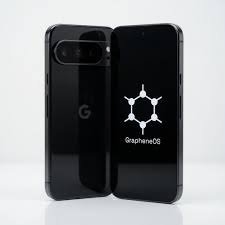
Review ZeroGhost phone features, including GrapheneOS, app permissions, security updates, compatibility, and privacy controls.
ZeroGhost phone reviews are useful for readers who want to understand how a privacy-focused smartphone differs from a conventional Android device. ZeroGhost is described as a smartphone configured with GrapheneOS, an open-source operating system built around mobile security, privacy, and greater user control. Its overall appeal is the opportunity to manage application permissions, choose which services to use, and reduce reliance on unwanted software. However, evaluating a privacy-focused phone requires more than looking at its marketing claims. Buyers should also examine app compatibility, hardware specifications, security updates, software authenticity, warranty conditions, and everyday usability before making a decision.
This guide explains the main features associated with ZeroGhost, how GrapheneOS works, which privacy benefits it can provide, and what potential buyers should verify before purchasing. It also discusses the limitations of privacy-focused smartphones, helping readers distinguish practical security protections from claims that no device can realistically guarantee.
What Is ZeroGhost Phone?
ZeroGhost is presented as a privacy-focused smartphone built around GrapheneOS. Unlike a conventional smartphone experience that may include a collection of preinstalled applications and connected services, this approach emphasizes control over the operating system, applications, and permissions used on the device.
The operating system is an important part of the experience because it determines how applications access storage, use device sensors, communicate with other software, and interact with security controls. A privacy-conscious setup can help users make more deliberate decisions about which applications they install and which services they allow to access personal information.
GrapheneOS is an open-source mobile operating system based on the Android Open Source Project. Its developers focus on improving security, privacy, application isolation, and protection against software exploitation. The project also aims to maintain practical functionality and compatibility with Android applications.
However, ZeroGhost is the product offering, while GrapheneOS is the operating system. They should not be treated as interchangeable names. The exact hardware model, installation procedure, included applications, update arrangements, and after-sales support should be confirmed with the seller before purchasing.
For readers researching the product, the ZeroGhost website is the starting point for reviewing the seller’s available information. Compare its specifications and purchase conditions with the technical documentation published by the operating system’s developers.
What Do ZeroGhost Phone Reviews Need to Evaluate?
A useful review should examine how well the phone balances privacy, security, usability, and value. A device may offer a security-focused operating system but still be unsuitable for a particular person if important applications are incompatible or long-term support is unclear.
The main evaluation areas include:
- Operating system: Whether the device uses an authentic, properly configured GrapheneOS installation.
- Application security: How the operating system isolates applications and limits access to sensitive resources.
- Permission management: How easily users can control access to location, the camera, microphone, contacts, and files.
- Hardware specifications: Processor, memory, storage, battery, display, camera, connectivity, and physical condition.
- App compatibility: Whether essential applications work correctly with the selected configuration.
- Security updates: Whether the exact hardware remains supported and receives updates.
- Purchase conditions: Price, delivery, return terms, warranty, and customer support.
- Everyday usability: Whether the phone meets the user’s normal communication, work, navigation, and entertainment needs.
These factors provide a more meaningful basis for comparing privacy-focused phones than promotional descriptions alone.
1. GrapheneOS: The Technology Behind ZeroGhost
The operating system is central to understanding the ZeroGhost concept. GrapheneOS builds on Android’s underlying open-source platform and implements additional privacy and security improvements.
Its official documentation describes features related to application sandboxing, exploit mitigation, permission controls, and reducing unnecessary exposure to security risks. These mechanisms are designed to strengthen the boundaries between applications and protect the wider operating system.
How is GrapheneOS different from standard Android?
GrapheneOS does not include or use Google applications and services by default. Users can decide whether they need those services and install compatible components when appropriate. The project provides an option for running official Google Play components as ordinary sandboxed applications rather than granting them the special system privileges commonly used in conventional Android installations.
This approach offers flexibility. Users who prefer a setup with fewer default services can configure the device accordingly, while people who depend on certain applications can evaluate whether they can install the required components.
Nevertheless, GrapheneOS is still an Android-based operating system. It is not a guarantee that every app will behave identically to the way it does on a device running its manufacturer’s standard software.
For a technical overview, refer to the official GrapheneOS features documentation.
Why does the operating system matter?
Applications depend on the operating system to access hardware, store information, request permissions, and communicate with online services. Security weaknesses in these areas can create opportunities for unauthorized access.
An operating system with strong security boundaries can help reduce the impact of certain vulnerabilities. It can also restrict unnecessary access to device resources and introduce protections that make some attacks more difficult.
These protections are valuable, but they do not eliminate every possible threat. The security of a phone also depends on software updates, application behavior, account protection, device configuration, and how carefully it is used.
2. Application Sandboxing and Data Protection
Application sandboxing is one of the most important concepts to understand when researching ZeroGhost phone reviews.
A smartphone may contain messaging applications, banking software, photographs, shopping accounts, work documents, and other sensitive information. Ideally, one application’s access should be restricted so it cannot freely read another application’s private data.
Sandboxing helps establish these boundaries by limiting how applications interact with the operating system and other applications.
How does application sandboxing work?
Each application normally operates within a restricted environment. The operating system enforces boundaries around access to files, processes, and system resources.
For example, a simple calculator generally has no reason to read a messaging application’s private storage. Application isolation helps restrict unnecessary access between these different software environments.
GrapheneOS strengthens aspects of Android’s application isolation and security model. This can help reduce the consequences of particular software vulnerabilities, although the level of protection depends on the nature of the vulnerability and the device’s configuration.
Does sandboxing make every app safe?
No. Sandboxing is a security mechanism, not a guarantee that every installed application is trustworthy.
An application may still collect information that the user provides or that the app is permitted to access. A social networking service, for example, may process profile details, uploaded photographs, messages, or activity within its own service.
Users should therefore combine operating-system protections with sensible app selection, careful permission management, and regular updates.
3. Granular App Permission Controls
Permission management gives users a practical way to control how applications access information and hardware.
Depending on the software and application, permissions may cover location, contacts, camera, microphone, notifications, photographs, files, and other resources.
A privacy-conscious approach begins by asking whether an application genuinely needs the access it requests.
Why are permission controls useful?
Consider a navigation application that needs location access to provide directions. Allowing location access while using the app may make sense for that purpose.
A basic calculator, on the other hand, generally does not need to know your location or access your contacts. Denying unnecessary permissions can reduce the amount of information exposed to applications.
Useful permission practices include:
- Review permissions after installing a new application.
- Allow only the access required for its intended purpose.
- Revisit permissions for applications you rarely use.
- Check whether location access can be restricted to times when an app is active.
- Review camera and microphone access, particularly for applications that do not require those features.
- Check the privacy settings inside individual applications as well as the operating system.
Menu names and available controls can vary depending on the software version.
Do permission controls prevent all data collection?
No. An application may still collect information that is necessary for its operation or that users deliberately provide. It may also process technical information or account activity through its online service.
Permission management is most useful when treated as one part of a wider privacy routine, alongside secure accounts, careful app selection, software updates, and informed decisions about cloud services.
4. Verified Boot and System Integrity
Verified boot is another important feature when evaluating a privacy-focused smartphone.
The general purpose of verified boot is to help establish whether the operating system and relevant system components match authenticated software rather than unauthorized modifications.
GrapheneOS documents verified boot and related integrity protections for supported devices. These mechanisms are designed to verify important system components during startup and help detect unauthorized changes. See the official GrapheneOS installation guide.
Why does verified boot matter?
If a malicious party could change important system components without detection, the altered software might attempt to bypass normal security controls. Verified boot is intended to make unauthorized modifications more difficult and to help identify problems with system integrity.
Correct configuration is important. The device must support the relevant security mechanisms, and the operating system must be installed and configured appropriately.
What should buyers check?
If ZeroGhost is supplied with GrapheneOS already installed, buyers should understand how the software’s authenticity can be verified and how the device maintains its intended security configuration.
The presence of an operating system name in the settings menu is not, by itself, proof that the entire installation is authentic or correctly configured.
Review the seller’s installation information and consult the official GrapheneOS documentation. The project also explains that it is not affiliated with or endorsing third-party businesses selling devices with the operating system preinstalled. Its official guidance recommends obtaining a supported device and installing GrapheneOS through its documented process. Review the GrapheneOS FAQ for the project’s current recommendations.
5. Privacy-Focused App Selection
The applications installed on a phone affect its overall privacy. Even a security-focused operating system cannot force every third-party app to follow privacy-friendly data practices.
Applications can have different requirements, collection practices, account systems, and online connections. Choosing them carefully is therefore an important part of managing a device.
How should users assess applications?
Before installing an app, consider its purpose, developer, permission requests, update history, and privacy policy. Look for clear explanations of which information is collected and how it is used.
Also consider whether a requested permission is essential. Some applications provide useful features without requiring extensive access to device resources, while others need specific permissions to perform their core functions.
Can users still install everyday applications?
GrapheneOS is designed to maintain practical Android application compatibility, but individual apps can have different requirements. Some may rely on particular services, device-integrity checks, or features that behave differently across operating systems.
Users should check their essential applications before switching. Banking, workplace, payment, authentication, navigation, and messaging apps deserve particular attention because they may be important to daily routines.
A flexible app environment is useful only when it supports the tasks a person actually needs to perform.
6. Google Services and Online Accounts
One question readers often ask when evaluating privacy-focused smartphones is whether they can use familiar online services.
GrapheneOS does not include Google apps and services by default. However, users can choose to install compatible official Google Play components using the project’s sandboxed Google Play implementation.
This means the experience depends partly on the user’s chosen configuration.
Why might someone use fewer connected services?
Online accounts can synchronize information between devices. Depending on the service and configuration, synchronized information might include contacts, photographs, documents, browser data, calendars, or application settings.
Cloud services can be useful, particularly when users need access to files across multiple devices. However, users should understand what information is stored remotely and how the provider processes it.
Does removing Google services make a phone completely private?
No. Applications from other developers can collect information, and the phone may still communicate with mobile networks, websites, and other online services.
Removing unnecessary services can reduce some forms of data sharing, but privacy depends on the whole setup. Users should review their applications, accounts, browser settings, location sharing, and cloud synchronization.
The most useful approach is to choose services deliberately rather than assuming a phone becomes completely private by removing a single provider.
7. Hardware and Everyday Performance
Privacy software is only one part of a smartphone purchase. Buyers should also understand the hardware they will receive.
The exact processor, memory, storage, display, battery capacity, camera system, charging options, network compatibility, and physical condition can vary between device models.
Because model-specific specifications for the supplied ZeroGhost description are not established here, buyers should confirm these details on the product page before ordering.
Processor and memory
The processor influences how applications run, while memory helps the phone manage multiple active tasks. The practical experience depends on the combination of hardware, software, and app requirements.
Users who regularly switch between work applications, messaging, browser tabs, and media may benefit from checking the hardware specifications carefully.
Storage capacity
Storage determines how much space is available for applications, photographs, video, documents, and offline files.
Consider your present usage and whether you typically store large amounts of media on your device. Check the advertised capacity and confirm whether the phone supports any form of expandable storage rather than assuming an upgrade is available.
Battery performance
Battery life depends on several factors, including battery condition, screen brightness, network coverage, application activity, and usage patterns.
If the phone is renewed or refurbished, ask whether battery health has been measured and whether any minimum threshold is provided. A battery-capacity figure alone does not guarantee a particular amount of real-world usage.
Camera and display
Camera specifications can help you compare hardware, but megapixel counts alone do not determine image quality. Image processing, lens design, software, and lighting conditions also matter.
Similarly, display resolution, refresh rate, brightness, and size affect the viewing experience. Compare the actual hardware model with your needs rather than relying solely on broad descriptions such as premium or high performance.
8. Security Updates and Long-Term Software Support
Security updates are essential for any smartphone, including a device designed around privacy. New software vulnerabilities can be discovered after a phone is released, and updates help address weaknesses that could otherwise remain exploitable.
Before choosing ZeroGhost, check whether the exact underlying hardware model remains supported by GrapheneOS and how long it is expected to receive security updates.
Why do security updates matter?
Updates can address security vulnerabilities, improve system stability, and introduce changes that strengthen device protections. Delaying important updates may leave a device exposed to known weaknesses.
The length of software support depends on the hardware model and the operating system’s support policy. Different smartphones do not necessarily receive updates for the same period.
What should buyers verify?
Ask which exact hardware model is supplied and check the relevant support information through official sources. Confirm that the phone can receive updates through the intended system update mechanism.
It is also worth checking who provides technical assistance if an update fails or causes compatibility problems. A privacy-focused operating system should not be treated as a permanent installation that never needs maintenance.
Regular updates, appropriate configuration, and responsible app selection remain important throughout the device’s useful life.
Explore ZeroGhost Phone Privacy Features – https://www.zeroghost.us
9. Is ZeroGhost Phone Suitable for Everyday Use?
A privacy-focused device needs to be evaluated according to how well it supports ordinary tasks. Users may want stronger control over data and permissions without sacrificing communication, navigation, productivity, or entertainment.
The best approach is to identify your essential applications and check whether they operate correctly in the intended setup.
Messaging and communication
Check whether your preferred messaging and communication apps support the phone’s configuration. Consider voice calls, video calls, notifications, contact access, and file sharing.
If an application depends on a particular service component, its behavior may differ from that on a conventional Android installation. Test important communication functions before relying on the phone for work or urgent contact.
Banking and payment apps
Banking applications and digital wallets can impose their own compatibility or device-integrity requirements. These requirements are set by individual developers and financial providers.
Before changing devices, verify that the applications you need work with the intended operating system and configuration. Do not assume that every financial app supports every Android-based operating system in the same way.
Navigation and travel
Navigation applications may use location services, network connections, and online accounts. Review the permissions they request and whether the available controls fit your privacy preferences.
If you rely on navigation for work or travel, test location access and any essential offline features before switching your main phone.
Work and productivity
Email, document editors, cloud storage, authentication applications, and business tools can have specific requirements. Some employers also require particular device-management arrangements.
Review those requirements before purchasing a different device. A phone that supports your privacy goals but cannot run the applications required for your work may create unnecessary inconvenience.
Entertainment and connected devices
Streaming applications, wearable devices, smart-home products, and certain games may rely on specific software services. Check compatibility with your own accessories and subscriptions before making a purchase.
The aim is not to avoid every connected service. It is to understand which services you use and decide how they fit into your privacy preferences.
10. Location Privacy, Tracking, and Online Activity
Location privacy is an important subject when comparing privacy-focused smartphones. Mobile devices can obtain location information through multiple technologies, including satellite positioning, nearby Wi-Fi networks, and cellular networks.
Applications may also request location permissions, and online services may process information associated with an account or activity.
How can a privacy-focused setup help?
Controlling app permissions can reduce unnecessary access to location information. Users can review which apps can access location and whether their access is needed continuously or only while an app is in use.
Account settings are also important. Some services offer location sharing, device synchronization, or location histories that can be managed separately from the operating system.
Can ZeroGhost make a user completely untraceable?
No. A privacy-focused phone cannot guarantee complete anonymity or prevent every form of tracking.
Mobile network operators can process network-related information, and online services may receive information when users access their websites or apps. Information voluntarily shared with other people can also reveal details about a user’s activities.
A security-focused operating system may improve local privacy controls, but it cannot eliminate the information generated by every network interaction.
Users should therefore be cautious about claims that a device is impossible to track, completely anonymous, or immune to surveillance.
11. Battery Life, Storage, and Daily Convenience
Security features matter, but basic hardware performance also affects the experience of owning a smartphone.
Before buying ZeroGhost, examine its exact processor, memory, storage capacity, battery condition, charging specifications, display, and camera. These details should be provided for the particular hardware model rather than inferred from general product descriptions.
Battery performance
Battery life depends on several factors, including battery age, screen brightness, cellular signal strength, application activity, and usage habits.
If the supplied phone is refurbished or renewed, check whether battery health has been tested and whether the seller states a minimum acceptable condition. A manufacturer’s original battery rating may not reflect the performance of an older device.
Storage and file management
Storage capacity affects how many applications, photographs, videos, and documents you can keep on the phone.
Consider whether you need extensive offline storage or frequently record large video files. Check the exact storage capacity and whether expandable storage is supported before buying.
Privacy-focused software does not automatically provide unlimited storage or eliminate the need to manage files and backups.
Charging and connectivity
Confirm the phone’s supported charging methods, connector, network bands, SIM options, and carrier compatibility. These factors may be particularly important if you are purchasing from a seller that supplies a phone configured for a different market.
Check local network compatibility before placing an international order. Do not assume that a device advertised as unlocked will work with every carrier or support every regional network feature.
12. ZeroGhost Phone Reviews: Potential Benefits and Limitations
A balanced assessment should recognize that privacy-focused smartphones can offer useful protections while still having practical limitations.
| Evaluation area | Potential benefit | What to verify |
|---|---|---|
| GrapheneOS | Security-focused Android-based operating system | Authentic installation and supported hardware |
| Application sandboxing | Helps restrict access between apps | Does not eliminate all app data collection |
| Permission management | Greater control over sensitive access | Available controls and application requirements |
| Verified boot | Helps verify system integrity | Correct configuration and verification process |
| App compatibility | Supports a range of Android applications | Essential apps and service dependencies |
| Software updates | Helps maintain security over time | Hardware support and update arrangements |
| Hardware | Can provide everyday smartphone functionality | Exact model, battery health, storage, and connectivity |
| Purchase experience | A preconfigured device may simplify setup | Price, seller information, return terms, and support |
One potential benefit of a preconfigured phone is convenience. Buyers who do not want to install an operating system themselves may prefer receiving a device that is already set up.
The trade-off is that they must trust the seller’s installation process and verify that the software is authentic and correctly configured. They should also understand what support is available if something goes wrong.
GrapheneOS itself is free and open-source software, so a buyer paying for a preconfigured device is generally paying for the hardware and the seller’s preparation or service, rather than a proprietary licence for GrapheneOS.
The most suitable choice depends on whether that additional convenience is worth the price and any limitations associated with the seller’s terms.
13. What Should You Check Before Buying ZeroGhost?
Before purchasing, review the complete product offering rather than relying entirely on privacy-related marketing.
Verify the exact phone model
Check the hardware manufacturer, model number, storage capacity, processor, battery condition, display specifications, and physical condition.
If the device is refurbished, confirm its condition description and ask which accessories are included.
Confirm the operating system configuration
Verify that the hardware is compatible with GrapheneOS and that the supplied installation can be authenticated. Review the installation and verified-boot information in the official GrapheneOS documentation.
Do not assume that the name of the operating system alone proves the device has been configured correctly.
Check update support
Look up the hardware model and determine its current support status. Confirm how security updates will be delivered and whether the phone can receive them through the intended update mechanism.
A device nearing the end of its supported life may be less attractive than a compatible model with a longer remaining update period.
Review the purchase terms
Examine the product price, delivery arrangements, return policy, warranty conditions, and support channels.
Pay attention to who is responsible for repairs and hardware defects. Installing a third-party operating system can affect manufacturer warranty coverage, so clarify the exact terms that apply to the device being sold.
Confirm the website and seller identity
Verify that you are purchasing from the intended seller and that the product page, checkout, contact information, and policy documents refer to the same business.
For the ZeroGhost offering described at Official site, check the specifications and current purchase conditions directly with the seller. Do not rely on terms from similarly named websites unless you have established that they belong to the same business.
Evaluate the total value
Compare the complete purchase cost with the alternative of obtaining a supported device and installing GrapheneOS through the official process.
Consider the convenience of receiving a preconfigured phone, your technical experience, the value of the seller’s support, and any differences in warranty or return arrangements.
The cheapest option is not always the most convenient, and the most expensive option is not automatically the most secure. The important factors are compatibility, authenticity, support, and suitability for your needs.
14. Who May Find ZeroGhost Phone Useful?
A privacy-focused phone may be worth considering for people who want more control over their mobile environment. Its practical value depends on each person’s priorities and willingness to understand the software they use.
Privacy-conscious smartphone users
People who prefer to review app permissions and make deliberate choices about online services may appreciate a security-focused operating system.
They can assess which services they need and decide whether to use them rather than assuming every included application is necessary.
Technology enthusiasts
Users interested in mobile operating systems, application isolation, and privacy settings may value the flexibility of a GrapheneOS-based environment.
They should still review official documentation, supported hardware, and application compatibility before buying.
Professionals with sensitive information
Freelancers and professionals may store client information, work documents, authentication credentials, or confidential communications on their phones.
A stronger device-security foundation can be helpful, but it should be combined with good account security, appropriate backup practices, software updates, and compliance with workplace requirements.
Buyers seeking a preconfigured device
Some people prefer purchasing a phone that is already configured rather than installing the operating system themselves.
A preconfigured phone can simplify the initial setup, but buyers should verify the authenticity of the installation, support arrangements, and applicable purchase terms before deciding.
15. Frequently Asked Questions About ZeroGhost Phone Reviews
1. What is ZeroGhost phone?
ZeroGhost is presented as a privacy-focused smartphone configured with GrapheneOS. It is intended for users interested in stronger control over applications, permissions, and mobile security settings. Confirm the exact hardware and software configuration with the seller.
2. What is GrapheneOS?
GrapheneOS is an open-source, security-focused mobile operating system based on the Android Open Source Project. It implements privacy and security improvements involving application isolation, exploit mitigation, and permission controls.
3. Is ZeroGhost phone different from a standard Android phone?
The key distinction described is the use of GrapheneOS instead of a conventional Android installation. The actual hardware differences depend on the specific model. Buyers should compare the operating system, specifications, software configuration, and included services.
4. Does ZeroGhost phone include Google apps?
The supplied description does not establish the exact applications installed on the device. GrapheneOS does not include Google apps and services by default, but compatible official Google Play components can be installed separately using its sandboxed implementation.
5. Can ZeroGhost phone run Android apps?
GrapheneOS supports many Android applications, but individual apps may have different requirements. Check compatibility for banking, messaging, navigation, authentication, and work-related applications before switching.
6. Does ZeroGhost phone stop all tracking?
No. Privacy-focused software can reduce certain forms of unnecessary access and improve device security, but mobile networks, online accounts, installed apps, and websites may still process information. No smartphone can guarantee complete anonymity.
7. What does verified boot do?
Verified boot checks the integrity and authenticity of important system components during startup. When properly configured on supported hardware, it helps detect unauthorized modifications to the operating system.
8. Does ZeroGhost phone receive regular security updates?
The update schedule depends on the exact hardware model and its support status. Confirm the model and review official GrapheneOS documentation to determine whether the device remains supported and how updates will be installed.
9. Is ZeroGhost phone suitable for banking and payments?
It may work with some banking applications, but compatibility depends on the individual financial provider and device configuration. Verify that the applications you rely on support the intended setup before purchasing.
10. Should I buy a phone with GrapheneOS preinstalled?
A preconfigured phone may be convenient for someone who prefers not to install the operating system. Before purchasing, verify the device’s authenticity, supported hardware, update arrangements, warranty, return policy, and seller support.
11. Is GrapheneOS free?
GrapheneOS is an open-source operating system. A seller may charge for the physical phone, preparation, configuration, delivery, or support associated with a preconfigured device. Compare those services with the cost of setting up a supported device yourself.
12. Where can I find ZeroGhost phone specifications?
Visit zeroghost.us to review the product information supplied by the seller. Confirm the exact model, hardware specifications, software installation, updates, warranty, and return terms before placing an order.
Conclusion
ZeroGhost phone reviews should consider privacy, security, performance, compatibility, and purchase conditions together. A smartphone configured with GrapheneOS offers access to an operating system designed to strengthen application isolation, improve security, and give users more control over their mobile environment.
Features such as application sandboxing, granular permissions, and verified boot can provide meaningful protections, but they do not guarantee complete anonymity or eliminate every form of tracking. Application behavior, cloud services, network connections, account settings, and user decisions remain important parts of the privacy picture.
Before choosing ZeroGhost, verify the underlying hardware, authentic software installation, current update support, application compatibility, and applicable warranty and return terms. Consider whether purchasing a preconfigured device provides enough convenience and support to justify the total cost.
For further product information, visit ZeroGhost and compare the seller’s details with the official GrapheneOS documentation. A careful review of the available evidence will help you decide whether a privacy-focused smartphone fits your everyday requirements in 2026.