Businesses today are generating more data, processing more transactions, and managing more digital interactions than ever before. At the same time, concerns around security, transparency, fraud prevention, and trust continue to grow. Whether it is financial transactions, supply chain records, healthcare data, or digital contracts, organizations need systems that can protect information while maintaining accuracy and accountability.
This growing demand for secure and transparent digital infrastructure has brought blockchain technology into the spotlight. What started as the technology behind cryptocurrencies has evolved into a powerful business tool that is transforming industries worldwide. However, implementing blockchain successfully requires more than simply choosing a platform and writing code. It demands strategic planning, technical expertise, regulatory awareness, and a clear understanding of business goals. This is where a blockchain development agency becomes an essential partner.
Organizations across the United States are increasingly exploring blockchain solutions to improve operational efficiency, strengthen data security, and build trust with customers and stakeholders. From startups launching innovative platforms to enterprises modernizing legacy systems, businesses are turning to blockchain to create competitive advantages in a rapidly changing digital landscape.
Why Is Blockchain Gaining Attention Across Industries?
Every business relies on data. Whether it is customer information, financial records, operational metrics, or transaction histories, organizations need systems that ensure information remains accurate, secure, and accessible.
Traditional databases work well in many situations, but they often create challenges when multiple parties need access to the same information. Verification processes can become slow, data silos emerge, and security vulnerabilities may increase.
Blockchain addresses these challenges by creating a decentralized and tamper-resistant record of transactions. Instead of relying on a single source of truth, information is distributed across a network where every participant can verify records independently.
This approach offers several advantages:
- Enhanced security
- Greater transparency
- Reduced fraud risks
- Faster verification processes
- Improved operational efficiency
- Better data integrity
As businesses continue to digitize operations, blockchain is increasingly viewed as a technology that supports long-term innovation rather than simply a trend.
What Does a Blockchain Development Agency Actually Do?
Many organizations understand blockchain’s potential but struggle to determine how it applies to their business. A blockchain development agency helps bridge the gap between emerging technology and real-world business requirements.
Rather than simply building software, these agencies provide end-to-end support throughout the blockchain journey. They evaluate business goals, identify practical use cases, recommend suitable platforms, develop custom solutions, and ensure successful deployment.
Typical services include:
- Blockchain consulting and strategy
- Smart contract development
- Decentralized application development
- Enterprise blockchain implementation
- Security audits
- System integration
- Ongoing maintenance and optimization
Think of blockchain like constructing a modern transportation network. The technology itself is important, but without careful planning, engineering, and execution, the infrastructure may never achieve its intended purpose. A blockchain partner ensures the technology aligns with business objectives and delivers long-term value.
How Does Blockchain Improve Security and Trust?
Security is one of the biggest reasons businesses invest in blockchain technology. Traditional databases can be vulnerable to unauthorized access, data manipulation, and cyberattacks, especially when large amounts of sensitive information are stored in a single location. Blockchain addresses these concerns by using a decentralized structure where information is distributed across a network rather than controlled by one central system.
Every transaction recorded on a blockchain is verified through a consensus process and secured using cryptographic techniques. Once information is added, it becomes extremely difficult to alter or remove, creating a permanent and reliable record of activity. This helps organizations maintain data accuracy while reducing the risk of fraud and unauthorized modifications.
Stronger Data Protection
Blockchain secures information through advanced encryption and distributed storage. Because records are shared across multiple network participants, there is no single point of failure that can compromise the entire system. This additional layer of protection helps businesses safeguard sensitive operational, financial, and customer data.
Transparent Record Keeping
One of blockchain’s most valuable features is transparency. Authorized participants can access the same verified information, creating a shared and trustworthy source of records. This visibility improves accountability and makes it easier to track transactions, monitor activities, and verify information when needed.
Reduced Fraud
Since blockchain records cannot be easily changed after verification, fraudulent activities become significantly harder to execute. Every transaction leaves a traceable audit trail, allowing organizations to identify discrepancies quickly and maintain greater control over business operations.
Increased Stakeholder Confidence
Customers, business partners, and regulators place greater trust in systems that provide transparency and verifiable records. By improving security, accountability, and data integrity, blockchain helps organizations build stronger relationships while supporting compliance and long-term business credibility.
For businesses operating in highly regulated industries such as finance, healthcare, logistics, and government services, these advantages can create a meaningful competitive edge while strengthening trust across the entire digital ecosystem.
Which Industries Benefit Most from Blockchain Solutions?
One of blockchain’s greatest strengths is its versatility. While financial services remain a major use case, organizations across multiple sectors are finding innovative ways to leverage blockchain technology.
Financial Services
Banks and financial institutions use blockchain to accelerate transactions, improve transparency, and reduce operational costs. Smart contracts can automate processes that traditionally require significant manual intervention.
Healthcare
Healthcare providers use blockchain to improve patient record security, support data sharing, and enhance compliance efforts.
Supply Chain Management
Supply chains often involve multiple stakeholders across different locations. Blockchain provides visibility into product movement and helps organizations verify authenticity throughout the distribution process.
Real Estate
Property transactions can involve extensive documentation and verification. Blockchain streamlines these processes while improving transparency and reducing paperwork.
Manufacturing
Manufacturers use blockchain to track materials, verify suppliers, and improve operational efficiency across production networks.
These applications demonstrate why organizations increasingly view blockchain as a strategic technology investment.
How Is Blockchain Supporting the Future of IoT Technology?
The growth of connected devices is transforming how businesses operate. From industrial sensors and smart equipment to connected vehicles and intelligent infrastructure, organizations are generating unprecedented amounts of data.
This rapid growth raises important questions about security, device authentication, and data integrity. Discussions around the Future of IoT Technology often focus on how businesses can securely manage billions of connected devices. Blockchain provides a powerful solution.
By creating secure and verifiable records of device interactions, blockchain helps organizations improve trust across IoT ecosystems. Businesses investing in IoT app development services are increasingly exploring blockchain integration to strengthen device security and support reliable data sharing.
For example, connected manufacturing equipment can automatically record maintenance histories on a blockchain, creating transparent records that improve operational visibility. Similarly, smart logistics systems can verify shipment data while reducing the risk of unauthorized changes.
As organizations continue investing in iot app development services, blockchain is expected to play an increasingly important role in supporting the evolving Future of IoT Technology.
How Are Businesses Combining Blockchain with AR and VR?
Emerging technologies often create greater value when used together. This is especially true for blockchain and immersive technologies.
Organizations adopting ar vr development services are discovering opportunities to use blockchain for secure digital ownership, identity verification, and virtual asset management.
Consider virtual training environments. Blockchain can securely store employee certifications and learning achievements, ensuring records remain verifiable and tamper-resistant.
Retail businesses using ar vr development services can also create immersive shopping experiences where digital products, loyalty rewards, and virtual assets are authenticated through blockchain technology.
As immersive experiences become more common across industries, blockchain will continue supporting trusted interactions within digital environments.
Why Is Strategic Consulting Important for Blockchain Success?
One of the biggest misconceptions about blockchain is that technology alone guarantees results. Many organizations rush into blockchain projects because competitors are adopting the technology or because industry trends generate excitement. Without a clear strategy, however, even technically successful projects can struggle to deliver business value.
This is where IT service management business consulting becomes essential. Consultants help organizations:
- Identify practical blockchain use cases
- Evaluate technology readiness
- Assess risks and opportunities
- Develop implementation roadmaps
- Align technology investments with business objectives
Effective IT service management business consulting ensures blockchain initiatives support measurable outcomes rather than becoming costly experiments. Organizations that combine blockchain expertise with strong business strategy often achieve significantly better results.
What Challenges Do Businesses Face During Blockchain Adoption?
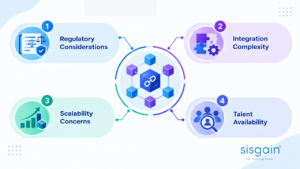
Although blockchain offers significant benefits, implementation is not always straightforward.
Regulatory Considerations
Regulatory requirements continue evolving across industries. Organizations must ensure blockchain solutions comply with applicable laws and standards.
Integration Complexity
Many businesses operate with existing software systems that were not designed for blockchain environments. Integrating new technologies with legacy infrastructure can require careful planning.
Scalability Concerns
As transaction volumes grow, blockchain networks must maintain performance and reliability. Choosing the right architecture becomes critical.
Talent Availability
Blockchain expertise remains specialized. Organizations often struggle to recruit experienced developers and architects internally.
A skilled blockchain development agency helps businesses navigate these challenges while reducing implementation risks.
What Should Organizations Look for in a Blockchain Partner?
Choosing the right blockchain partner is one of the most important decisions in any blockchain initiative. The technology itself may be powerful, but its success largely depends on the expertise, strategy, and execution capabilities of the team implementing it. A reliable partner should not only understand blockchain technology but also understand how to apply it to real business challenges and long-term objectives.
Industry Experience
Blockchain requirements can vary significantly across industries. A partner with relevant industry experience will better understand operational challenges, compliance requirements, and business goals. This experience helps ensure the solution is designed to deliver practical value rather than simply implementing technology for its own sake.
Technical Capabilities
Blockchain projects often involve smart contracts, decentralized applications, integrations, security testing, and platform selection. Organizations should evaluate whether the partner has proven expertise across these areas and experience working with modern blockchain frameworks and enterprise-grade solutions.
Strategic Approach
A strong blockchain partner focuses on business outcomes as much as technology. Instead of immediately recommending a solution, they should assess organizational needs, identify suitable use cases, and develop a roadmap that aligns blockchain investments with measurable business objectives.
Long-Term Support
Blockchain implementation is not a one-time project. As business requirements evolve, systems require updates, optimization, monitoring, and ongoing maintenance. Organizations should look for a partner that can provide continuous support and help ensure long-term performance, security, and scalability.
The right blockchain development agency acts as more than a technology vendor. It becomes a strategic partner that helps organizations reduce risks, accelerate innovation, and maximize the long-term value of their blockchain investments.
How Does Blockchain Support Digital Workplace Services?
Modern organizations increasingly rely on distributed teams, remote collaboration, and digital workflows.
As businesses invest in digital workplace services, secure information sharing becomes increasingly important. Employees need reliable access to documents, approvals, records, and communication systems without compromising security.
Blockchain can enhance digital workplace services by supporting secure identity management, transparent document verification, and trustworthy collaboration environments. This helps organizations improve operational efficiency while maintaining compliance and reducing security risks.
As hybrid work models continue evolving, blockchain is expected to contribute to stronger workplace trust and more secure digital operations.
What Does the Future Hold for Blockchain Development?
Blockchain technology continues to evolve rapidly. Several trends are shaping its future:
- Enterprise blockchain adoption
- Increased smart contract usage
- Greater integration with artificial intelligence
- Expanded IoT connectivity
- Enhanced interoperability between blockchain networks
- Growing adoption within digital workplace services
Organizations that begin exploring blockchain today will likely be better positioned to capitalize on future innovations.
The technology is moving beyond experimentation and becoming a practical tool for solving real business challenges.
Why Are More Businesses Turning to SISGAIN for Digital Innovation?
Successful technology initiatives require more than coding expertise. SISGAIN helps organizations transform ideas into scalable digital solutions through a combination of technical excellence and business-focused strategy.
The company offers expertise across enterprise software development, mobile applications, cloud solutions, AI technologies, emerging digital platforms, cybersecurity, and digital transformation initiatives. By understanding both technology and industry requirements, SISGAIN helps businesses improve efficiency, accelerate innovation, and create future-ready digital ecosystems that support sustainable growth.

Conclusion
Blockchain is no longer limited to cryptocurrency conversations. It has become a powerful business technology that helps organizations improve security, transparency, efficiency, and trust. A professional blockchain development agency plays a critical role in helping businesses identify opportunities, overcome implementation challenges, and build solutions that align with long-term goals.
From supporting the Future of IoT Technology and enhancing ar vr development services to strengthening digital workplace services and improving operational processes, blockchain continues to create new possibilities across industries. Organizations that invest strategically today will be better prepared for the connected and data-driven future ahead.
FAQs
1. What should businesses look for in iot app development services?
Businesses should look for scalability, security, real-time data processing, and integration capabilities. The right solution should support current operational needs while allowing future expansion as connected devices and data volumes grow.
2. How can ar vr development services benefit organizations?
AR and VR solutions can improve employee training, customer engagement, product visualization, and remote collaboration. They help businesses create interactive experiences that enhance learning and decision-making.
3. Why work with a blockchain development agency?
A specialized blockchain partner helps organizations identify the right use cases, develop secure solutions, and ensure successful implementation. Their expertise reduces risks and accelerates blockchain adoption.
4. How do digital workplace services improve productivity?
Digital workplace solutions connect employees, tools, and information in one environment. This helps teams collaborate more effectively, streamline workflows, and maintain productivity regardless of location.
5. Why is IT service management business consulting important for organizations?
It helps businesses align technology investments with operational goals and improve service delivery. A strategic consulting approach can reduce inefficiencies, optimize IT resources, and support long-term growth.