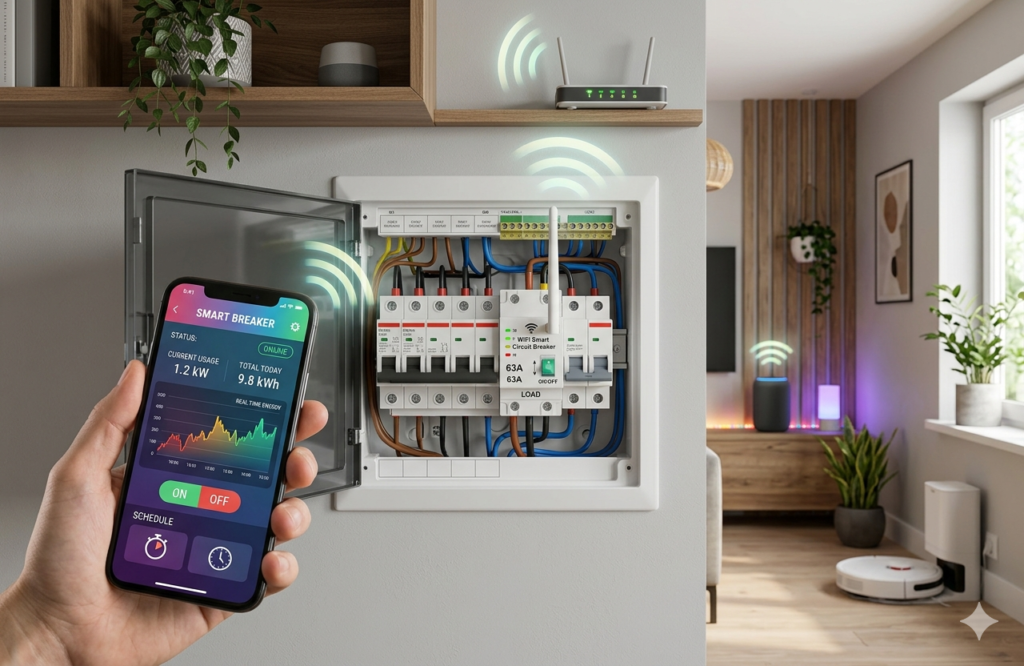
As smart home technology continues to evolve, homeowners and businesses are looking for innovative ways to improve safety, convenience, and energy efficiency. One of the most practical advancements in electrical systems is the WiFi circuit breaker. Unlike traditional circuit breakers that only protect electrical circuits from overloads and short circuits, a WiFi circuit breaker adds intelligent control and remote monitoring capabilities.
Whether you want to manage electricity consumption, monitor equipment remotely, or improve electrical safety, a WiFi circuit breaker can be a valuable addition to your electrical setup. This guide explains everything you need to know about WiFi circuit breakers, including how they work, their benefits, features, applications, and factors to consider before buying one.
What Is a WiFi Circuit Breaker?
A WiFi circuit breaker is a smart electrical protection device that combines the functionality of a standard circuit breaker with wireless connectivity. Through a WiFi connection, users can remotely control and monitor the breaker using a smartphone app or smart home platform.
In addition to protecting electrical circuits from faults, a WiFi circuit breaker allows users to:
- Turn power on or off remotely
- Monitor energy consumption
- Receive real-time alerts
- Schedule automatic operations
- Track voltage and current levels
- Integrate with smart home systems
These features make WiFi circuit breakers ideal for residential, commercial, and industrial applications.
How Does a WiFi Circuit Breaker Work?
A WiFi circuit breaker operates similarly to a traditional breaker by disconnecting power when it detects electrical faults such as overloads or short circuits. However, it includes a built-in WiFi communication module that connects to a wireless network.
Once connected, the breaker communicates with a mobile application that allows users to manage electrical circuits remotely.
The typical process works as follows:
1. WiFi Connection
The breaker connects to the local WiFi network during setup.
2. Mobile App Integration
Users install a compatible application on their smartphone or tablet.
3. Real-Time Monitoring
The breaker continuously sends electrical data such as voltage, current, and power consumption to the app.
4. Remote Control
Users can switch circuits on or off from anywhere with internet access.
5. Safety Protection
The breaker automatically disconnects power when dangerous electrical conditions are detected.
Key Features of a WiFi Circuit Breaker
Modern WiFi circuit breakers come with a wide range of advanced features.
Remote Switching
One of the most popular features is remote switching. Users can control electrical devices without physically accessing the electrical panel.
For example, if you accidentally leave equipment running, you can turn it off through the mobile app.
Energy Monitoring
Many WiFi circuit breakers provide detailed energy usage statistics. This helps users identify energy-hungry appliances and reduce electricity costs.
Real-Time Notifications
The system can send alerts whenever unusual electrical activity occurs, such as:
- Overloads
- Voltage fluctuations
- Overcurrent conditions
- Power interruptions
Scheduling Functionality
Users can create schedules to automate power management.
Examples include:
- Turning lights on at sunset
- Switching off office equipment after business hours
- Managing irrigation systems automatically
Voice Assistant Compatibility
Many models work with popular voice assistants, allowing hands-free control through voice commands.
Data Tracking and Reports
Historical energy consumption reports help users understand usage patterns and improve efficiency.
Benefits of Using a WiFi Circuit Breaker
The popularity of WiFi circuit breakers continues to grow because they offer several significant advantages.
Enhanced Safety
Electrical safety is one of the main reasons people invest in smart breakers. The ability to monitor circuits in real time allows users to detect issues before they become serious problems.
Instant alerts help prevent:
- Electrical fires
- Equipment damage
- Unexpected outages
Greater Convenience
Managing electrical systems remotely saves time and effort. Whether you are at home, at work, or traveling, you can access your electrical circuits through your smartphone.
Improved Energy Efficiency
Energy monitoring helps identify wasteful consumption patterns. Users can make informed decisions that reduce electricity bills.
Better Equipment Protection
Sensitive appliances and machinery benefit from advanced protection features. Automatic disconnection during unsafe conditions can extend equipment lifespan.
Smart Home Integration
WiFi circuit breakers fit perfectly into modern smart homes. They can work alongside smart switches, sensors, and automation systems.
Applications of WiFi Circuit Breakers
WiFi circuit breakers are suitable for a wide variety of environments.
Residential Homes
Homeowners use WiFi circuit breakers for:
- Lighting control
- Air conditioner management
- Water pump monitoring
- Energy tracking
- Remote shutdown of appliances
Offices
Businesses benefit from:
- Automated power schedules
- Energy cost reduction
- Equipment monitoring
- Remote facility management
Industrial Facilities
Factories and industrial sites use smart breakers to:
- Monitor heavy machinery
- Improve operational safety
- Reduce downtime
- Track power consumption
Agricultural Systems
Farm owners often install WiFi circuit breakers for:
- Irrigation control
- Water pumps
- Greenhouse systems
- Remote monitoring of electrical equipment
Rental Properties
Property managers can remotely manage electrical systems across multiple locations without visiting each site.
WiFi Circuit Breaker vs Traditional Circuit Breaker
Understanding the differences can help you make the right purchasing decision.
| Feature | Traditional Circuit Breaker | WiFi Circuit Breaker |
|---|---|---|
| Circuit Protection | Yes | Yes |
| Remote Control | No | Yes |
| Energy Monitoring | No | Yes |
| Mobile App Access | No | Yes |
| Real-Time Alerts | No | Yes |
| Scheduling Functions | No | Yes |
| Smart Home Integration | No | Yes |
While traditional breakers provide essential protection, WiFi circuit breakers offer additional convenience and intelligence.
Factors to Consider Before Buying a WiFi Circuit Breaker
Choosing the right WiFi circuit breaker requires evaluating several important factors.
Current Rating
Select a breaker with an appropriate current rating for your electrical load.
Common ratings include:
- 16A
- 32A
- 63A
- 100A
Voltage Compatibility
Ensure the breaker supports your electrical system voltage requirements.
App Compatibility
Check whether the breaker works with a reliable and user-friendly mobile application.
Smart Platform Support
Consider compatibility with smart home ecosystems if you plan to automate your property.
Safety Certifications
Always choose products that meet recognized safety standards and certifications.
Installation Requirements
Some models require professional installation, while others are designed for easier setup.
Common Challenges and Solutions
Like any smart device, WiFi circuit breakers may face occasional issues.
Weak WiFi Signal
A poor wireless connection can affect performance.
Solution:
Install the breaker within a strong WiFi coverage area or use a WiFi extender.
App Connectivity Issues
Software updates can sometimes cause connection problems.
Solution:
Keep both the app and firmware updated.
Incorrect Load Selection
Using an undersized breaker can cause frequent tripping.
Solution:
Consult an electrician to determine the correct breaker rating.
Future of WiFi Circuit Breakers
The future of electrical protection is becoming increasingly intelligent. Manufacturers are integrating advanced technologies such as:
- Artificial intelligence
- Predictive maintenance
- Advanced energy analytics
- Cloud-based monitoring
- Smart grid connectivity
These developments will provide even greater control, efficiency, and safety for users.
As smart homes and connected buildings continue to expand, WiFi circuit breakers are expected to become a standard component in modern electrical systems.
Conclusion
A WiFi circuit breaker is much more than a standard electrical protection device. It combines safety, convenience, remote control, and energy management into a single smart solution. Whether you are a homeowner looking to improve energy efficiency or a business owner seeking better control over electrical systems, a WiFi circuit breaker offers practical benefits that traditional breakers cannot match.
With features such as remote monitoring, real-time alerts, scheduling, and smart home integration, these intelligent devices are transforming the way people manage electricity. As technology advances, WiFi circuit breakers will play an increasingly important role in creating safer, smarter, and more energy-efficient environments.