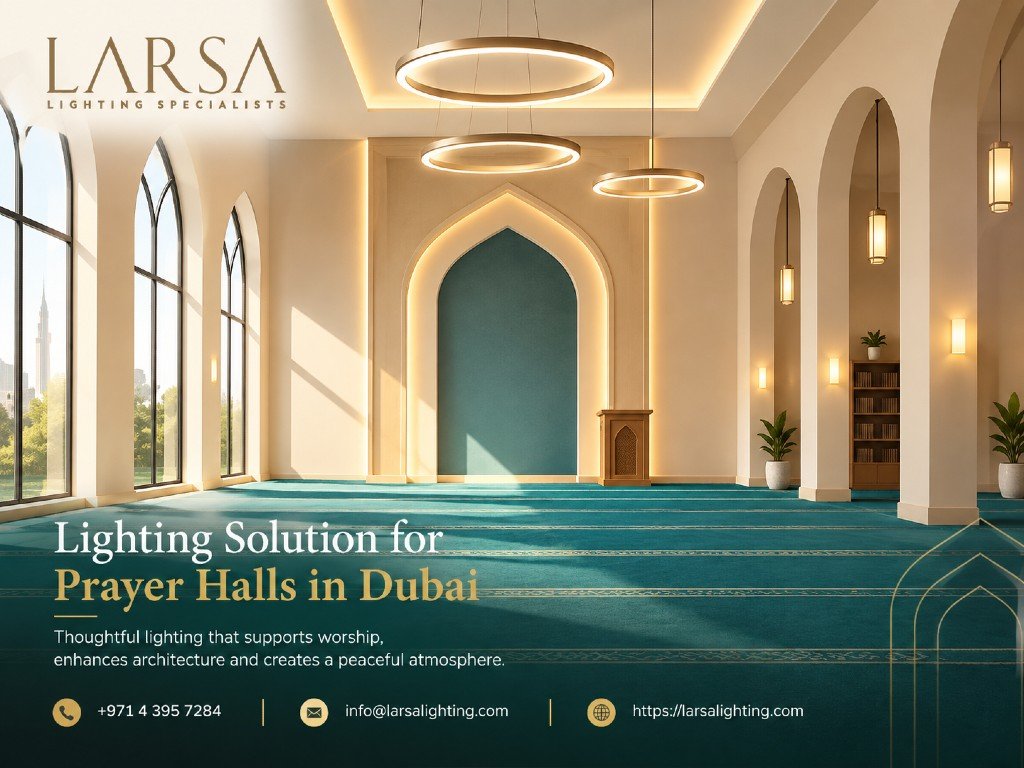
Prayer halls require lighting that supports concentration, comfort, and the architectural character of the space. In Dubai, where religious buildings often combine traditional Islamic design with contemporary architecture, a well-planned lighting system can improve visibility while preserving a peaceful atmosphere. From the main prayer area to entrances and ablution facilities, every zone needs careful consideration.
A successful Lighting Solution for Prayer Halls in Dubai goes beyond choosing attractive fixtures. It combines balanced illumination, glare control, energy efficiency, reliable performance, and convenient maintenance to create an environment that serves worshippers throughout the day.
1. Establish the Right Lighting Hierarchy
The main prayer area should have comfortable, consistent illumination without harsh contrasts or distracting bright spots. Poorly distributed light can affect visibility and diminish the appearance of architectural features, carpets, and decorative surfaces.
Begin by identifying the visual priorities of the hall. The qibla wall and mihrab should remain clearly visible without appearing excessively bright. Subtle architectural accent lighting can highlight Islamic calligraphy, geometric patterns, textured stone, and decorative recesses. Concealed linear lights can also create a soft, even wash across selected surfaces.
Ceiling height and architectural style influence fixture selection. High ceilings may accommodate decorative chandeliers, pendants, or suspended luminaires, while lower ceilings often benefit from recessed downlights, indirect cove lighting, or carefully positioned surface-mounted fixtures. Each option should complement the interior rather than compete with its defining features.
2. Prioritise Glare Control and Visual Comfort
Glare is a common challenge in prayer halls, particularly when luminaires are positioned within the direct line of sight of worshippers. Exposed LED points, unshielded lamps, and highly reflective finishes can create discomfort even when overall illumination levels appear sufficient.
Choose fixtures with suitable shielding, recessed optics, or controlled beam distribution. Their placement should account for the imam’s position, prayer rows, and the viewing angles experienced during standing, bowing, and prostration.
Reflective materials such as polished marble, glazed tiles, and metallic decorations require additional attention. Light can bounce off these surfaces, producing unwanted reflections or bright hotspots. Testing feature lighting on-site helps confirm that the finished result matches the design intent.
For projects involving elaborate chandeliers or decorative pendants, visual comfort should remain a priority alongside appearance. Carefully selected lamps and appropriate dimming can help preserve the intended atmosphere without introducing excessive brightness.
3. Balance Illumination for Prayer and Reading
Prayer halls serve different activities, including congregational prayer, Quran reading, religious education, lectures, and community gatherings. Each activity may require a different lighting level and distribution.
General lighting should provide even illumination throughout the main prayer area, while dedicated reading zones may need additional task lighting. Educational rooms and multipurpose spaces can benefit from independently controlled lighting that adapts to their use.
Rather than relying on a single circuit, divide the installation into practical zones. These may include the main hall, qibla wall, perimeter lighting, entrance, reading areas, and decorative features. Separate controls allow staff to adjust illumination for regular prayers, cleaning, special occasions, and periods when only part of the building is occupied.
The appropriate light levels should be determined by the project requirements, applicable regulations, daylight conditions, and users’ visual needs. A carefully designed Lighting Solution for Prayer Halls in Dubai should support both comfort and flexibility without wasting energy.
4. Select Appropriate Colour Temperature
Colour temperature influences how welcoming a prayer hall feels and how architectural materials appear. Warm white light, typically around 2700K to 3000K, can complement timber, traditional carpets, brass details, and warm-toned stone. Neutral white light around 3500K may suit contemporary interiors with cooler materials or stronger daylight.
Consistency is essential. Combining warm decorative lighting with noticeably cooler general lighting can make finishes appear mismatched and create an uneven visual experience. Select a coordinated colour temperature across ambient, accent, and decorative fixtures.
Colour rendering is equally important. High-quality LED lighting helps reveal the natural appearance of carpets, wood, stone, and decorative finishes. Consistent colour quality between luminaires also reduces visible differences when fixtures need replacement.
5. Integrate Daylight With Artificial Lighting
Daylight can make prayer halls feel spacious and connected to their surroundings. Windows, rooflights, clerestory openings, and screened facades can introduce natural illumination while reducing the need for electric lighting during daytime hours.
However, direct sunlight can cause glare, uneven brightness, and unwanted reflections on polished flooring. Louvres, diffusing screens, suitable glazing, and internal shading can help control these effects while retaining the benefits of daylight.
Daylight sensors and dimmable LED systems can further improve energy efficiency. These controls should be commissioned carefully so that changes in brightness remain gradual and unobtrusive during worship.
6. Choose Energy-Efficient and Maintainable Fixtures
Prayer halls may operate for extended periods, especially during Ramadan, Friday prayers, and community events. Efficient LED luminaires with reliable drivers and appropriate thermal management can help reduce electricity consumption and replacement frequency.
Maintenance planning is particularly important in buildings with high ceilings. Chandeliers and suspended fixtures may require specialist access equipment for cleaning, inspection, or repairs. Coordinating mounting arrangements and maintenance access early can help prevent unnecessary operational costs.
In Dubai and across the UAE, dust accumulation and high ambient temperatures can also affect lighting performance. Appropriate fixture ratings, durable finishes, and accessible components help maintain consistent illumination over time.
7. Illuminate Supporting Areas and Plan Controls
A complete lighting design considers the entire worship experience, not just the main hall. Entrances and corridors need safe, comfortable illumination, while shoe-storage areas require clear visibility. Ablution facilities need functional lighting and fixtures suitable for moisture-prone environments.
Emergency lighting and exit signage should be coordinated with the architectural design to maintain safety without unnecessarily disrupting important sightlines. Courtyards, parking approaches, teaching rooms, and separate prayer areas should also form part of the overall lighting plan.
Simple lighting controls make the building easier to operate. Preset scenes for preparation, regular prayers, cleaning, and special gatherings allow staff to adjust multiple lighting zones efficiently. Clear labels and straightforward controls are especially valuable for facilities used by different teams.
Conclusion
Effective prayer-hall lighting brings together visual comfort, architectural expression, energy efficiency, and dependable operation. From highlighting the mihrab to managing daylight and maintaining safe circulation, each decision contributes to a more welcoming and functional worship environment.
For architects, consultants, and project teams, early coordination between lighting specialists, electrical engineers, facility managers, and religious stakeholders helps ensure that the final design meets practical and aesthetic requirements. Larsa Lighting recognises lighting as both a science and an art, supporting thoughtful approaches to lighting design for religious and architectural spaces.