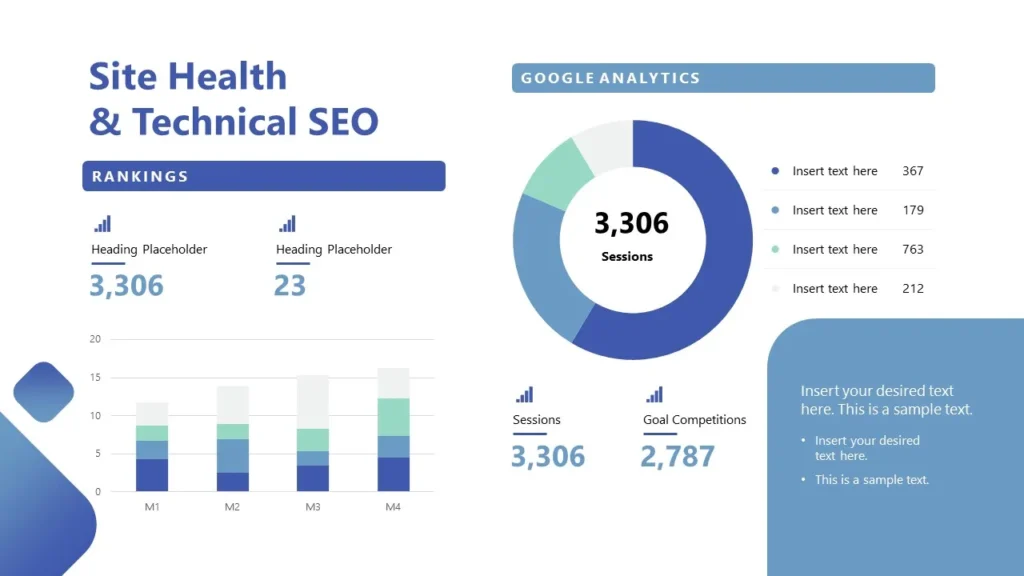
Website SEO health checkup and analysis
A website can look perfect on the surface and still have SEO problems working quietly in the background. Broken links, outdated content, indexing issues, slow pages, missing metadata, and poor internal linking can gradually affect how easily search engines discover and understand a website.
That is why a regular SEO health checkup is useful for businesses that want to maintain their organic visibility.
SEO is not a one-time task that ends when a website launches. Websites change constantly. New pages are published, old pages are removed, designs are updated, plugins and integrations change, and search behavior evolves. A periodic health check can help identify issues before they become larger problems.
What Is an SEO Health Checkup?
An SEO health checkup is a structured review of a website’s search-related performance and technical foundation.
It can examine areas such as crawling, indexing, page structure, content, internal links, metadata, mobile usability, site speed, redirects, and other factors that can affect organic search performance.
The purpose is not simply to find problems. A useful audit should help prioritize which issues deserve attention and explain why they matter.
Why Regular Checks Matter
A website can develop technical problems without anyone intentionally causing them.
For example, a website redesign may accidentally change URLs. A developer might remove a page without creating an appropriate redirect. New content may introduce duplicate targeting. A large image library may gradually affect page performance.
Regular checks create an opportunity to catch these changes.
Check Whether Search Engines Can Crawl Your Website
Search engines need to access your website before they can understand and potentially index its pages.
Technical issues can interfere with crawling. Incorrect robots directives, problematic redirects, broken links, or poor site architecture can make important content harder to discover.
A health check should therefore examine how search engine crawlers move through the website.
Review Important Indexing Signals
Not every page on a website needs to appear in search results. However, important commercial, service, product, and informational pages should generally be accessible and indexable when there is a reason for them to appear in search.
Reviewing indexed pages can also reveal unexpected URLs, duplicate versions, or important pages that are missing from search.
Evaluate On-Page SEO

On-page optimization helps search engines and users understand what a page is about.
A regular audit can examine title tags, meta descriptions, headings, URLs, image alt text, content structure, and internal links.
The goal should not be to insert keywords everywhere.
Instead, pages should have a clear purpose and provide useful information that matches the search intent behind the topic.
Look for Outdated or Thin Content
Content can lose value over time.
Statistics change, products are updated, industry practices evolve, and information that was useful several years ago may no longer answer a customer’s question.
An SEO health checkup can identify pages that need updating, expanding, consolidating, or removing.
Refreshing content should involve meaningful improvements rather than simply changing the publication date.
Review Website Performance
Website speed and overall page experience can influence how people interact with a website.
Large images, unnecessary scripts, third-party tools, excessive animations, and inefficient code can all contribute to slower pages.
A health check should identify pages that may need performance improvements.
Mobile Experience Matters
A website should also be easy to use on smaller screens.
Check whether text is readable, navigation works properly, buttons are easy to tap, forms function correctly, and important content remains accessible.
A website that performs well on desktop but creates problems for mobile users can lose potential customers even when its SEO is otherwise strong.
Strengthen Internal Linking
Internal links help visitors move between related pages and can help search engines understand relationships between content.
For example, a service page can link to relevant educational articles, while an article can naturally link back to the appropriate service.
During an SEO health checkup, look for important pages that receive very few internal links.
Fix Broken Links and Redirect Issues
Broken links create unnecessary friction for visitors and can make website maintenance more difficult.
Redirects should also be reviewed, particularly after website migrations or redesigns.
Long redirect chains, incorrect destinations, and unnecessary redirects can create technical complications.
Consider Your Website Platform

Different website platforms have different technical considerations.
A Webflow agency, for example, may work with businesses on website structure, CMS collections, redirects, metadata, page settings, and performance within the Webflow environment.
The platform itself does not replace SEO strategy. The important thing is how the website is structured, optimized, maintained, and connected to the needs of its audience.
The Pros and Cons of Regular SEO Health Checks
The biggest advantage of regular SEO audits is visibility into problems that may otherwise go unnoticed. Businesses can identify technical issues, content gaps, indexing concerns, and optimization opportunities before they become more difficult to address.
Another benefit is prioritization. Instead of making random SEO changes, teams can focus on issues with the greatest potential impact.
The main downside is that an audit takes time and may uncover more problems than a business can immediately fix. That is why prioritization is important. Not every issue deserves the same level of attention.
An audit is also not a guarantee of higher rankings. Search results depend on many factors, including competition, relevance, content quality, technical accessibility, and broader search-system changes.
FAQs About SEO Health Checkups
What is the frequency of a website needing an SEO health checkup?
There’s no standard interval. Companies who update their site regularly may want to check more often, whereas for a smaller site, maybe less. Also, a second audit could be helpful following a redesign, migration or big structural change.
Is an SEO audit necessary for ranking?
An audit uncovers issues and opportunities, and your improvements come from those findings. Correcting critical technical and content issues can have a lasting impact, but rankings are never assured.
Can a Webflow agency help with an SEO health checkup?
Yes. A Webflow agency with SEO experience can review technical structure, page settings, content organization, redirects, performance, and other areas relevant to a Webflow website.
Conclusion
Your website is a dynamic asset not a one-time project. Search engines change, your technology, customer behavior and content all evolve and new SEO issues will emerge even if a website was finely optimized when first built.
A regular SEO health checkup provides an opportunity to identify technical issues, improve content, strengthen internal linking, review performance, and make sure important pages remain accessible to search engines and users.
No matter if your website is built and maintained in-house or with an outsourced Webflow agency, regular tracking can help companies keep a healthier SEO foundation. The point isn’t to jump on every new algorithm feature, but to ensure your website has a solid technical foundation, is helpful to users, and matches what people are searching for.