Anal discomfort, pain during bowel movements, and occasional bleeding are problems that many people hesitate to discuss. However, these symptoms should never be ignored, especially when they occur repeatedly. One possible cause is an anal fissure, a small tear in the delicate skin lining the anal canal.
Recognising the early warning signs can help individuals seek timely medical attention and avoid complications associated with a long-standing fissure. Although some fissures heal with appropriate dietary and lifestyle changes, persistent cases may require medical treatment.
Understanding the 10 Anal Fissure Symptoms can help you identify potential problems, distinguish fissures from other anorectal conditions, and understand when professional evaluation is necessary.
What Is an Anal Fissure?
An anal fissure is a small cut or tear in the skin surrounding the anal opening or lining of the anal canal. It commonly develops when hard or large stools stretch the anal tissue during bowel movements. Frequent diarrhoea, excessive straining, and certain underlying medical conditions may also contribute.
An anal fissure can cause considerable discomfort because the affected area contains sensitive nerve endings. In some cases, the internal anal sphincter muscle may tighten or go into spasm, increasing pain and interfering with the healing process.
Anal fissures are generally classified into two categories:
- Acute anal fissure: A recently developed tear that has usually been present for a relatively short period.
- Chronic anal fissure: A persistent or recurring tear that may develop scar tissue, raised edges, or a small skin tag.
Recognising the symptoms early is important for preventing the condition from becoming more difficult to manage.
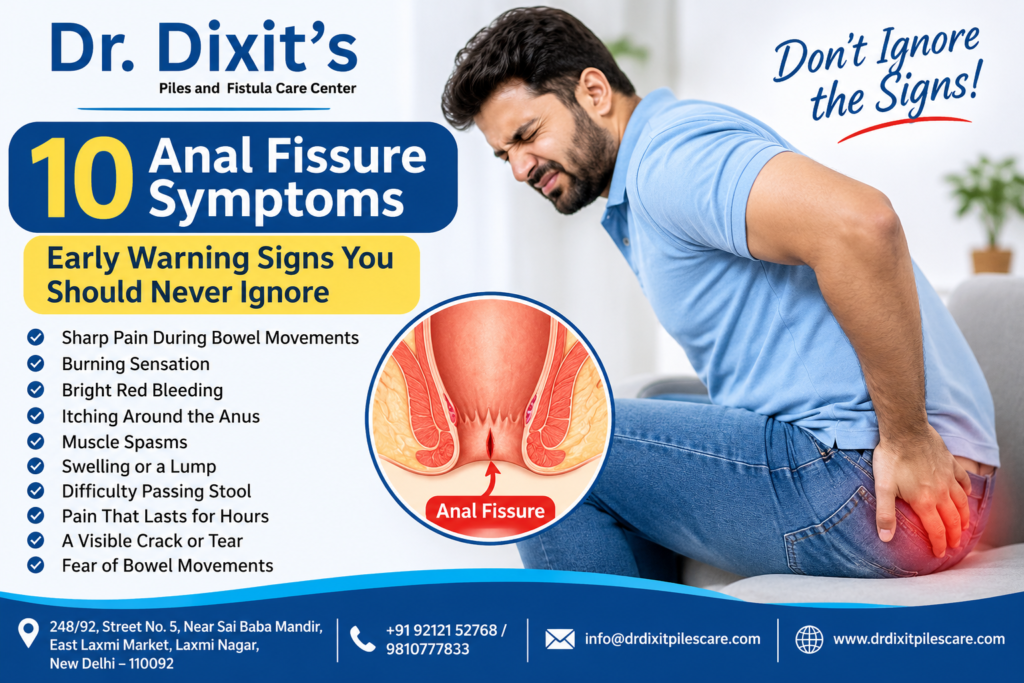
10 Anal Fissure Symptoms You Should Know
The symptoms of an anal fissure can vary depending on the severity and duration of the condition. Below are ten common signs that may indicate an anal fissure.
1. Sharp Pain During Bowel Movements
One of the most recognisable symptoms of an anal fissure is sharp, cutting, or tearing pain while passing stool.
This discomfort occurs when stool passes through the anal opening and stretches the damaged tissue. The pain may become particularly intense when passing hard or dry stools.
People often describe the sensation as:
- A sharp cut or tearing feeling.
- Sudden pain during defecation.
- Stinging or stabbing discomfort around the anus.
Repeated pain during bowel movements should be medically evaluated rather than dismissed as ordinary constipation.
2. Burning Sensation After Passing Stool
A burning sensation around the anal opening is another common symptom.
Unlike pain that occurs only during defecation, burning discomfort may continue after the bowel movement has finished. In some individuals, it can last for several minutes or even a few hours.
This happens because the damaged tissue remains irritated, while tightening of the anal sphincter muscle may contribute to ongoing discomfort.
3. Bright Red Blood During or After Bowel Movements
Noticing fresh blood on toilet paper or in the toilet bowl can be an alarming experience.
Anal fissures commonly cause small amounts of bright red bleeding, particularly when passing hard stools. The blood may appear as:
- A few bright red spots on toilet paper.
- Thin streaks on the surface of stool.
- Small amounts of fresh blood in the toilet bowl.
Although anal fissures are one possible explanation, rectal bleeding can also result from haemorrhoids and other medical conditions. Therefore, unexplained or recurring bleeding should always be assessed by a healthcare professional.
4. Itching Around the Anal Opening
Persistent itching around the anus can sometimes accompany an anal fissure.
The damaged skin may become irritated during bowel movements, while moisture, discharge, and repeated wiping can aggravate the surrounding area.
This itching may lead to frequent scratching, which can further irritate sensitive skin.
Maintaining gentle hygiene and avoiding harsh soaps or excessive rubbing can help reduce irritation.
5. Muscle Spasms or Tightness Around the Anus
The internal anal sphincter is a ring-shaped muscle that helps control bowel movements. When an anal fissure develops, this muscle may tighten involuntarily.
These spasms can cause:
- A feeling of tightness around the anal opening.
- Sudden episodes of discomfort.
- Increased pain after bowel movements.
- Difficulty relaxing during defecation.
Increased muscle tension can also reduce blood flow to the affected area, potentially delaying the healing process.
6. Swelling or a Small Lump Near the Anus
Some individuals with a long-standing anal fissure develop a small lump or skin tag near the affected area.
This is sometimes called a sentinel pile. It can appear near the external end of a chronic fissure.
People may notice:
- A small piece of extra skin near the anal opening.
- Mild swelling around the affected area.
- A lump that becomes noticeable during cleaning.
However, not every lump around the anus is caused by a fissure. Haemorrhoids, infections, and other conditions can produce similar changes and require proper diagnosis.
7. Difficulty Passing Stool
An anal fissure can make bowel movements uncomfortable enough that individuals begin avoiding or delaying defecation.
Unfortunately, this behaviour can create a cycle:
- Passing stool causes pain.
- The individual starts avoiding bowel movements.
- Stool remains in the bowel for longer and may become harder.
- Passing the harder stool can aggravate the existing tear.
- The pain may become worse.
Addressing constipation and maintaining regular bowel habits are important steps in breaking this cycle.
8. Pain That Continues for Hours After Defecation
Pain that persists long after passing stool is another important warning sign.
Unlike brief discomfort, fissure-related pain may continue for several minutes or hours after a bowel movement. This is often associated with irritation and involuntary tightening of the anal sphincter.
The discomfort may interfere with everyday activities, including:
- Sitting comfortably.
- Walking for extended periods.
- Working at a desk.
- Sleeping peacefully.
Persistent post-defecation pain should not be ignored, particularly when accompanied by bleeding or recurring discomfort.
9. A Visible Crack or Tear Near the Anal Opening
In some cases, an anal fissure may appear as a small linear crack in the skin around the anus.
The tear may be difficult to identify without a medical examination, especially when the surrounding tissue is painful or swollen.
A visible fissure may be accompanied by redness, irritation, or a small amount of bleeding.
Avoid repeatedly touching or examining the affected area, as this may increase irritation. A healthcare professional can assess the area and determine whether a fissure is present.
10. Fear or Anxiety About Bowel Movements
Although it is not a physical symptom, anxiety about passing stool can be an important consequence of a painful anal fissure.
People who repeatedly experience severe pain may begin delaying bathroom visits or avoiding defecation altogether.
This can lead to constipation, harder stools, and further irritation of the affected tissue.
If bowel movements have become stressful because of recurring pain, seeking medical advice can help identify the underlying cause and appropriate treatment options.
What Causes Anal Fissures?
Understanding the possible causes of anal fissures can help individuals reduce their risk of developing them.
Common contributing factors include:
- Chronic constipation and hard stools.
- Excessive straining during bowel movements.
- Frequent or prolonged diarrhoea.
- Insufficient dietary fibre.
- Pregnancy and vaginal childbirth.
- Inflammatory bowel diseases, such as Crohn’s disease.
In some cases, infections and other underlying medical conditions may also cause fissures.
How Can You Manage Anal Fissure Symptoms?
Early care and appropriate lifestyle changes can support healing, particularly in uncomplicated acute fissures.
Consider the following measures:
1. Increase dietary fibre: Include fruits, vegetables, whole grains, and other fibre-rich foods in your daily diet to support softer stools.
2. Drink sufficient water: Adequate fluid intake helps maintain normal bowel movements and may reduce constipation.
3. Avoid excessive straining: Do not force bowel movements or spend unnecessarily long periods sitting on the toilet.
4. Try warm sitz baths: Sitting in comfortably warm water for approximately 10–20 minutes may help soothe discomfort and relax the anal muscles.
5. Maintain gentle hygiene: Clean the area carefully with water and avoid harsh products that may irritate sensitive skin.
6. Seek professional guidance: A doctor may recommend appropriate medication, stool-softening measures, or other treatments depending on the condition.
Avoid using prescription creams or relying on home remedies without understanding the underlying cause.
When Should You Consult an Anal Fissure Specialist?
You should seek medical evaluation if you experience recurring anal pain, bleeding during bowel movements, persistent burning, or a visible tear near the anal opening.
Medical attention is particularly important when:
- Symptoms continue despite basic self-care.
- Pain becomes increasingly severe.
- Bleeding occurs repeatedly.
- A lump or swelling develops.
- Symptoms interfere with normal daily activities.
Heavy bleeding, dizziness, fever, or severe worsening pain requires prompt medical attention.
An accurate diagnosis is important because anal fissures can sometimes be confused with piles, anal fistulas, infections, and other anorectal conditions.
A qualified specialist can evaluate your symptoms and recommend an appropriate treatment plan.
Conclusion: Recognise Anal Fissure Symptoms and Seek Timely Care
Anal fissures can cause significant discomfort, particularly during and after bowel movements. Symptoms such as sharp pain, burning, bright red bleeding, itching, muscle spasms, and difficulty passing stool should not be overlooked.
Recognising these 10 Anal Fissure Symptoms early can help you understand when medical evaluation is necessary. Although many acute fissures improve with conservative care, persistent or recurring symptoms may require specialised treatment.
If you are experiencing symptoms of an anal fissure, consider consulting an experienced anorectal healthcare professional. Dr. Dixit’s Piles and Fistula Care Centre provides consultation and guidance for patients experiencing piles, fissures, fistulas, and other anorectal concerns.
Visit Dr. Dixit’s Piles and Fistula Care Centre to learn more about available care options and take an informed step towards better anorectal health.
Disclaimer: This article is intended for general educational purposes and does not replace professional medical advice, diagnosis, or treatment.
Frequently Asked Questions (FAQs)
1. What are the most common symptoms of an anal fissure?
The most common symptoms include sharp pain during bowel movements, burning afterwards, bright red bleeding, itching, and spasms around the anal opening.
2. Can an anal fissure cause bleeding without pain?
Although pain is common, symptoms can vary. Bleeding without noticeable pain should not automatically be attributed to an anal fissure. A medical examination can help identify the cause.
3. How long does an anal fissure take to heal?
Many acute anal fissures improve within a few weeks with appropriate care. Chronic fissures may take longer and sometimes require medical treatment.
4. Is an anal fissure the same as piles?
No. An anal fissure is a tear in the lining of the anal canal, whereas piles, also called haemorrhoids, are swollen blood vessels around or inside the anus. Both conditions can cause bleeding and discomfort.
5. Can constipation make an anal fissure worse?
Yes. Hard stools and excessive straining can repeatedly injure the affected tissue, increasing pain and potentially delaying healing.
6. When should I visit a doctor for an anal fissure?
Consult a healthcare professional if you experience recurring pain, bleeding, persistent itching, or symptoms that do not improve. Early evaluation helps establish the correct diagnosis and treatment approach.