
Search is no longer limited to a page of blue links. Google AI Overviews, ChatGPT search, Microsoft Copilot, Perplexity, and other AI-powered tools and AI-Generated Answers can now combine information from multiple websites into a direct response.
For website owners, this creates a new visibility opportunity. A page may be cited inside an AI-generated answer, included among supporting sources, or used to help explain a topic even when it does not hold the first traditional organic position.
The difficult part is that there is no guaranteed formula for earning an AI citation. Generative systems may use different search indexes, retrieval methods, ranking signals, and language models. Their source selections can also change based on the wording of a question, the user’s location, and how recently the answer was generated.
Still, the process is not completely mysterious. AI search systems need to discover a page, understand its subject, assess its usefulness, and extract information that directly supports an answer. Websites that perform these tasks well are generally better positioned for both traditional search and AI-assisted discovery.
Learning how to appear in AI-generated answers is therefore less about finding a secret technical trick and more about becoming a clear, credible, accessible, and genuinely useful source.
AI Visibility Begins With Search Visibility

AI platforms cannot reliably cite a page they cannot discover or access.
For Google’s AI search features, the basic technical requirements are closely connected to ordinary organic search. Google explains in its official guidance on AI features and website visibility that pages generally need to be indexed and eligible to appear in search with a snippet. It does not require a special AI schema, machine-readable AI file, or separate optimization method.
This means foundational SEO still matters. Pages need crawlable links, appropriate indexing settings, useful page titles, descriptive headings, mobile-friendly layouts, and technically reliable hosting.
A website with broken internal links, accidental noindex tags, blocked resources, or unstable server performance is giving AI search systems an unnecessary obstacle course.
Review Crawler Access Carefully
Publishers should understand which automated crawlers their websites allow.
OpenAI identifies different crawlers for different purposes in its official crawler documentation. OAI-SearchBot is associated with surfacing websites in ChatGPT search results, while GPTBot is used for potential model training. Site owners can manage them separately through their robots.txt rules.
Blocking an AI training crawler does not necessarily mean blocking AI search visibility, provided the platform offers separate controls. However, configurations vary among companies, so robots.txt rules should be reviewed carefully rather than copied from a random social media post.
A site can have excellent content and still remain invisible if the relevant search crawler is denied access.
Publish Information That Directly Answers Real Questions
AI-generated answers are usually triggered by questions or tasks. A user might ask how to repair something, compare two products, understand a law, estimate a cost, or decide which option fits a particular situation.
Pages that answer these needs clearly give retrieval systems useful material to work with.
Before creating an article, identify the main question and the related questions a reader would naturally ask next. Search intent should guide the content, not simply the desire to repeat a keyword.
An article about electric vehicle maintenance, for example, should not spend half its introduction explaining that electric cars use electricity. Readers are more likely to need realistic service items, cost factors, battery considerations, tire wear, maintenance intervals, and comparisons with gasoline vehicles.
Provide a Direct Answer Early
A clear summary near the beginning helps both readers and retrieval systems understand the page.
This does not require reducing an entire article to two sentences. It means confirming the topic and giving the reader a useful starting point before expanding into details.
For a question such as “Can a dirty air filter increase an electricity bill?” a strong page might answer that restricted airflow can make an HVAC system run longer and work under less efficient conditions. The following sections can then explain airflow, frozen coils, motor strain, and replacement schedules.
Long introductions that delay the answer may satisfy a word-count target, but they are less useful to readers and more difficult for systems to extract.
Clear Structure Makes Information Easier to Retrieve
AI tools often work with passages rather than treating an entire page as one indivisible document. Clear headings and focused sections make those passages easier to understand.
An H1 should identify the primary subject. H2 headings should organize major subtopics, while H3 headings can explain supporting details. Each section should remain focused on the promise made by its heading.
A heading called “Repair Costs” should contain information about repair costs. It should not suddenly become a history of air conditioning, a product advertisement, and a personal story about someone’s cousin who owns a toolbox.
Short paragraphs, descriptive headings, comparison tables, definitions, and concise explanatory sections can improve readability and extraction. These elements are especially useful when a topic contains multiple conditions, processes, or choices.
Use Natural Language Instead of Keyword Blocks
Search systems have become much better at understanding related concepts and natural phrasing. Repeating an exact keyword in every paragraph is unnecessary and can make the article sound manufactured.
Use the primary keyphrase in important locations where it fits naturally, including the title, introduction, one relevant heading, and the conclusion. Related terminology can then help establish context.
An article about appearing in AI-generated answers might naturally discuss AI search visibility, generative engine optimization, citations, search indexing, structured content, topical authority, and source credibility.
This creates semantic depth without turning the page into a keyword storage facility.
Evidence Makes a Page Easier to Trust
AI systems need reliable information because inaccurate answers can harm users and the platform providing the response.
Claims are stronger when supported by primary sources, official documentation, original research, recognized standards, or clearly identified expert analysis. Links should lead readers to the source that directly supports the statement.
If an article includes a statistic, explain who produced it, when it was published, what was measured, and whether important limitations apply. An impressive number without context is decorative, not informative.
References should be integrated where they help the reader verify a claim. A long source list at the bottom of an article is less useful if nobody can determine which statement each link supports.
Original Information Creates Citation Value
Websites become more valuable when they contribute something that cannot be found everywhere else.
Original surveys, experiments, interviews, photographs, pricing data, case studies, templates, calculations, and first-hand experience can give AI systems a reason to cite the original publisher.
A thousand websites can rewrite the same product announcement. The page that tests the product, documents the method, publishes measurements, and explains unexpected findings has a more distinctive contribution.
Originality does not require a large research department. A local business can publish anonymized service trends, common customer questions, regional cost ranges, or lessons from completed projects. The methodology should be described honestly so readers understand what the information represents.
Demonstrate Who Created the Content
Authority is easier to assess when a website clearly identifies the people and organization behind its information.
Useful trust signals include author names, biographies, relevant experience, editorial policies, contact information, publication dates, correction procedures, and clear ownership details.
For sensitive topics such as health, finance, law, and safety, professional qualifications and expert review are particularly important. A general writer can still explain a subject, but technical claims should be reviewed or supported by appropriate specialists.
Avoid fictional experts, vague biographies, and credentials that cannot be verified. A profile saying someone is a “world-leading authority” becomes less persuasive when the person appears nowhere else on the internet.
Build a Consistent Topical Identity
A site that publishes substantial, connected content around a subject may be easier to understand than one that jumps randomly between unrelated commercial topics.
For example, a home-improvement website might build connected resources covering HVAC maintenance, roofing, plumbing, renovation planning, rental inspections, and energy efficiency. Internal links can show how those pages relate to one another.
This does not mean every website must cover only one narrow subject. A general publication can have clearly defined categories and qualified contributors for each topic.
Consistency helps search systems understand what the site knows, while depth helps readers trust that the information was not created solely to capture one keyword.
External Recognition Still Matters
A website can claim expertise, but independent recognition is usually more convincing.
Relevant backlinks, brand mentions, citations, professional memberships, expert contributions, and references from reputable publications can strengthen a site’s authority. These signals help establish that the organization exists beyond its own pages.
Quality matters more than raw quantity. One relevant citation from a respected industry publication can be more meaningful than hundreds of links from unrelated directories, automated profiles, or spam websites.
Digital public relations, original research, expert commentary, and genuinely useful resources can attract recognition naturally. Buying large quantities of low-quality links may inflate a third-party metric temporarily, but it does not create real authority.
AI visibility should not become an excuse to revive every manipulative link-building tactic with “GEO” added to the sales pitch.
Factual Precision Improves Extractability
AI systems are more likely to use content that contains clear facts, definitions, comparisons, and explanations.
Vague writing may sound polished but offer little information. Sentences such as “Technology is changing the digital world in many incredible ways” consume space without giving a system anything meaningful to cite.
Specific writing is more useful. Define important terms, explain cause and effect, distinguish similar concepts, and state the conditions under which a claim is true.
For example, instead of claiming that inverter air conditioners “always cut electricity bills in half,” explain that savings depend on equipment efficiency, sizing, operating hours, room heat gain, maintenance, electricity prices, and the system being replaced.
Precision is not only better for AI citation. It also protects readers from exaggerated conclusions.
Make Comparisons Easy to Understand
Many AI queries involve decisions. Users ask whether one option is better, cheaper, safer, faster, or more appropriate than another.
Comparison content should describe the criteria behind the conclusion. A useful comparison might examine price, performance, maintenance, limitations, warranty, ease of use, and suitability for different users.
Tables can help when the data is genuinely comparable. The surrounding text should explain important qualifications rather than leaving readers to interpret a wall of check marks.
Avoid declaring one universal winner when the better choice depends on circumstances. A balanced answer is often more credible than a page determined to make every reader buy the same product.
Structured Data Helps Confirm Meaning
Structured data can help search engines interpret entities and page types. Common examples include Article, Organization, Person, Product, Breadcrumb, Event, and LocalBusiness markup.
The structured data should accurately represent information visible on the page. Adding unsupported review scores, fake author details, or misleading product information can create trust and policy problems.
Schema markup does not guarantee inclusion in an AI-generated response. Google specifically states that no special structured data is required for its AI features. However, accurate markup can support broader search understanding and eligibility for relevant search features.
Think of structured data as a clear label, not a backstage pass.
Keep Important Information Fresh
AI answers frequently involve topics that change, including prices, software, regulations, product specifications, event schedules, and public figures.
Pages covering time-sensitive subjects should include visible publication and update dates. More importantly, the content itself must actually be reviewed. Changing the date without checking the facts does not make an article fresh.
Update discontinued products, broken links, outdated screenshots, expired statistics, and recommendations that no longer reflect the market. If a major section is no longer correct, rewrite it or add a clearly dated explanation.
Evergreen pages also need maintenance. Basic principles may remain stable, but examples, tools, sources, and platform guidance can change.
Separate Confirmed Facts From Predictions
AI and technology news often combines official announcements, informed reporting, leaks, and speculation.
Clearly label what has been confirmed, what has been reported by reputable sources, and what remains a prediction. Link to the original announcement whenever possible.
This protects credibility and makes the page more useful to systems attempting to provide a factual answer. A rumor written with absolute certainty may attract clicks briefly, but it becomes a liability when proven wrong.
Technical Quality Supports AI Discovery
Good content cannot perform properly if the website is slow, unstable, or difficult to navigate.
Pages should load reliably, work on mobile devices, use secure HTTPS connections, and avoid intrusive elements that cover the main content. Important text should be available in the rendered page and not depend on a complicated interaction that crawlers may fail to complete.
Canonical tags, redirects, XML sitemaps, pagination, and internal links should be configured consistently. Duplicate versions of the same article can divide signals and create uncertainty about which URL should be indexed.
Images should include useful alternative text when they contribute meaning. Tables and interactive elements should remain understandable on small screens.
Technical SEO does not make weak content authoritative, but technical problems can prevent strong content from being discovered.
Brand Clarity Helps AI Systems Understand the Source
A website should make its identity obvious.
Use a consistent organization name, logo, author information, contact page, and About page. Explain what the publication covers, who operates it, and how its content is produced.
For businesses, keep names, addresses, service areas, and contact details consistent across relevant platforms. For publishers, maintain clear category structures and contributor pages.
Entity clarity helps systems connect the website with mentions and information found elsewhere. It also gives human readers a way to judge whether the source is appropriate for their needs.
Anonymous sites are not automatically untrustworthy, but a website giving important advice with no authors, owner, contact information, or editorial explanation creates unnecessary doubt.
Avoid Thin AI-Generated Content
Using AI as a writing or research assistant does not automatically prevent a page from ranking or being cited. The real issue is whether the final content is accurate, original, useful, and created for readers.
Mass-producing hundreds of similar articles with generic wording, invented facts, and no editorial review is unlikely to build durable authority. Such pages may cover many keywords but contribute little that deserves to be quoted.
Human review should verify facts, sources, tone, examples, and conclusions. Add first-hand knowledge where possible. Remove repetitive sections written only to increase word count.
AI can speed up drafting, but it cannot accept responsibility for a false claim published under your brand.
Measure More Than Traditional Rankings
AI visibility requires broader measurement because citations may appear differently across platforms and prompts.
Track referral traffic from AI services when it appears in analytics. Monitor important questions manually across relevant platforms, while remembering that results can vary by user, location, and date.
Record which pages receive citations, which competitors appear, what types of sources are selected, and whether the answer uses your information accurately.
Traditional SEO metrics still matter. Organic impressions, clicks, backlinks, indexed pages, engagement, conversions, and branded searches can reveal whether the overall strategy is improving.
Do not treat a single AI citation as proof that an entire campaign is working. Visibility should be evaluated across multiple queries and over time.
What Research Suggests About AI Citations
Research into generative engine optimization is still developing, and results should not be treated as universal ranking rules.
A 2026 paper examining citation selection and citation influence across several AI search platforms found that highly influential pages tended to be well structured, semantically relevant, and rich in extractable evidence such as definitions, numerical facts, comparisons, and procedural explanations.
That finding supports a practical principle: make useful evidence easy to locate and understand.
However, publishers should be cautious when agencies promise specific citation increases. AI systems evolve quickly, and a technique tested on one set of prompts may not work equally well across industries, languages, or platforms.
The strongest strategy is to improve the underlying value of the website rather than optimize for a temporary model behavior.
SEO and GEO Work Best Together
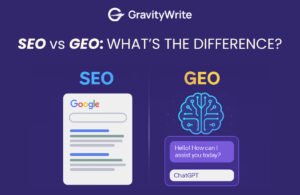
Generative engine optimization, sometimes called GEO, should not be treated as a replacement for SEO.
Traditional search optimization helps pages become crawlable, indexable, relevant, and authoritative. Those same qualities can support selection by AI-powered search tools.
GEO adds emphasis to passage clarity, evidence, direct answers, source credibility, entity understanding, and content that can support conversational queries. It expands the SEO process rather than deleting it.
A page that performs well in traditional search has already cleared several important discovery and quality barriers. A page written for AI but invisible to ordinary search may struggle to enter the retrieval process at all.
Conclusion: Become a Source Worth Citing
A website is more likely to appear in AI-generated answers when it is easy to access, easy to understand, factually reliable, and genuinely useful.
Strong pages answer real questions, provide direct explanations, organize information clearly, cite credible evidence, and show who created the content. Original research, professional expertise, external recognition, technical reliability, and consistent topical coverage can strengthen the site further.
There is no special schema tag or hidden keyword that guarantees an AI citation. Platforms choose sources differently, and their systems will continue to evolve.
The most durable approach is also the least mysterious: publish content that deserves to be referenced.
If a page provides the clearest definition, the best-supported comparison, the most useful procedure, or the most credible original evidence, it gives both search engines and AI answer systems a strong reason to include it. That is good GEO, good SEO, and, more importantly, good publishing.