Small drones can move quickly, fly at low altitudes, and operate in areas where traditional surveillance can struggle. That makes reliable detection an important part of modern airspace security. A UAV radar is designed to identify and track unmanned aerial vehicles by detecting their movement and position. Understanding how this technology works helps explain its role in uav defense and modern security planning.
How UAV Radar Spots a Drone
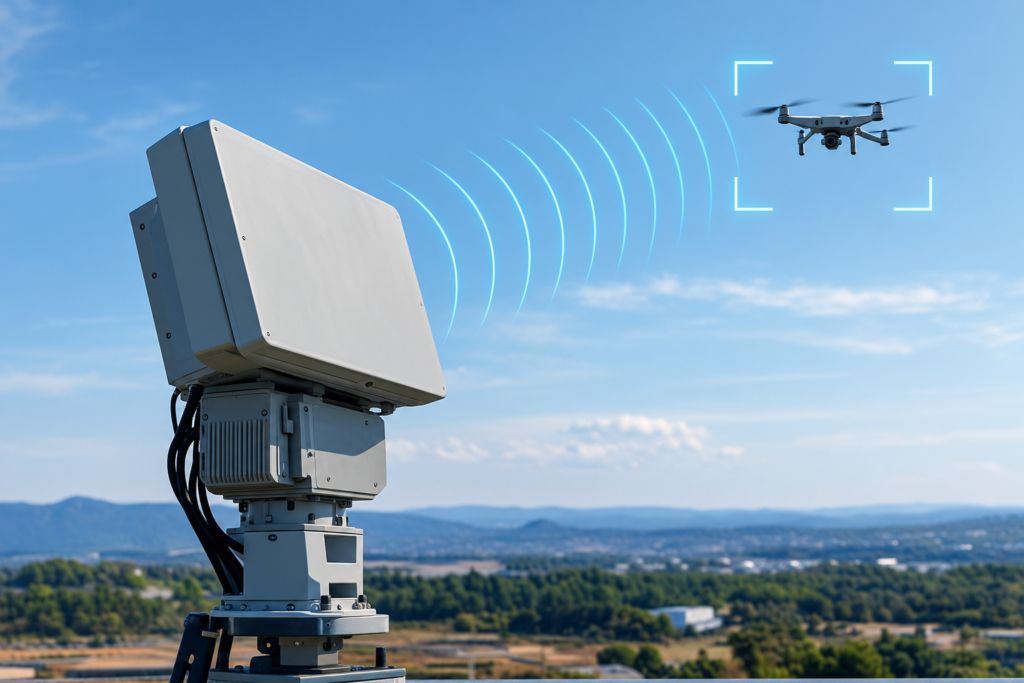
UAV radar uses radio waves to detect objects in the air. When those signals encounter a drone, part of the energy returns to the radar system. The system can then process the returned signal to estimate important details such as:
- Distance from the radar
- Direction of movement
- Approximate altitude
- Speed and trajectory
- Changes in the drone’s position
Unlike visual observation, radar can operate during darkness and in changing weather conditions. This makes it a useful component of layered drone defence systems.
What Makes Drone Detection Challenging?
Not every airborne object is a drone. Birds, aircraft, buildings, vegetation, and other objects can create signals that require careful analysis. Modern radar systems therefore use signal processing and tracking methods to separate potential UAVs from surrounding activity.
Detection can also become more difficult when drones are small or flying close to the ground. Terrain and other physical obstacles may affect radar coverage. For this reason, uav defense systems often combine radar with additional detection technologies rather than relying on a single sensor.
Where Radar Fits Into UAV Security
Radar generally serves as an early detection layer. Once a possible drone is identified, other systems may provide additional information for classification and response.
A broader drone defence setup may combine:
- Radar detection
- Radio-frequency monitoring
- Optical or thermal cameras
- Tracking and identification software
- Command-and-control platforms
This layered approach can give security teams a more complete picture of activity in protected airspace.
Building a More Complete Detection Picture
UAV-Defence operates within a technology landscape where accurate detection and continuous tracking are increasingly important. Radar doesn’t simply answer whether something is flying. It can help establish where an object is moving and whether its behaviour requires further attention.
As drone use expands across commercial, industrial, and public environments, uav defense technology will remain an important part of responsible airspace monitoring.
Conclusion
UAV radar provides a critical detection layer by identifying, tracking, and monitoring airborne objects that may otherwise be difficult to observe. Its role in drone defence becomes stronger when combined with complementary sensors and tracking technologies. As UAV activity grows, reliable detection can support better airspace awareness and security planning. Understanding how radar works gives organisations a clearer foundation for assessing detection requirements and reviewing modern UAV security solutions.