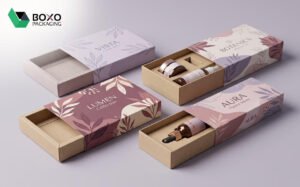
Tray and sleeve boxes pair an inner tray with an outer wrap, giving a neat reveal when the pack is opened. For brands wanting a premium feel without the cost of rigid construction, tray and sleeve boxes are a practical middle route. This guide covers formats, board weights, printing, finishing, costs and sample testing so you can brief a supplier clearly.
How a Tray and Sleeve Set Works
A tray and sleeve box has a shallow inner tray that holds the product and an outer sleeve that slides over it. The sleeve carries most of the branding, while the tray provides structure and keeps contents in place.
The design is popular because it opens smoothly, ships flat and is quick to assemble. It suits items that sit in a single layer, such as chocolates, soaps, candles, cosmetics and gift sets.
Style Variations to Consider
The right build depends on product weight, how often the box is opened and whether it needs a window or dividers. These are the formats most brands compare first.
- Standard tray and sleeve: a printed outer wrap over a folding carton tray, suited to lightweight gifts and retail items.
- Drawer box: a tray with a finger notch or ribbon pull, giving a more polished opening motion.
- Windowed sleeve: a die cut opening in the wrap that shows the product without removing the tray.
- Tray with insert: a divider or cushioning layer that holds bottles, jars or multiple items apart.
Board Weights and Material Options
Folding trays and sleeves are usually made from SBS board at 300 to 400 GSM, which prints cleanly and keeps its shape around most retail products. Lighter items suit the lower end, while heavier jars or boxed sets benefit from the upper range.
Kraft board at 250 to 350 GSM suits natural or handmade brands, though its brown tone mutes lighter colours. Rigid greyboard trays give a weightier feel, but they cost more and take up more storage space. For posting, E flute corrugated makes a tidy, sturdy tray, while B flute adds extra crush resistance.
Where boxes touch food, ask your supplier about materials that comply with UK food contact rules, and consider a greaseproof liner for oily products. At Boxo Packaging, we usually ask for product weight, dimensions and sales channel before suggesting a board grade.
Printing and Finishing for a Clean Reveal
Offset printing delivers precise colour on larger runs, while digital printing suits short runs, seasonal designs and frequent artwork changes. Flexographic printing is mostly used on corrugated trays.
Matt or soft touch lamination, spot gloss and foil stamping give the sleeve a refined look, though laminated and foiled boards can complicate recycling. Water based inks and aqueous coatings are generally simpler to process and still guard against scuffs.
Fit matters most here. The dieline must allow for board thickness, so the sleeve slides smoothly without being loose or catching on the tray.
Cost Factors and Sustainability
Price depends on quantity, board weight, print method, finishing and any insert or window. A plain one colour sleeve over a simple tray is usually the lowest cost route, while foil, embossing and rigid trays raise the price quickly.
FSC certified board shows that fibre comes from managed sources, though it does not make a box fully green, as every material has some footprint. Using two parts means more board than a single carton, but both can be recycled together if kept free of heavy laminates and plastic windows.
Ordering Tips Before You Commit
Ask for a physical sample filled with your real product, and slide the sleeve on and off many times to check for tearing or a loose fit. Check the proof for colour, spelling, barcode placement and legal text.
Allow extra lead time, because production and freight can take several weeks. A reliable supplier will question your specification rather than simply accept it, especially around board strength and sleeve tolerance. That is how we work at Boxo Packaging, because fixing a problem early costs far less than a reprint, especially with tray and sleeve boxes.\
Custom Bakery Packaging: A Practical Guide for Cafés, Patisseries and Online Bakers
Well made cartons keep cakes, pastries and biscuits fresh, intact and appealing from the counter to the customer’s kitchen. For bakeries that want a consistent look across every product, custom bakery packaging is a practical way to protect fragile bakes and build recognition. This guide covers formats, board weights, printing, food contact, costs and sample testing so you can brief a supplier clearly.
What Made to Measure Bake Boxes Need to Handle
A bakery carton must hold the product securely, resist grease and moisture and stay clean enough to present food. It also needs enough strength to be carried, stacked and sometimes chilled without losing its shape.
Different bakes make different demands. A buttery croissant leaves oil marks on plain board, while a cream filled cake needs a firm base and a snug fit to stop it sliding.
Popular Styles and Formats
The right format depends on what you sell, how far it travels and whether shoppers see it before buying. These are the styles most bakeries compare first.
- Window cake box: a folding carton with a die cut opening, so customers see the finish before they buy.
- Pastry tray box: a shallow, wide carton with a lid, suited to tarts, slices and viennoiserie.
- Cupcake box with insert: a carton with a die cut holder that keeps each cake upright and separate.
- Gable box: a handle top carton for biscuits, favours and small take away treats.
Board Choices and Weights
Most bakery cartons use SBS board at 300 to 400 GSM, which stays rigid under a heavy cake and prints crisply. Kraft board at 250 to 350 GSM suits artisan and rustic brands, although its brown tone mutes lighter colours and can dull fine artwork.
For posted bakes, E flute corrugated gives a neat finish with extra crush resistance, while B flute or double wall suits heavier tiered or multi item orders. Rigid greyboard is rarely practical for fresh bakes because it costs more and is harder to keep clean.
For anything touching food, ask your supplier for materials that comply with UK food contact rules, and request supporting documentation. Greaseproof liners or a food safe coating help with oily bakes. At Boxo Packaging, we usually ask for product weight, dimensions and sales channel before suggesting a board grade.
Printing and Finishing for Food Use
Digital printing suits short runs, seasonal menus and frequent artwork changes. Offset printing gives stronger colour accuracy on larger orders, while flexographic printing is common on corrugated outer cartons.
Water based inks and an aqueous coating are a sensible starting point for food adjacent use, and print should sit on the outside of the carton rather than touching the bake. Matt lamination and foil stamping add a premium feel but can complicate recycling, and grease can make coated board harder to recycle too.
Check dielines carefully for inserts and window openings. A window that is too large weakens the lid, while a poor fit lets cakes slide.
Cost Factors and Sustainability
Price depends on quantity, board weight, print method, finishing and extras such as windows, liners and inserts. A simple one colour print on plain kraft is usually the cheapest route, while foil, embossing and film windows push costs up.
FSC certified board shows that fibre comes from managed sources, though it does not make a carton fully green, as every material has some footprint. Film windows and greaseproof layers can reduce recyclability, so a die cut opening without film may suit brands that care about disposal. Stronger board costs more but can prevent damaged bakes, which waste both food and money.
Ordering Tips Before You Commit
Request a physical sample filled with your real bake, and leave it for a few hours to check for grease marks, softening or sagging. Check the proof for colour, spelling, allergen text and barcode placement, and test the lid closure several times.
Allow extra lead time, because production and freight can take several weeks. A reliable supplier will question your specification rather than simply accept it, particularly around board strength, grease resistance and fit. That is how we work at Boxo Packaging, because fixing a problem early costs far less than a reprint, especially with custom bakery packaging.