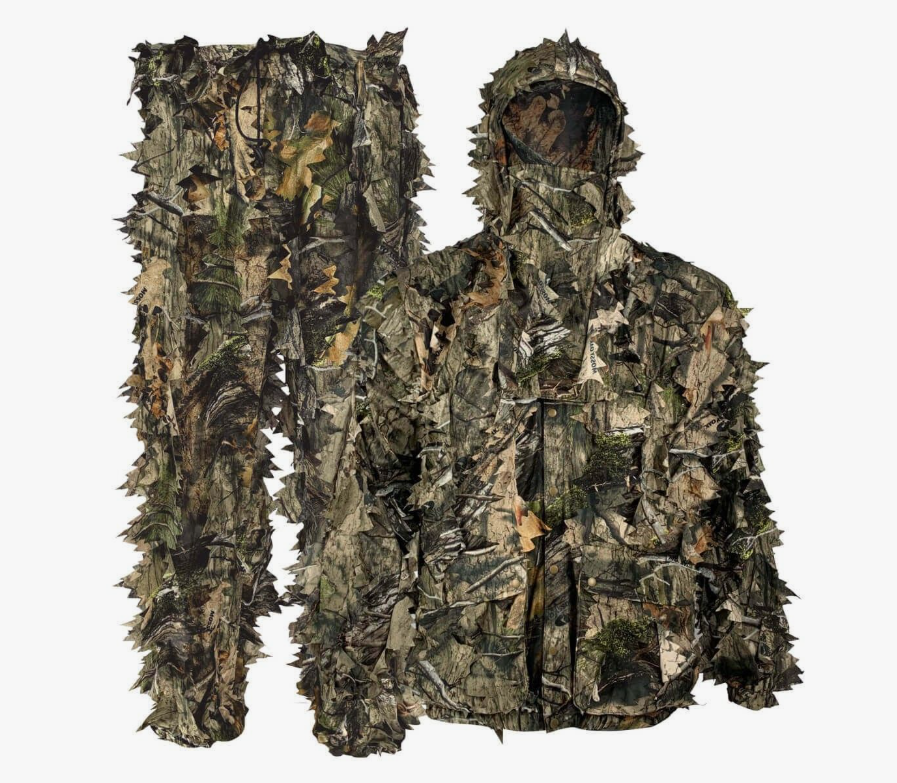
A turkey hunting leafy suit can be a practical addition to a hunter’s equipment when reducing the visible human outline is an important part of field preparation. Turkey hunting often involves remaining still for extended periods while working within woodland, brush, grass, and other natural surroundings. Conventional camouflage can help coordinate clothing colors with the environment, but three-dimensional leafy elements add texture and irregularity that can further break up the recognizable shape of the body. For hunters who spend significant time moving carefully between locations or waiting in a selected position, suitable concealment clothing can contribute to a more practical and comfortable setup.
Choosing a turkey hunting leafy suit requires consideration of more than pattern and appearance. Hunters may encounter changing temperatures, dense vegetation, uneven terrain, and long periods of stationary observation. Clothing that is lightweight, breathable, quiet during movement, and flexible enough for different positions can be easier to use throughout a hunting session. Buyers should also consider coverage, sizing, durability, and compatibility with other equipment. Evaluating these factors before purchasing can help both experienced hunters and newcomers select camouflage clothing that suits their environment and intended use.
Understanding Leafy Camouflage for Turkey Hunting
Leafy camouflage is designed to disrupt the recognizable outline of the wearer by adding visual texture around the body. A printed camouflage pattern can help blend colors with surrounding vegetation, but the shape of a person may still remain noticeable, particularly against a relatively uniform background. Three-dimensional leafy elements create irregular edges that can make the overall silhouette less consistent with the surrounding landscape. This can be particularly useful in environments containing leaves, grasses, branches, and natural shadows. However, camouflage is only one part of effective field concealment. Positioning, movement, exposed skin, and environmental conditions can all affect visibility. Hunters should therefore use camouflage clothing as part of a broader approach to careful and controlled movement.
Why the Right Clothing Matters for Turkey Hunting
Turkey hunting can require a combination of walking and prolonged periods of stillness, making clothing performance especially important. A hunter may cover considerable ground before reaching a suitable location and then remain in one position while observing the surroundings. Clothing that is too heavy, restrictive, or noisy can become inconvenient during this transition. Breathability is useful when walking in warmer weather, while sufficient room for layering can be valuable during cooler mornings. Fabric noise should also be considered because unnecessary rustling can become noticeable when the surrounding environment is quiet. The right hunting clothing should therefore balance concealment with mobility and comfort rather than focusing on visual appearance alone.
Key Features to Consider Before Buying
When selecting leafy camouflage clothing, buyers should examine several practical features. Lightweight construction can reduce fatigue during longer walks, while breathable materials may make extended use more comfortable in warmer conditions. A suitable fit should provide freedom of movement without creating excessive loose material that can catch on branches or brush. Durability is also important because hunting environments may involve contact with vegetation, rough surfaces, and changing weather. Coverage should be evaluated carefully, including whether the garment works effectively with separate face, neck, and hand protection. Hunters should also consider how easily they can sit, kneel, turn, reach for equipment, and change positions while wearing the garment. Testing these movements before a hunting trip can reveal practical limitations that may not be obvious during a simple fitting.
Matching Camouflage to Turkey Hunting Terrain
Turkey habitats can vary widely, so camouflage should be selected with the intended environment in mind. Dense woodland, open fields, brushy areas, and tall grass can each present different visual backgrounds. Seasonal changes may also alter the colors and textures found within the same hunting location. A camouflage system that looks natural among fresh spring vegetation may appear less appropriate in a landscape dominated by dry grass or fallen leaves. Hunters should consider where they normally hunt and the seasonal conditions they are likely to encounter. Those who regularly move between different environments may prefer a versatile design that can work across several types of terrain. The goal is to create a natural visual transition between the hunter and the immediate surroundings rather than simply choosing the most visually complex pattern available.
Comfort, Mobility, and Weather Considerations
Comfort can have a significant effect on the practicality of hunting clothing during long sessions. Hunters may need to remain seated or crouched for extended periods, so clothing should allow natural movement without creating pressure or restriction. Lightweight materials can make carrying and wearing the garment easier, while appropriate ventilation can help manage heat during active movement. In cooler conditions, the camouflage layer should provide enough room for suitable base layers and insulation. Hunters should also think about how the garment interacts with backpacks, footwear, and other equipment. Before relying on new clothing in the field, it is useful to wear it during ordinary practice activities such as walking, sitting, kneeling, and reaching. This can help identify problems with fit, mobility, or fabric noise before they become inconvenient outdoors.
Creating a Complete Turkey Hunting Camouflage Setup
A complete concealment setup should account for areas that remain visible even when the main body is covered. Hands, facial features, and exposed neck areas can create noticeable visual contrasts in natural surroundings. Depending on the conditions, hunters may consider complementary accessories such as gloves, face coverings, or neck protection. Additional concealment equipment may also be useful for hunters who spend substantial time in a fixed location. However, adding equipment should be approached practically because unnecessary accessories can increase weight and restrict movement. Every component should serve a useful purpose and work comfortably with the rest of the setup. Hunters should test the complete arrangement before heading into the field to make sure they can move safely, access necessary equipment, and maintain a comfortable position.
Durability and Care of Leafy Hunting Gear
Outdoor hunting clothing can experience repeated exposure to dirt, moisture, vegetation, and physical friction. For that reason, durability and maintenance should be considered alongside camouflage performance. Buyers should inspect construction details such as seams, closures, fabric, and attached leafy elements before purchasing. Proper cleaning and storage are equally important because specialized camouflage materials may require more careful handling than ordinary outdoor clothing. After use, allowing the garment to dry appropriately before storage can help maintain its condition. Regular inspection can also reveal loose components or damaged sections that may need attention before the next outing. Taking care of camouflage clothing can help preserve its practical characteristics and extend its useful life.
Conclusion
Selecting a turkey hunting leafy suit involves balancing concealment with the practical demands of turkey hunting. Hunters should consider terrain, seasonal vegetation, weight, breathability, mobility, fabric noise, coverage, fit, and durability before choosing their equipment. Three-dimensional leafy construction can help disrupt the human outline, but effective field concealment also depends on sensible positioning and controlled movement. Complementary accessories may provide additional coverage for visible areas such as the face and hands, while proper maintenance can help keep the clothing ready for repeated outdoor use. By evaluating camouflage gear according to actual hunting conditions rather than appearance alone, hunters can build a comfortable and practical setup that supports responsible preparation in the field.