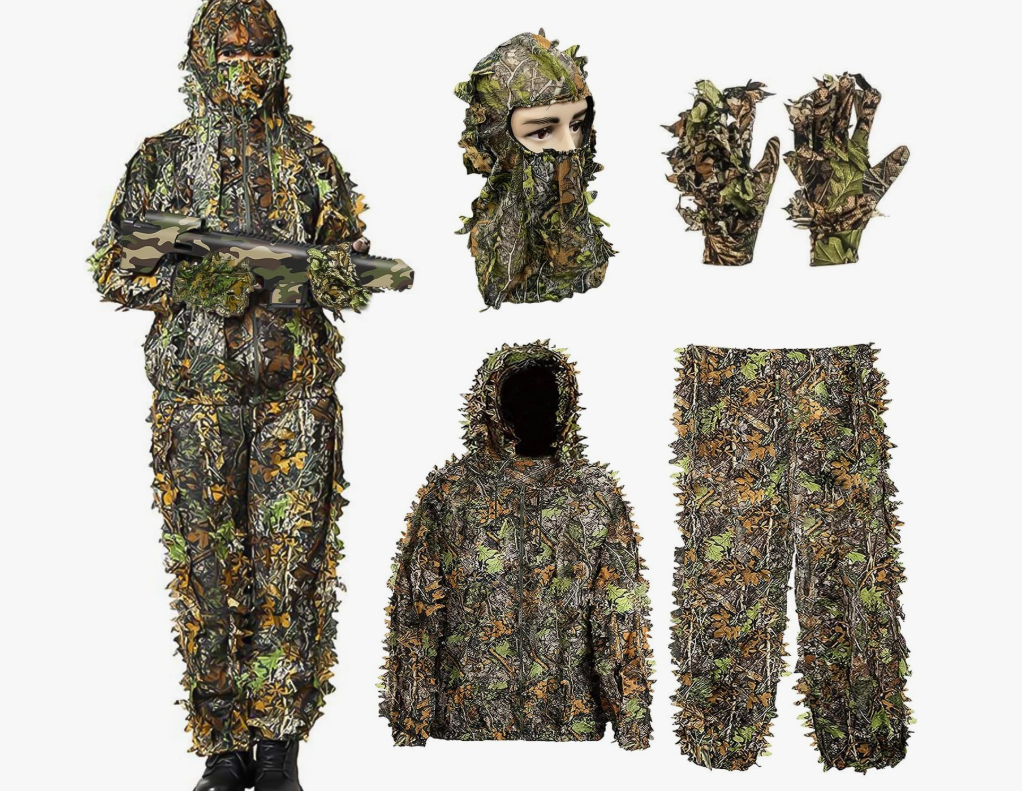
A leafy camo suit is designed to help hunters and outdoor enthusiasts reduce their visible outline in natural environments. Unlike ordinary camouflage clothing that relies primarily on printed patterns, leafy designs add texture and irregular shapes around the body, helping break up the recognizable human silhouette. This can be particularly useful in wooded areas, grasslands, fields, and other environments where natural vegetation creates complex backgrounds. As hunters spend long hours outdoors, they increasingly look for concealment clothing that offers more than an appropriate appearance, with comfort, mobility, breathability, and practical coverage becoming important parts of the buying decision.
Interest in a leafy camo suit also extends beyond traditional hunting. Wildlife observers, outdoor photographers, guides, and other field users may benefit from clothing designed to reduce visual disturbance while allowing natural movement. However, choosing effective camouflage requires attention to the environment and the conditions in which the clothing will be used. Factors such as seasonal vegetation, temperature, fabric noise, garment weight, fit, and the amount of movement involved can all influence how useful a camouflage system becomes in practice.
Understanding Leafy Camouflage and Visual Concealment
The primary purpose of leafy camouflage is to disrupt the shape that makes a person immediately recognizable. Human beings naturally form a familiar outline, and simply matching the color of nearby vegetation does not necessarily eliminate that outline. Three-dimensional leafy elements can create additional visual irregularity, making the overall shape less uniform. This approach can be especially useful when a hunter is positioned among vegetation where leaves, grass, branches, and shadows naturally overlap. Effective concealment still depends on movement and positioning, however. Even highly textured clothing cannot compensate for sudden motion or poor positioning. For this reason, camouflage clothing should be viewed as one part of a broader field strategy that includes careful movement, appropriate positioning, and awareness of surrounding conditions.
Why Hunting Clothing Needs More Than a Camouflage Pattern
Hunting often involves long periods of standing, walking, sitting, kneeling, or remaining still, so clothing must accommodate different types of movement. A garment that looks effective but restricts mobility can become inconvenient during an extended outing. Likewise, heavy or poorly ventilated clothing may become uncomfortable when temperatures rise. Hunters should therefore evaluate camouflage apparel according to the demands of their specific activity rather than selecting it based solely on visual appearance. Fabric noise is another consideration because unnecessary rustling can be noticeable in quiet environments. A practical hunting garment should allow the wearer to move naturally while minimizing avoidable distractions. Good clothing should also work alongside backpacks, hunting equipment, footwear, and additional layers without creating excessive bulk.
Important Features to Consider Before Buying
When selecting camouflage clothing, buyers should examine several practical characteristics. Lightweight construction can be valuable for users who walk considerable distances, while breathable materials may be preferable in warm or humid conditions. A suitable fit should provide enough room for natural movement and, where necessary, additional clothing underneath without becoming excessively loose. Durability also matters because hunting environments may involve branches, brush, uneven ground, and repeated outdoor use. Buyers should pay attention to the garment’s coverage as well, since exposed areas such as the hands, face, and neck can remain visually noticeable even when the main clothing blends effectively with the surroundings. Accessories such as gloves, face coverings, and neck protection can therefore complement the main camouflage garment and create a more consistent overall appearance.
How to Match Leafy Camouflage to Different Environments
No single camouflage design is equally appropriate for every environment. A hunter moving through dense green vegetation may have different concealment requirements from someone hunting in dry grassland, autumn woodland, or a mixed landscape. Seasonal changes can also alter the dominant colors and textures of an area, making environmental conditions an important consideration when selecting camouflage. Before purchasing, users should think about where they normally hunt, the season in which they are most active, and whether they spend most of their time moving or remaining stationary. A camouflage design that complements the local surroundings can provide a more natural visual appearance than one selected simply because it looks attractive in isolation. Matching clothing to the actual field environment is therefore one of the most practical steps a buyer can take.
Comfort and Mobility During Extended Outdoor Use
Comfort becomes increasingly important as time in the field increases. Hunters may spend several hours wearing the same clothing, sometimes while carrying additional equipment or navigating uneven terrain. A useful camouflage garment should permit natural movement of the arms, legs, and torso without unnecessary restriction. Ventilation can help manage heat during active movement, while lightweight construction may reduce fatigue. At the same time, clothing should provide enough coverage for the expected weather and terrain. Before using new gear during an important outing, it is sensible to test it through ordinary movements such as walking, crouching, sitting, reaching, and climbing. This can reveal whether the garment catches on surrounding vegetation, interferes with equipment, or produces more noise than expected.
Building a Complete Camouflage Setup
Effective concealment is rarely limited to one garment. The face, hands, and equipment can create noticeable visual contrasts even when the body is well covered. Hunters may therefore consider complementary items such as gloves, face coverings, neck protection, or other concealment accessories depending on their environment and activity. A portable blind or additional camouflage material may also be appropriate when remaining in a fixed position for extended periods. The key is to build a setup that remains practical rather than adding unnecessary equipment. Every additional item contributes weight and can affect mobility, so users should consider whether each component serves a genuine purpose. Testing the complete setup before entering the field can help identify problems with fit, movement, visibility, or equipment access.
Choosing Quality Hunting Gear for Long-Term Use
Quality should be evaluated through practical performance rather than appearance alone. Outdoor clothing is exposed to dirt, moisture, vegetation, repeated movement, and changing weather, so construction and material selection can influence how well it performs over time. Buyers should consider stitching, closures, fabric characteristics, fit, and care requirements before making a purchase. It is also useful to think about how frequently the garment will be used. Occasional users may prioritize versatility and ease of storage, while frequent hunters may place greater emphasis on durability and specialized features. Selecting clothing that matches actual usage patterns can help prevent spending money on features that are unnecessary while ensuring important requirements are not overlooked.
Conclusion
A well-chosen leafy camo suit can be a practical addition to a hunter’s outdoor equipment when its design matches the environment, activity, and weather conditions. Three-dimensional texture can help disrupt the human outline, while suitable materials, comfortable construction, appropriate coverage, and quiet movement contribute to a more functional field experience. Buyers should consider terrain, seasonal vegetation, fit, weight, breathability, durability, and compatibility with additional concealment accessories before making a decision. Most importantly, camouflage should complement responsible hunting practices rather than replace careful positioning and awareness. By evaluating clothing according to real-world requirements instead of appearance alone, hunters can select outdoor gear that supports greater comfort, practical concealment, and confident preparation in the field.