Shoulder and elbow pain can make everyday activities such as lifting, reaching, dressing, working, or exercising surprisingly difficult. Whether your pain started after an injury, sports activity, repetitive movement, or gradually developed over time, the right physiotherapy approach can help improve movement, strength, and function.
Shoulder pain physiotherapy focuses on identifying the underlying cause of discomfort and creating a treatment plan based on your symptoms, lifestyle, and physical needs. At Physio Asia, physiotherapy can help people manage shoulder and elbow conditions while working towards a safer and more comfortable return to daily activities.
Common Causes of Shoulder Pain
The shoulder is a highly mobile joint, which allows a wide range of movement but can also make it vulnerable to strain and injury. Some common causes of shoulder pain include:
- Rotator cuff injuries
- Shoulder impingement
- Frozen shoulder
- Shoulder instability
- Tendon irritation
- Sports injuries
- Muscle strains
- Joint stiffness
- Poor posture
- Repetitive overhead activities
Pain may appear when you raise your arm, reach behind your back, carry an object, or sleep on the affected side. Some people may also experience weakness, stiffness, clicking, or reduced range of motion.
A physiotherapy assessment can help determine which movements are affected and what factors may be contributing to your symptoms.
How Shoulder Pain Physiotherapy Can Help
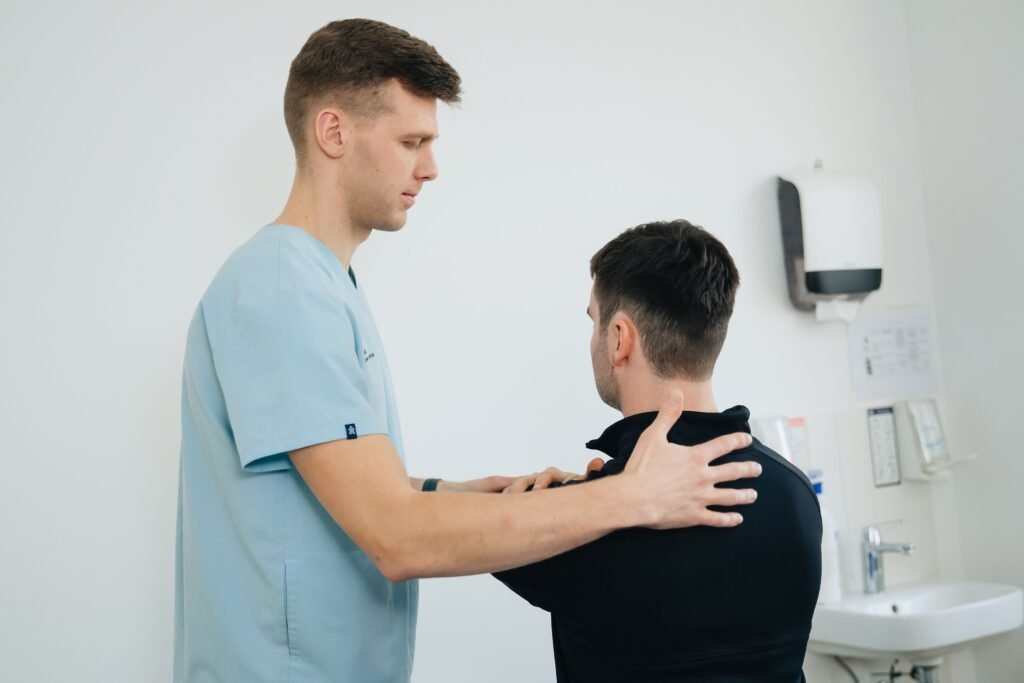
Shoulder pain physiotherapy is designed to improve mobility, strength, coordination, and confidence in using the affected arm. Your physiotherapist may first assess your posture, shoulder movement, muscle strength, joint mobility, and functional limitations.
Depending on your condition, treatment may include:
1. Manual Therapy
Hands-on techniques may be used to improve joint and soft-tissue mobility. These techniques can help reduce stiffness and make certain shoulder movements more comfortable.
2. Therapeutic Exercises
A personalised exercise programme can help strengthen the muscles supporting the shoulder. Exercises may focus on the rotator cuff, shoulder blade muscles, upper back, and surrounding areas.
3. Mobility Exercises
If your shoulder movement is restricted, specific stretching and mobility exercises can gradually improve your range of motion.
4. Posture and Movement Advice
Poor movement habits and prolonged sitting can sometimes contribute to discomfort. Your physiotherapist may provide advice on posture, workstation setup, lifting techniques, and daily activities.
5. Activity Modification
Continuing activities that repeatedly aggravate the shoulder may delay recovery. Physiotherapy can help you understand which activities should be temporarily modified while maintaining appropriate movement and exercise.
Shoulder Joint Pain Physiotherapy
Shoulder joint pain physiotherapy can be useful when pain is accompanied by stiffness, reduced movement, or difficulty performing everyday tasks.
Conditions such as frozen shoulder, arthritis, rotator cuff problems, and certain injuries can affect how the shoulder joint moves. Treatment is therefore not simply about reducing pain. The goal is also to restore useful movement and help you return to normal activities.
For example, someone struggling to reach an overhead shelf may need a different treatment approach from an athlete experiencing pain during throwing or a person having difficulty putting on a shirt.
A personalised rehabilitation programme considers your specific symptoms and functional goals.
Exercises for Shoulder Pain
Exercises are often an important part of shoulder rehabilitation. The appropriate exercises depend on the cause and severity of your symptoms.
A physiotherapist may recommend exercises involving:
- Gentle shoulder mobility
- Rotator cuff strengthening
- Scapular stabilisation
- Upper-back strengthening
- Stretching
- Resistance-band exercises
- Functional movement training
Exercises should be performed correctly and progressed gradually. Doing too much too soon can aggravate symptoms, while avoiding movement completely may contribute to stiffness and weakness.
For this reason, professional assessment can be helpful when shoulder pain persists or interferes with normal activities.
Elbow Pain and Its Common Causes
Elbow pain can affect people of all ages, particularly those who participate in sports, strength training, manual work, or activities involving repetitive arm movements.
Common causes include:
- Tennis elbow
- Golfer’s elbow
- Tendon irritation
- Muscle strain
- Sports injuries
- Joint stiffness
- Overuse injuries
- Nerve-related irritation
Elbow pain may occur around the outside or inside of the joint and can sometimes extend into the forearm or hand. You may notice pain while gripping, lifting, typing, playing sports, or performing repetitive movements.
Elbow Pain Physiotherapy Singapore
If you are looking for elbow pain physiotherapy Singapore, physiotherapy can help identify movement and strength problems that may be contributing to your symptoms.
Treatment may include manual therapy, stretching, strengthening exercises, activity modification, and gradual return-to-sport or work programmes.
For conditions such as tennis elbow, rehabilitation often focuses on improving the strength and capacity of the muscles and tendons around the forearm. The programme can be progressed according to your symptoms and daily demands.
The aim is not only to manage current discomfort but also to improve the elbow’s ability to tolerate everyday and sporting activities.
When Should You See a Physiotherapist?
Not every episode of shoulder or elbow pain requires immediate physiotherapy. However, professional assessment may be helpful if your symptoms:
- Continue for several days or weeks
- Keep returning
- Affect your sleep
- Limit shoulder or elbow movement
- Make lifting difficult
- Affect work or sports performance
- Are associated with weakness
- Started after an injury
Severe pain, significant swelling, obvious deformity, or a serious injury should be assessed promptly by an appropriate healthcare professional.
What to Expect During Physiotherapy
Your first physiotherapy appointment generally begins with an assessment of your symptoms and medical or activity history. The physiotherapist may examine your range of motion, strength, posture, joint movement, and functional activities.
Based on the assessment, a treatment and rehabilitation plan can be developed. This may include hands-on treatment, exercises, education, and recommendations for modifying activities.
As your condition improves, exercises can be gradually progressed to help you regain strength and confidence.
Preventing Future Shoulder and Elbow Problems
After recovering from an injury, maintaining strength and mobility can help support long-term joint function. Consider incorporating regular strengthening exercises and taking breaks from repetitive activities.
Good technique is also important during exercise and sports. Increasing training volume gradually rather than making sudden changes can help your body adapt to new demands.
If your work involves prolonged computer use or repetitive arm movements, adjusting your workstation and taking regular movement breaks may also be useful.
Get Professional Help for Shoulder and Elbow Pain
Shoulder and elbow problems can interfere with work, exercise, sports, and simple daily activities. The right physiotherapy programme can help address pain, stiffness, weakness, and movement limitations while supporting a gradual return to normal function.
If you are experiencing persistent shoulder symptoms, shoulder pain physiotherapy and shoulder joint pain physiotherapy may help you work towards better movement and strength. For people experiencing elbow problems, elbow pain physiotherapy Singapore can provide a structured approach to rehabilitation.
Learn more about shoulder physiotherapy and treatment options at Physio Asia and take the next step towards managing your shoulder or elbow pain.