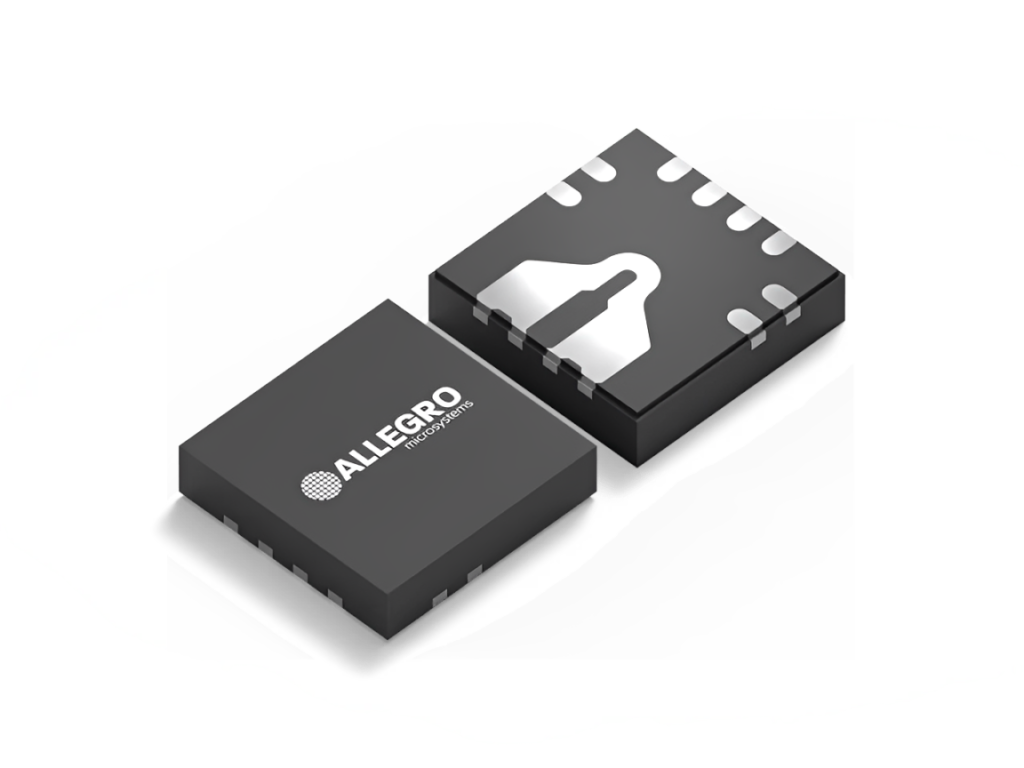
Sensor ICs
Sensor ICs give electronic systems the ability to detect what is happening around them. Instead of operating only from fixed instructions, devices equipped with Sensor ICs can measure real conditions and respond according to changing environments.
These integrated circuits can detect physical properties such as temperature, pressure, movement, magnetic fields, light intensity, current, proximity, and orientation. After detecting a change, they convert it into an electrical signal that a controller or processor can understand.
This capability makes Sensor ICs valuable in modern equipment where fast decisions, accurate monitoring, and automatic control are required. They can be found in industrial machinery, smart appliances, vehicles, portable devices, energy systems, robotics, building controls, and advanced electronic instruments.
What Happens Inside Sensor ICs During Measurement?
A Sensor IC typically contains more than a simple sensing element. Depending on its design, it may include several circuits that work together to turn a physical condition into dependable data.
The internal process may involve:
- Detecting a physical change
- Producing an initial electrical signal
- Amplifying the signal
- Filtering unwanted interference
- Correcting measurement variations
- Converting analogue information into digital values
- Sending the measurement to another device
This integrated signal path is one reason Sensor ICs are useful in compact electronic designs.
By combining several functions inside one package, manufacturers can reduce external circuitry and create more streamlined systems.
Why Is Sensitivity Important in Sensor ICs?
Sensitivity determines how effectively a sensor reacts to small changes in the parameter being measured.
A highly sensitive device may detect very small changes in temperature, magnetic field strength, pressure, or movement. However, the required sensitivity depends on the application.
For example, a precision measurement instrument may need to detect extremely small variations, while a simple safety switch may only need to determine whether a condition is above or below a defined threshold.
Selecting the correct sensitivity helps prevent unnecessary complexity while ensuring that the system receives useful and dependable information.
How Does Resolution Affect Sensor ICs Performance?
Resolution describes the smallest change that a sensing system can distinguish.
High-resolution Sensor ICs can provide more detailed measurement information. This can be beneficial in applications involving precision motion, environmental monitoring, laboratory instruments, industrial control, and advanced automation.
However, resolution should be considered together with accuracy. A device may provide highly detailed output values, but those values are only useful if they represent the actual condition with sufficient accuracy.
Designers should therefore evaluate both characteristics before selecting a component.
Why Do Response Times Matter for Sensor ICs?
Response time defines how quickly Sensor ICs react when the measured condition changes.
Fast response can be critical in applications where delays could affect performance or safety. Motor control, protection circuits, automated machinery, and high-speed motion systems often require rapid sensing.
Slower response may be acceptable for applications such as room temperature monitoring or general environmental measurement, where conditions change gradually.
Choosing an appropriate response speed allows the sensing system to match the behaviour of the equipment it controls.
How Are Sensor ICs Used in Motor and Motion Systems?
Motor-driven equipment depends on accurate information about movement, speed, current, and position.
Sensor ICs can provide feedback that allows control electronics to regulate motor operation more effectively.
They may be used to monitor:
- Shaft position
- Rotational direction
- Motor speed
- Electrical current
- Mechanical movement
- Temperature
- Alignment
This information is valuable in industrial drives, robotics, fans, pumps, actuators, conveyors, and electrically powered transportation systems.
Closed-loop motor control uses feedback from sensors to continually adjust output and maintain the desired operating condition.
What Is the Role of Sensor ICs in Safety Systems?
Safety functions often depend on detecting abnormal conditions before they become serious problems.
Sensor ICs can monitor changes that may indicate excessive heat, electrical overload, unexpected movement, pressure loss, incorrect position, or environmental danger.
A control system can then react by:
- Reducing power
- Activating an alarm
- Stopping machinery
- Disconnecting a circuit
- Starting cooling equipment
- Switching to a safe operating mode
Reliable sensing is therefore an important part of many electronic protection strategies.
How Do Sensor ICs Help Reduce Energy Consumption?
Energy efficiency has become an important design consideration, especially for portable electronics, battery-operated equipment, and wireless sensing devices.
Sensor ICs can help reduce power consumption in several ways.
Some devices operate using very low supply currents. Others include sleep modes that allow them to remain inactive until a measurement is required.
They may also use programmable thresholds. Instead of continuously sending data, the device can alert the main processor only when a meaningful change occurs.
This reduces unnecessary processor activity and helps conserve energy.
Which Sensor ICs Are Useful for Smart Buildings?
Smart buildings depend on continuous environmental and occupancy information to operate efficiently.
Sensor ICs can support automated control of lighting, ventilation, heating, cooling, security, and energy management systems.
Useful sensing functions include:
- Temperature measurement
- Humidity detection
- Ambient light monitoring
- Motion sensing
- Presence detection
- Air pressure monitoring
- Magnetic position detection
For example, occupancy information can allow lighting and climate systems to operate only when spaces are being used.
Environmental measurements can also help building management systems maintain suitable indoor conditions while avoiding excessive energy consumption.
How Are Sensor ICs Applied in Medical and Healthcare Equipment?
Electronic healthcare equipment often requires precise measurement of physical and environmental conditions.
Sensor ICs may be integrated into monitoring devices, diagnostic equipment, wearable electronics, temperature measurement systems, and pressure-based instruments.
Important requirements can include:
- High measurement stability
- Low power operation
- Compact dimensions
- Fast signal response
- Reliable output
- Suitable operating range
Wearable electronics benefit particularly from small Sensor ICs because several sensing functions can be incorporated into lightweight devices.
Why Is Operating Temperature Important When Choosing Sensor ICs?
Every Sensor IC is designed to operate within a specified temperature range.
Electronic systems installed in industrial, automotive, or outdoor environments may experience temperatures far beyond those found in typical indoor consumer devices.
Using a component outside its rated range can affect accuracy, reliability, and operating life.
Engineers should therefore compare the expected environment with the component specifications before making a selection.
Temperature effects are especially important when high measurement precision is required.
What Is the Difference Between Contact and Contactless Sensing?
Some sensing methods require physical interaction with the measured object, while others can operate without direct contact.
Contactless Sensor ICs may use magnetic, optical, capacitive, or other principles to detect position, movement, or proximity.
Contactless operation can offer several benefits:
- Reduced mechanical wear
- Longer operating life
- Faster detection
- Simplified maintenance
- Improved reliability in repetitive applications
This makes contactless sensing attractive for switches, motor systems, access controls, automation equipment, and positioning applications.
How Can Sensor ICs Support Condition Monitoring?
Condition monitoring involves observing equipment performance over time to detect signs of deterioration.
Sensor ICs can collect information about vibration, temperature, current, movement, and other operating conditions.
When measurement patterns begin to change, maintenance teams may be able to investigate before a complete failure occurs.
This approach can support:
- Preventive maintenance
- Reduced downtime
- Better equipment utilisation
- Earlier fault identification
- Improved operational planning
Connected monitoring systems can also transmit sensor data to remote platforms for further analysis.
What Should Be Considered Before Integrating Sensor ICs?
Successful sensor integration requires attention to more than the sensing parameter alone.
Designers should consider:
- Accuracy requirements
- Measurement range
- Sensitivity
- Resolution
- Power consumption
- Supply voltage
- Output format
- Communication interface
- Package type
- Mounting position
- Operating temperature
- Environmental exposure
- Response speed
The surrounding circuit should also be designed to minimise electrical noise and provide stable power to the sensing device.
Why Will Sensor ICs Remain Important in Future Electronics?
Electronic systems are becoming increasingly connected, automated, and responsive. These systems require accurate information before they can make intelligent decisions.
Sensor ICs provide that information by translating real-world conditions into measurable electrical data.
As robotics, smart infrastructure, electric transportation, industrial automation, wearable devices, energy management, and connected equipment continue to develop, demand for compact and efficient sensing solutions will remain strong.
Conclusion
Sensor ICs are fundamental components for electronics that must measure, interpret, and respond to real-world conditions. Their ability to integrate sensing, signal processing, conversion, and communication within compact packages makes them suitable for a wide range of modern applications.
From motor control and building automation to medical equipment, condition monitoring, energy management, and protection systems, Sensor ICs provide the information required for precise electronic decision-making.
Choosing the right Sensor ICs involves balancing accuracy, sensitivity, resolution, response time, power consumption, operating environment, and communication requirements. When these factors are matched correctly, sensing technology can significantly improve the intelligence, efficiency, safety, and reliability of electronic systems.