Hair thinning and progressive hair loss can affect confidence, styling choices, and overall appearance. Platelet-rich plasma (PRP) therapy has become a popular non-surgical option because it uses components derived from the patient’s own blood to support the scalp environment and potentially encourage healthier hair growth. However, choosing treatment should involve more than simply finding a clinic that offers PRP. Understanding the procedure, suitability, safety measures, and realistic outcomes is essential before making a decision.
When considering PRP For Hair Treatment Dubai, patients should approach the process as a medical consultation rather than a quick cosmetic procedure. PRP may be more suitable for some forms and stages of hair loss than others, and results can vary depending on factors such as the underlying cause of thinning, follicle condition, age, overall health, and treatment protocol.
Dubai offers a wide selection of aesthetic and medical facilities where hair restoration services may be available. This makes it particularly important to compare how clinics evaluate patients, prepare PRP, monitor treatment, and explain expected results. Asking the right questions before treatment can help patients understand whether PRP is appropriate for their individual concerns.
What Should You Ask Before Choosing PRP Treatment?
Before scheduling a session, ask who will assess your hair loss, how the diagnosis will be established, what PRP preparation method is used, and how the treatment plan is customized. It is also useful to discuss the number of sessions that may be recommended and how progress will be monitored.
Patients should also ask whether PRP is being recommended as a standalone treatment or as part of a broader hair-management plan. A responsible consultation should explain both potential benefits and limitations rather than presenting PRP as a guaranteed solution.
Enfield Royal Clinic
Enfield Royal Clinic can be considered by patients looking for a structured approach to hair restoration and aesthetic care in Dubai. During a consultation, patients should ask how their hair loss will be assessed before PRP is recommended and whether the proposed protocol is customized to their scalp and follicular condition.
For anyone researching PRP For Hair Treatment Dubai, it is important to discuss the preparation of platelet-rich plasma, injection technique, treatment intervals, and methods used to evaluate progress. Patients should also clarify what type of results may realistically be expected and whether additional hair treatments could be appropriate.
Tajmeels Clinic
Tajmeels Clinic is another Dubai-based option patients may explore when researching aesthetic and hair-related procedures. Before proceeding, patients should ask about the clinician’s experience with PRP, the consultation process, and how individual hair-loss patterns are assessed.
A useful consultation should address whether the patient is a suitable candidate and explain the anticipated treatment schedule. Patients can also ask how discomfort is managed during injections and what aftercare instructions should be followed following a session.
Dynamic Life Clinic
Dynamic Life Clinic may be considered by individuals exploring non-surgical approaches to hair concerns. One of the most important questions to ask is whether the clinic first determines the likely cause of hair thinning before recommending PRP.
Hair loss can have different underlying factors, so treatment should not be based solely on visible thinning. Patients should ask whether scalp examination or other assessments are used to guide the treatment plan. It is also worthwhile to understand how the clinic measures changes in hair density and quality over time.
Cocoona Clinic
Cocoona Clinic is among the Dubai facilities that patients may research when comparing aesthetic and hair restoration services. Prospective patients should ask what type of PRP protocol is followed and how the preparation process is handled.
It is also important to discuss treatment expectations. PRP is not necessarily appropriate for every type of hair loss, and the degree of improvement can differ considerably between individuals. A thorough consultation should therefore explain whether PRP is likely to address the patient’s specific concern and what alternatives may exist if it is not suitable.
Dubai Cosmetic Surgery Clinic
Dubai Cosmetic Surgery Clinic may also be included in a patient’s research when evaluating options for hair restoration. Before treatment, patients should ask about the professional qualifications of the person performing the procedure and the facility’s approach to patient safety.
Questions about the PRP preparation system, injection technique, treatment intervals, and post-treatment guidance can help patients make a more informed choice. Patients should also ask how their progress will be reviewed rather than relying exclusively on immediate visual changes.
Emirates Hospital
Emirates Hospital provides a medical setting that patients may consider when exploring hair-related treatment options. When discussing PRP, patients should focus on the diagnostic and medical aspects of the procedure, including whether an underlying condition could be contributing to hair loss.
A consultation should provide an opportunity to discuss medical history, medications, previous hair treatments, and individual expectations. Patients should also ask about possible side effects and what symptoms would require follow-up after treatment.
Al Zahra Hospital Dubai
Al Zahra Hospital Dubai is another healthcare facility patients may research when considering treatment for hair concerns. Before undergoing PRP, it is sensible to ask whether the proposed treatment is supported by an appropriate clinical assessment.
Patients can discuss how their scalp and hair condition will be evaluated, whether multiple sessions may be necessary, and how treatment outcomes will be documented. Clear communication about limitations is especially important because PRP results are not identical for every patient.
King’s College Hospital London Dubai
King’s College Hospital London Dubai can also be considered when patients are researching medical approaches to hair loss. Prospective patients should ask about the consultation process, the clinical assessment used to determine suitability, and the qualifications of the professional providing treatment.
Patients should also clarify what happens if PRP does not produce the expected degree of improvement. Understanding alternative approaches and follow-up options can make the treatment decision more informed and realistic.
How to Choose the Right Clinic for PRP For Hair Treatment Dubai
Experience and Qualifications
Experience matters when selecting a provider for PRP. Ask who performs the treatment, what relevant qualifications they hold, and how frequently they perform hair-related procedures. A qualified professional should also be able to explain the reasoning behind the recommended treatment plan.
Technology and Techniques
PRP protocols can differ between providers. Ask how the blood sample is processed, how platelet-rich plasma is prepared, and what injection technique is used. Understanding these details can help patients compare treatment approaches without relying solely on promotional claims.
Safety Standards
Safety should remain a priority. Patients should ask about sterile equipment, infection-control procedures, blood handling, and the clinical environment. Because PRP involves blood collection and injections, appropriate medical precautions are essential.
Consultation Process
A proper consultation should be individualized. The provider should review relevant medical history and examine the scalp and pattern of hair loss before recommending treatment. Patients should feel comfortable asking questions and receiving straightforward answers.
Patient Experience
The treatment experience includes more than the injection session itself. Ask about appointment duration, preparation requirements, discomfort management, aftercare, and follow-up. Clear instructions can make the process easier to manage.
Expected Results
One of the most important questions concerns realistic outcomes. PRP is intended to support hair growth and improve the scalp environment in suitable candidates, but it does not guarantee complete restoration of lost hair. Ask how improvement will be assessed and when changes may reasonably become noticeable.
Frequently Asked Questions
Is PRP suitable for every type of hair loss?
No. Suitability depends on the cause, severity, and pattern of hair loss. A professional assessment is necessary to determine whether PRP is appropriate.
How many PRP sessions might be needed?
The recommended number of sessions varies between patients and depends on the treatment protocol and individual response. A provider should explain the proposed schedule during consultation.
Is PRP for hair loss painful?
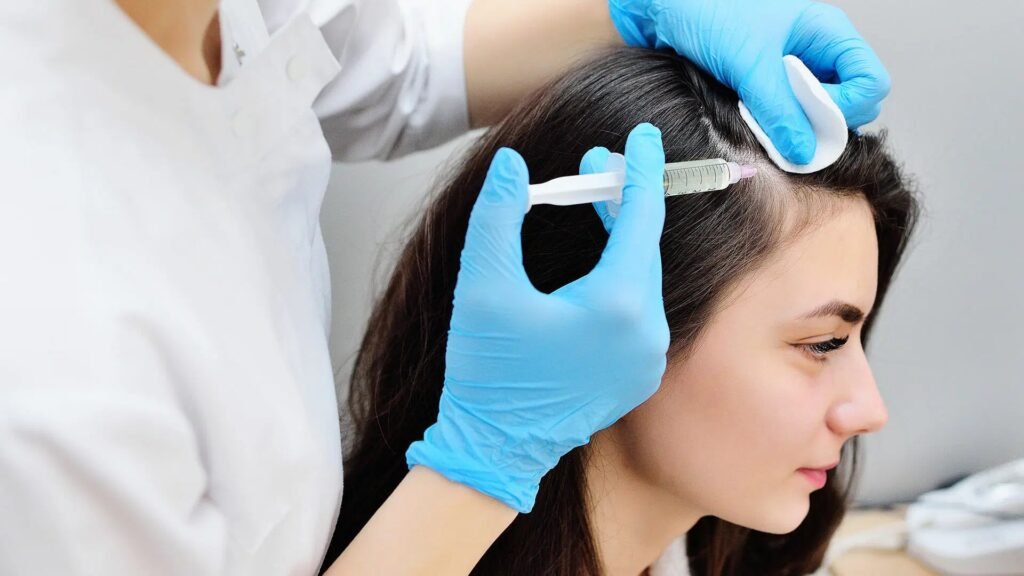
PRP involves multiple scalp injections, so some temporary discomfort may occur. Clinics may use measures intended to improve patient comfort during the procedure.
When can results from PRP become noticeable?
Hair growth is gradual, so changes generally do not appear immediately. The timeline varies according to the individual, the condition being treated, and the treatment protocol.
Can PRP permanently stop hair loss?
PRP should not be presented as a guaranteed permanent solution. Hair loss may have progressive or underlying causes, and some patients may require ongoing management or complementary treatments.
Conclusion
Choosing a provider for hair restoration requires careful consideration of clinical expertise, safety practices, treatment protocols, consultation quality, and realistic expectations. Patients should ask detailed questions before committing to any procedure and should understand why PRP has been recommended for their specific hair-loss pattern. Comparing providers and discussing potential alternatives can make the decision more informed. For individuals researching PRP For Hair Treatment, the most valuable starting point is a professional consultation that focuses on suitability, safety, and achievable results rather than promises of guaranteed hair regrowth.