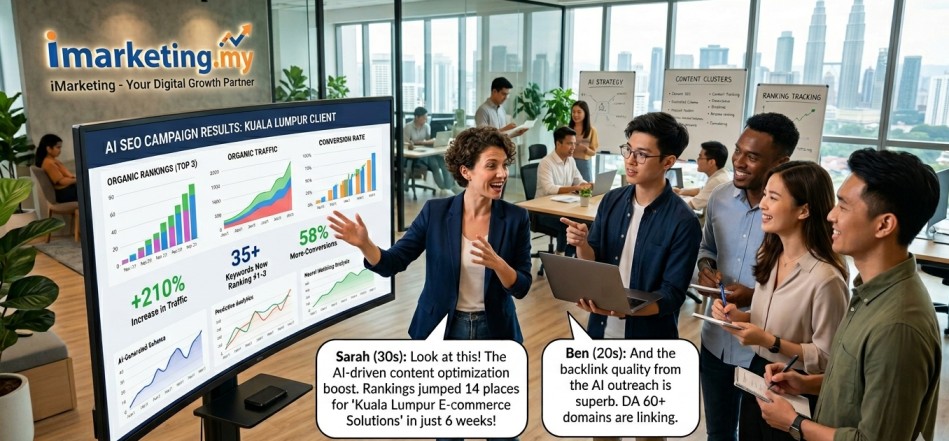
Small business owners constantly look for ways to gain an edge in search rankings without exhausting their limited resources. The rapid integration of seo ai tools has fundamentally changed how companies approach their online presence. Tasks that once required an entire team of specialists can now be accelerated with software, sparking curiosity among entrepreneurs.
You might wonder if investing time and budget into artificial intelligence is a smart move for a smaller operation. Many business owners fear that AI requires immense technical knowledge or a massive budget. Others worry that using automated tools might result in penalisation from search engines.
This post explores the realities of artificial intelligence in search engine optimisation. We will examine the concrete benefits, the potential drawbacks, and how smaller teams can successfully implement these tools to drive organic traffic.
Understanding AI SEO: Beyond the Buzzwords
Artificial intelligence in search engine optimisation involves using machine learning algorithms and natural language processing to analyse data, predict trends, and automate digital marketing tasks. Rather than manually cross-referencing spreadsheets to find keyword gaps, software can do the heavy lifting in seconds.
These systems learn from vast amounts of search data. They can identify search intent, group related topics, and even suggest structural improvements for your web pages. Essentially, the software acts as a highly capable research assistant that never sleeps.
Benefits for Small Businesses: Efficiency, Cost-Effectiveness, and Niche Targeting
Using AI offers several distinct advantages for small businesses trying to compete with larger corporations.
Unlocking Operational Efficiency
Smaller teams simply do not have the hours to manually audit hundreds of web pages. Software can instantly scan your site for broken links, missing meta tags, and slow-loading images. This frees up your schedule so you can focus on running your business.
Cost-Effective Growth
Hiring a full-service marketing agency can stretch a small business budget to breaking point. Automated platforms offer a middle ground. They provide high-level insights and data analysis at a fraction of the cost of a dedicated consultant.
Finding Niche Opportunities
Large companies often dominate high-volume search terms. AI tools excel at identifying long-tail keywords and hyper-specific questions that your target audience is asking. By answering these specific questions, small businesses can capture highly qualified local or niche traffic.
Challenges and Limitations: The Human Element and Algorithm Volatility
Despite the clear advantages, relying entirely on automation comes with significant risks.
Search engines continually update their algorithms to prioritise helpful, human-written content. If a website relies entirely on unedited, AI-generated text, it risks being flagged as spam. The software often lacks nuance, empathy, and real-world experience. It cannot share a personal anecdote about a customer interaction or offer a unique, contrarian opinion based on industry expertise.
Furthermore, algorithms can hallucinate or pull outdated information. Business owners must always review and verify the outputs before publishing anything on their website.
Practical Applications: Tools and Strategies for Implementation
Implementing these systems does not require a degree in computer science. Small businesses can start by adopting a few targeted tools.
First, use AI-driven research software to build your content calendar. Platforms can analyse competitor websites and highlight the exact topics you need to cover to compete.
Second, leverage generative text tools to overcome writer’s block. You can prompt the software to generate blog outlines, suggest catchy headlines, or write first drafts of product descriptions. From there, your human writers can step in to inject brand voice, personality, and personal expertise.
Finally, use technical auditing tools. Many affordable SEO plugins and platforms use machine learning to provide weekly health checks for your website, alerting you to critical errors before they impact your rankings.
Case Studies: Small Businesses Thriving with AI SEO
Many independent businesses have successfully integrated these tools into their workflow.
A local plumbing service, for example, used AI to identify specific questions homeowners were asking about winter pipe maintenance. By generating outlines and writing helpful blog posts answering these exact queries, they saw a massive increase in local organic traffic.
Similarly, an independent online retailer used machine learning to optimise hundreds of product descriptions. The software identified missing keywords and suggested better formatting. This automated audit saved weeks of manual labour and resulted in higher visibility across search results.
The Future of AI in SEO: What to Expect Next
Search engines are actively testing generative experiences, where users receive AI-generated summaries right at the top of the results page. This shifts the focus from ranking for simple keywords to answering complex queries comprehensively.
Small businesses will need to focus on establishing strong topical authority. Providing deep, conversational answers to user questions will become even more critical as search behaviour becomes more conversational.
Making an Informed Decision for Your Business
Artificial intelligence is a powerful lever for small businesses looking to improve their search visibility. It drastically reduces the time required for research, technical auditing, and outlining content.
However, it is not a magic solution that runs entirely on autopilot. The most successful businesses use these tools to augment their human creativity, not replace it. By combining the speed of automation with genuine human expertise, your small business can build a sustainable, highly visible online presence. Take the time to experiment with a few affordable tools, measure your results, and scale your efforts as you see a return on your investment.