Buying a diamond online can be convenient, but it also requires careful attention. A photograph may show a beautiful stone, yet a picture alone cannot tell you whether the diamond matches its stated quality, whether the grading information is reliable, or whether you are receiving the stone described on the product page. Since diamonds can represent a significant purchase, verification should happen before payment rather than after delivery.
The good news is that online buyers do not need to be gemologists to make a sensible decision. By checking the diamond report, comparing its details, reviewing the seller, and understanding what the product description actually means, you can reduce uncertainty and buy with greater confidence. The same careful approach applies whether you are considering an engagement ring, a pair of earrings, or another piece from a jewellery brand such as ErayaSparkle.
Start With a Genuine diamond Grading Report
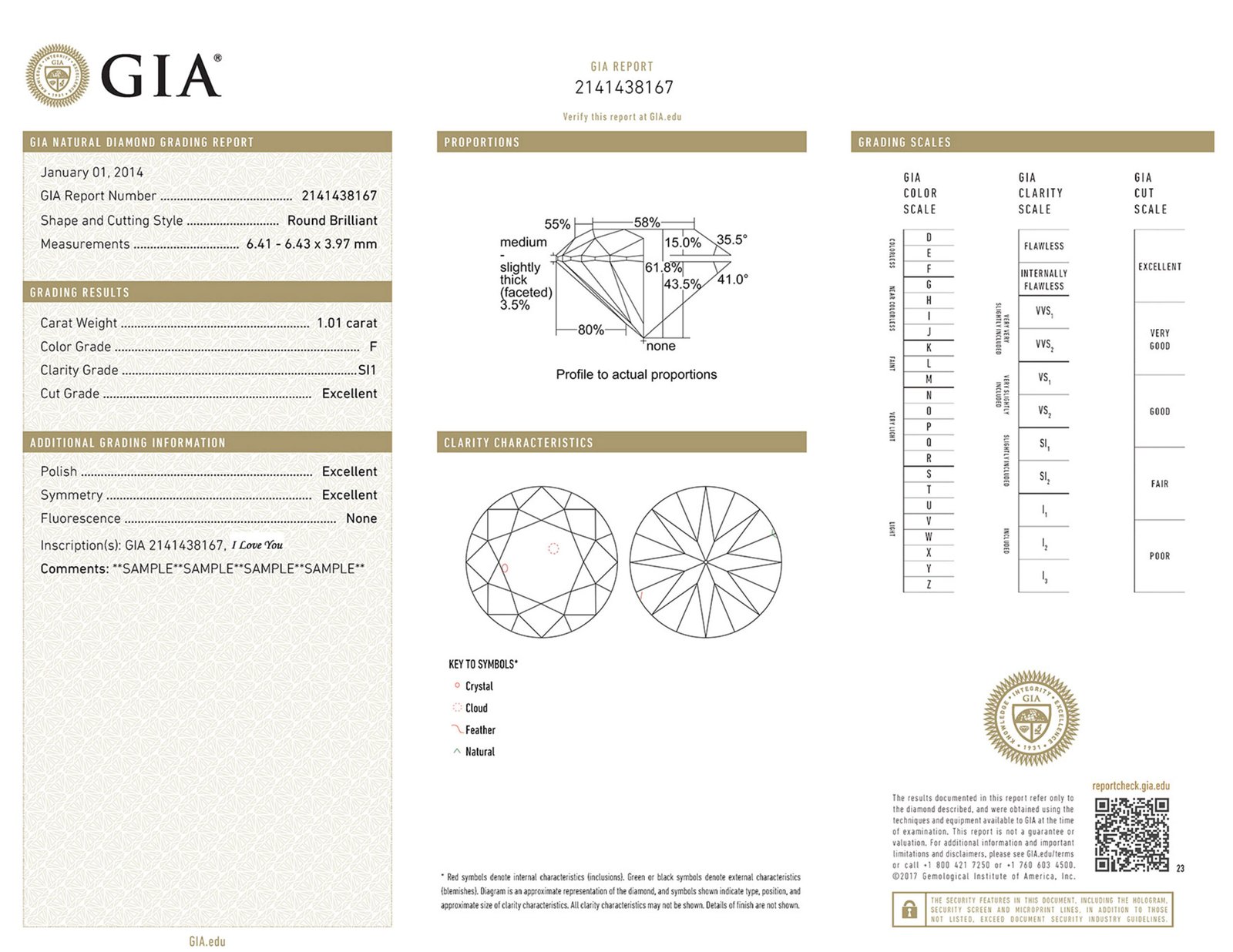
A diamond grading report is one of the most useful documents to examine before purchasing online. It records important characteristics of the stone, including its carat weight, color, clarity, cut, measurements, and shape. However, simply seeing the word “certified” on a product page should not be enough. The important question is who issued the report and whether the information can be independently checked.
Look for the report number and verify it through the issuing laboratory’s official database whenever that service is available. The information shown online should correspond with the diamond being offered. If the seller’s listing says one thing while the grading report says something different, pause before making the purchase. A reliable seller should be comfortable providing clear documentation instead of asking customers to accept unsupported claims.
Match the Diamond Details Carefully
Once you have the report, compare it with the product description. Start with the basic 4Cs: cut, color, clarity, and carat weight. These details influence both the appearance and value of a diamond, so even a small difference in the stated grade can matter. Do not assume that two diamonds with the same carat weight will look or perform the same way.
Measurements are another useful check. Compare the listed length, width, and depth with the information on the report. When a diamond has identifying information such as a laser inscription, that detail can provide another way to connect the physical stone with its grading documentation. These checks may seem simple, but together they create a much stronger picture of what you are actually buying.
Do Not Judge Quality From a Photograph Alone
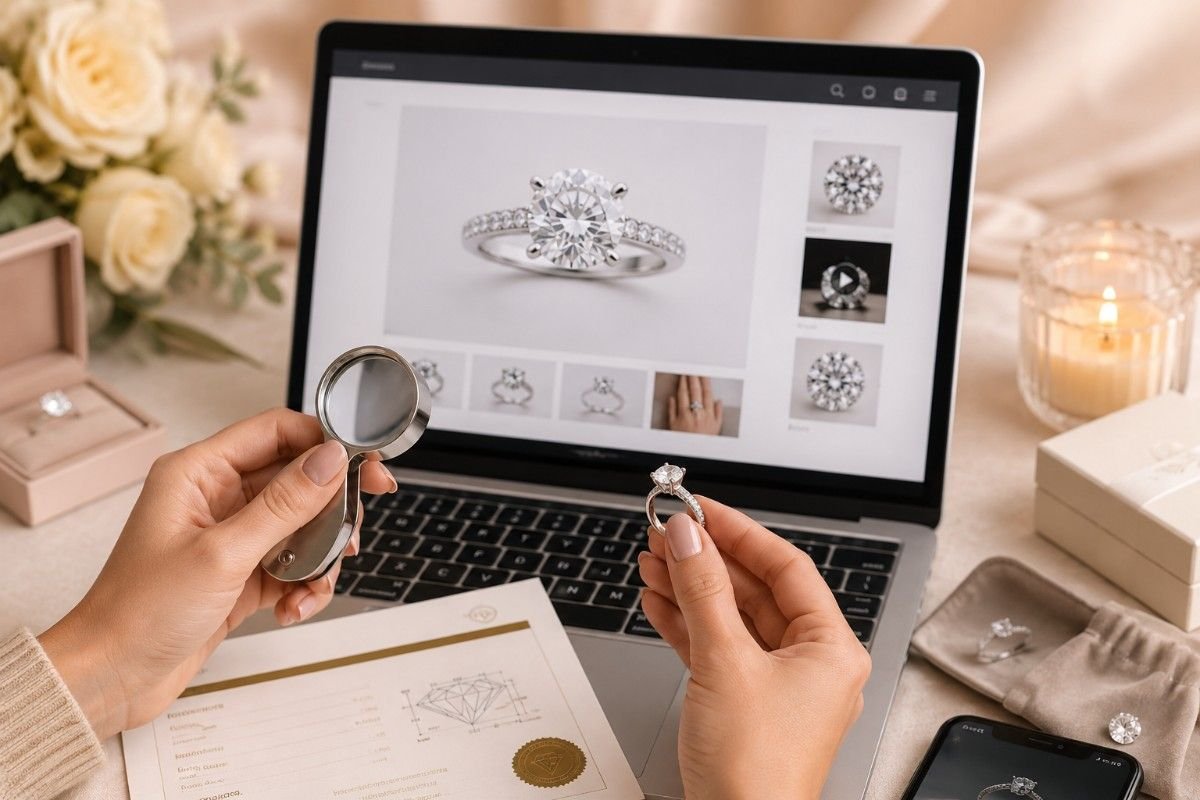
Online photographs are helpful for understanding a diamond’s appearance, but they should never be treated as proof of authenticity or quality. Photography equipment, lighting, magnification, background, and editing can all change how a diamond appears on a screen. A stone that looks exceptionally bright in a carefully produced photograph may appear different under everyday lighting.
Instead, look for photographs from different angles and, when available, a clear video of the jewellery. Pay attention to the overall shape, setting, proportions, and visible characteristics rather than focusing only on sparkle. If a seller provides detailed images and transparent specifications, that gives you more information to work with. If the presentation looks impressive but important details are missing, ask questions before proceeding.
Check Whether the diamond Is Natural or Lab-Grown
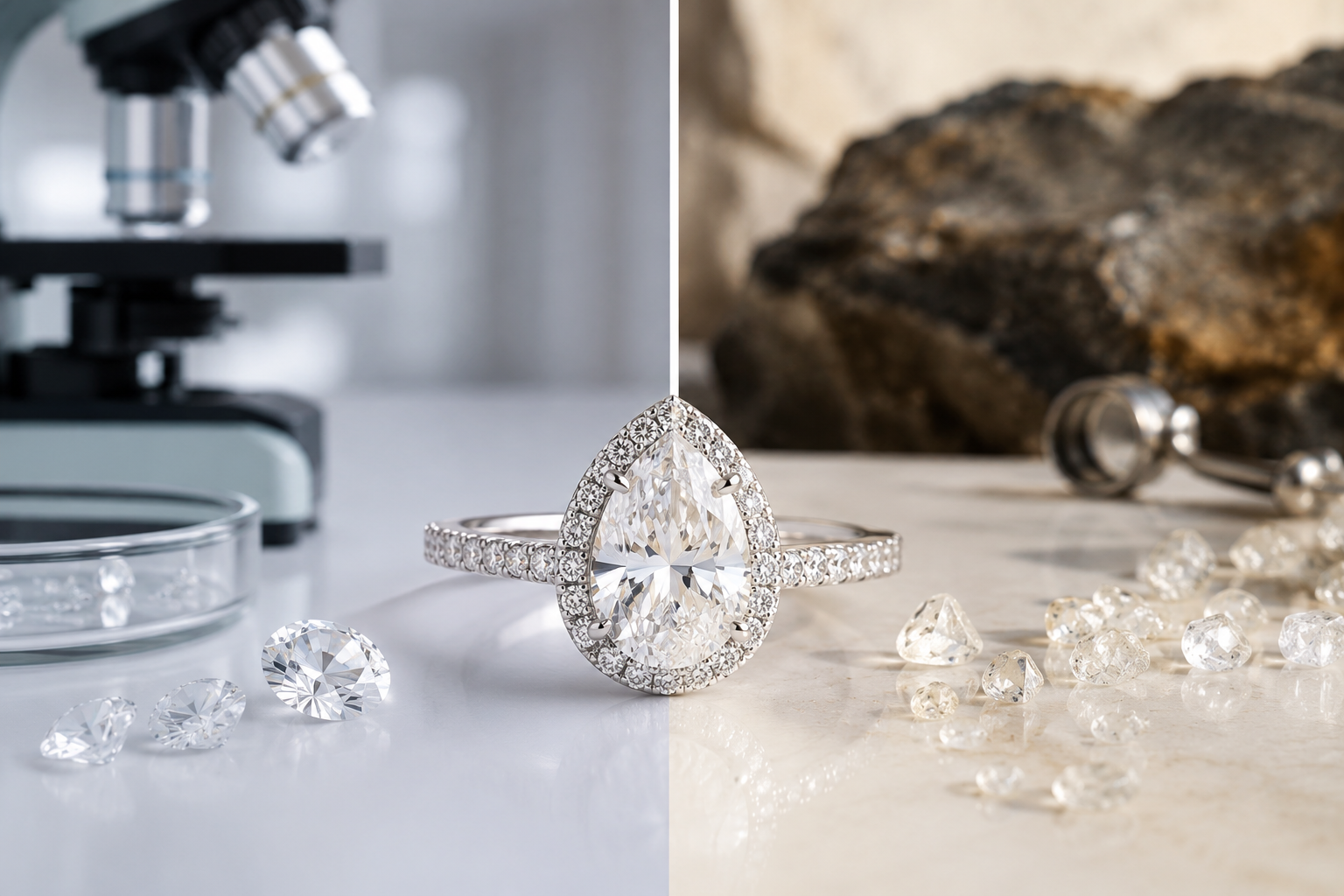
Another important step is confirming the diamond’s origin. A listing should clearly state whether the stone is a natural diamond or a lab-grown . These are different origins, and buyers should know which type they are purchasing before completing an order. Lab-grown diamonds are real , but they are created using controlled technological processes rather than forming naturally underground.
The grading documentation and product description should tell the same story. This distinction can be especially important when comparing prices or shopping for a particular design. For example, someone researching halo rings for women may compare several similar-looking pieces online, but the diamond origin, quality specifications, metal, craftsmanship, and documentation can differ considerably between products.
Research the Seller Before Making Payment
Verifying the diamond is only part of the process. You should also verify the seller. Look for a clear return policy, warranty information, customer support details, secure payment options, and enough product information to understand what you are purchasing. Independent customer reviews can also help you identify whether previous buyers experienced problems with delivery, product quality, returns, or communication.
Be cautious when a seller avoids basic questions or makes unusually broad promises without supporting information. A very low price is not automatically evidence of a poor product, but it is a reason to investigate further. A trustworthy online jewellery business should make important information easy to understand rather than hiding it behind vague descriptions.
Look Beyond the Most Obvious Red Flags
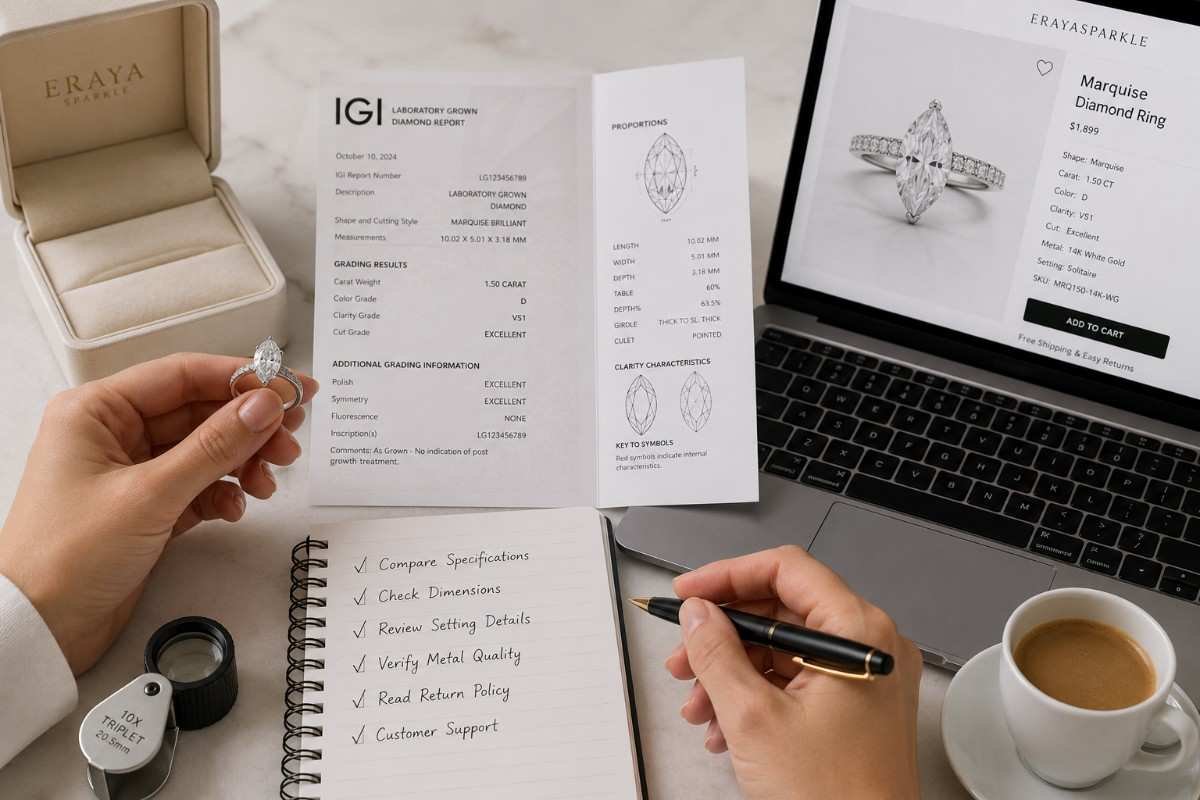
Some warning signs are easy to recognize, such as a certificate number that cannot be verified or specifications that do not match the grading report. Other concerns are less obvious. A product page may contain beautiful images while providing little information about the stone itself. Similarly, pressure to purchase immediately can discourage buyers from taking the time to perform basic checks.
A better approach is to slow the process down. If you are comparing a Marquise Diamond Ring with another design, for example, look at more than shape and price. Compare the documented specifications, dimensions, setting details, metal quality, return terms, and available support. A few extra minutes of research can prevent an expensive misunderstanding.
Make Verification Part of Your Buying Process
Verifying a diamond online should not feel like an unnecessary technical exercise. It is simply a way of making sure that the product description, grading report, and seller information tell a consistent story. When those pieces align, you have a much clearer basis for making your decision.
The strongest online purchases are built on evidence rather than attractive photography alone. Before paying, verify the grading report, match the diamond’s specifications, confirm its origin, examine the available images, and understand the seller’s policies. Taking these steps does not guarantee that every purchase will be perfect, but it can significantly reduce uncertainty and help you choose a diamond with confidence.