Electrical systems used in marine, offshore, industrial, and underwater environments face challenges that ordinary connectors may not handle effectively. Water, humidity, salt, pressure, vibration, corrosion, and limited installation space can all affect electrical connections.
A suitable connector therefore needs to provide more than simple electrical contact; it must also protect the connection from environmental conditions while maintaining reliable performance.
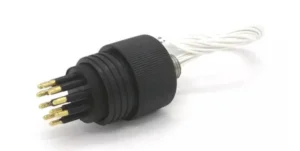
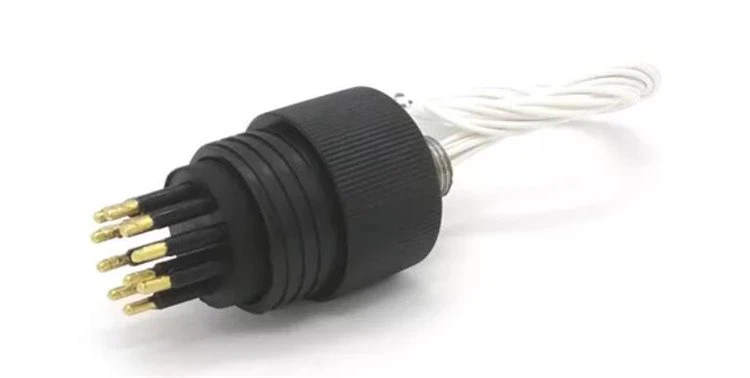
The Micro Flat 7-9 Core Watertight Connector is designed for applications where compact dimensions, multiple electrical channels, and environmental protection are important. HYSF Subsea’s specifications describe 7-pin and 9-pin configurations with a 5A rated current per pin, a 550V AC/DC working voltage, and insulation resistance of at least 200MΩ at 1000V DC.
1. Preventing Water and Moisture Ingress
Water is one of the biggest threats to electrical connections. When moisture reaches exposed contacts, it can cause corrosion, short circuits, insulation degradation, and unstable electrical performance. In underwater equipment, these problems can become even more serious because electrical components may remain exposed to water for extended periods.
A properly sealed connector creates a protective barrier around the electrical interface. The Micro Flat 7-9 Core Watertight Connector uses a sealed construction intended for demanding underwater applications. HYSF describes the series as incorporating precision sealing features and rugged rubber construction to help isolate electrical paths from surrounding moisture.
This protection is especially useful for subsea sensors, underwater cameras, marine robotics, monitoring equipment, and sealed electrical housings where water exposure is unavoidable.
2. Supporting High-Pressure Applications
Electrical connectors used underwater must also withstand increasing water pressure as equipment operates at greater depths. Poorly designed connections can allow water to penetrate the housing or create mechanical stress around the electrical interface.
According to HYSF’s published specifications, its Micro Flat 7-9 core series is rated for hydrostatic working pressures up to 60 MPa. The manufacturer associates this rating with deep-sea applications reaching depths of approximately 6,000 meters under specified conditions.
This type of pressure resistance helps protect the electrical interface when equipment is deployed in deep-water environments. It can be particularly relevant to remotely operated vehicles, autonomous underwater vehicles, subsea sensor systems, and offshore equipment.
3. Maintaining Electrical Insulation
Good waterproofing alone is not enough. A connector must also maintain adequate electrical insulation between its individual contacts. Poor insulation can allow unwanted current paths, electrical leakage, or interference between circuits.
The published specifications for the Micro Flat 7-9 Core Watertight Connector list insulation resistance of at least 200MΩ at 1000V DC. HYSF also lists a contact resistance below 0.01Ω, supporting efficient electrical transmission through the connection.
These characteristics can help electrical systems maintain stable connections when operating in demanding environments. Proper insulation is particularly important when several power, control, or signal circuits are routed through one compact connector.
4. Providing Multiple Electrical Channels
Modern underwater equipment often requires several electrical connections in a limited space. Separate connectors for every circuit can increase installation complexity and consume valuable panel space.
The 7-pin and 9-pin configurations provide multiple connection points within one compact interface. HYSF’s product information identifies dedicated 7-pin and 9-pin male and female cable, receptacle, and plug configurations.
This multi-core arrangement allows engineers to consolidate several electrical circuits into a single connection point. Depending on the equipment design, different cores can be allocated to power, control signals, sensors, communications, or other electrical functions.
5. Protecting Connections in Compact Equipment
Space is often limited in underwater equipment. ROVs, AUVs, sensor pods, cameras, and other subsea systems may have strict dimensional requirements. Traditional connectors can sometimes create unnecessary protrusion from an equipment housing.
The flat design addresses this challenge by keeping the connector profile low. HYSF describes its flat series as a space-saving solution for applications where vertical clearance is limited, while also helping reduce water-flow resistance around moving underwater equipment.
The compact design can make cable routing easier and allow electrical interfaces to be positioned closer to flat panels or equipment housings. This can be useful when designing compact subsea assemblies where every millimeter of available space matters.
6. Improving Resistance to Harsh Marine Conditions
Saltwater environments are highly demanding for electrical hardware. Continuous exposure to moisture and salt can accelerate corrosion, while equipment may also experience vibration, mechanical impact, temperature changes, and repeated deployment cycles.
The connector series is designed with rugged materials and protective construction intended for marine applications. HYSF states that its micro flat connectors use gold-plated copper contacts and high-temperature vulcanized neoprene rubber construction. Its published operating temperature range is -60°C to +80°C.
These features can contribute to more dependable electrical connections in environments where conventional exposed electrical interfaces may deteriorate more quickly.
7. Supporting Underwater Robotics
ROVs and AUVs depend on reliable electrical connections for sensors, control systems, cameras, lights, and other equipment. A connector failure can interrupt communication or power to an important subsystem.
The low-profile design of this connector series makes it suitable for applications where equipment designers need to manage both electrical connectivity and physical space. HYSF specifically identifies ROVs and AUVs among the applications for its Micro Flat series.
By combining multiple cores with a compact structure and environmental sealing, these connectors can simplify the integration of electrical components into underwater robotic platforms.
8. Useful for Sensors, Cameras, and Monitoring Systems
Subsea monitoring equipment often contains multiple electrical devices operating inside compact housings. Environmental sensors, hydrophones, cameras, lighting systems, and monitoring instruments all require dependable connections.
A multi-core watertight interface can reduce the number of separate connection points required within an assembly. HYSF identifies subsea sensor nodes, monitoring packages, underwater cameras, and lights as potential applications for its micro flat connector series.
This approach can help equipment designers organize wiring more efficiently while maintaining protection against demanding environmental conditions.
9. Hysfsubsea for Specialized Watertight Connectivity
Hysfsubsea focuses on subsea and watertight interconnection solutions for demanding marine applications. Its product range includes flat, miniature, bulkhead, cable, and other specialized connector configurations.
The company’s published catalog lists its Micro Flat 7-Pin and 9-Pin products with a 7/16-20UNF mounting thread, 5A rated current, 60MPa pressure rating, 550V AC/DC rated voltage, and operating temperatures from -60°C to +80°C.
For projects involving underwater robotics, subsea instrumentation, offshore equipment, or compact marine electrical systems, selecting a connector based on the application’s pressure, voltage, current, temperature, sealing, and dimensional requirements is essential.
Conclusion
Reliable electrical connections are essential when equipment operates in wet, high-pressure, or space-constrained environments. A well-designed Micro Flat 7-9 Core Watertight Connector can help protect electrical interfaces against moisture while providing multiple connection channels in a compact format.
Its combination of low-profile construction, sealing, insulation performance, pressure resistance, and multi-core connectivity makes this type of connector suitable for many demanding subsea applications.