Gate Drivers
Power electronics are at the heart of many technologies that people and industries depend on every day. Electric vehicles, industrial motor drives, solar inverters, battery chargers, robotics, data-centre power supplies, and energy storage systems all rely on power semiconductor devices to control electrical energy efficiently. These semiconductors can handle substantial voltage and current, but their performance depends on how accurately they are switched.
A power transistor cannot simply be turned on and off with any ordinary logic signal. It needs the correct gate voltage, enough current to change state quickly, and precise timing to prevent electrical losses or harmful switching conditions. This is why the gate-driving stage has become such an important part of modern circuit design.
A well-designed gate driver can improve switching speed, reduce wasted energy, minimise heat generation, and help protect expensive semiconductor devices. As engineers move toward smaller power converters, higher switching frequencies, and advanced materials such as silicon carbide and gallium nitride, gate-driving technology is becoming even more important.
What Are Gate Drivers and Why Do Power Circuits Need Them?
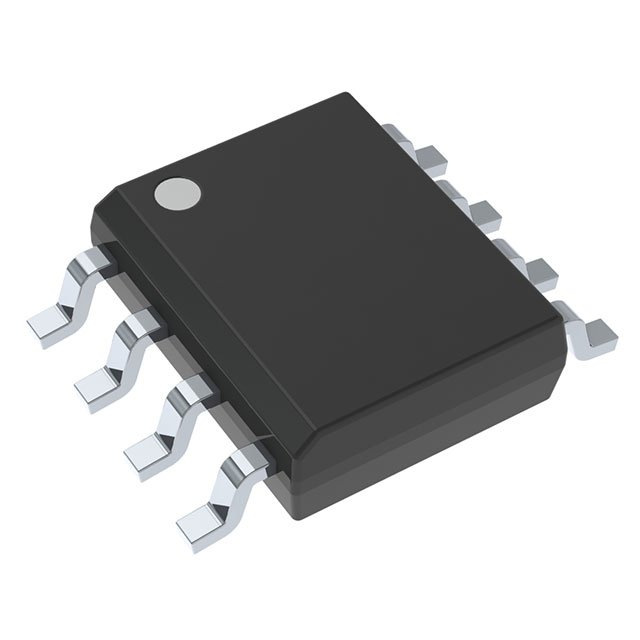
Gate Drivers are specialised electronic circuits that control power semiconductor switches by delivering the required voltage and current to their gate terminals. They are commonly used with MOSFETs, IGBTs, silicon carbide MOSFETs, and gallium nitride transistors.
Their main role is to act as an electrical interface between a low-power control source and a high-power switching device. A microcontroller, digital signal processor, or control IC may generate the instruction to switch, but its output typically cannot provide enough current to operate a large power transistor effectively.
The gate driver strengthens the control signal and makes sure the semiconductor changes state at the required speed. This is important because slow transitions increase switching losses, while uncontrolled fast transitions can introduce voltage spikes and electromagnetic interference.
In practical terms, gate drivers help a power circuit achieve:
- Faster and more controlled switching
- Lower power losses
- Better thermal efficiency
- Improved timing accuracy
- Greater semiconductor protection
- More reliable system operation
- Higher achievable switching frequency
These benefits explain why gate-driving circuits are found across almost every area of modern power electronics.
How Does a Gate Driver Actually Turn a Transistor On and Off?
Power transistors have a gate terminal that must be electrically charged before the device turns on. To switch the device off, that charge has to be removed.
The gate terminal behaves partly like a capacitor. This means that a brief current is required whenever the transistor changes state. The larger the gate capacitance or total gate charge, the more current may be needed for fast switching.
When the control circuit sends an ON command, the driver supplies current to the gate. As the gate voltage rises, the transistor begins conducting. The driver continues delivering charge until the device reaches the intended operating condition.
During turn-off, the opposite process occurs. The driver pulls current away from the gate, causing the gate voltage to fall and stopping current flow through the power transistor.
This process happens extremely quickly. In high-frequency converters, it may occur hundreds of thousands or even millions of times per second.
Why Is Switching Speed So Important in Power Electronics?
Switching speed has a direct effect on efficiency. During the brief period when a transistor is transitioning between fully off and fully on, both voltage and current may exist across the device.
This creates power loss.
If the transition is slow, the transistor spends more time in this inefficient region. More energy is converted into heat, reducing overall system efficiency.
Faster switching shortens this transition period and can significantly reduce switching losses. However, excessively fast switching may also create problems such as voltage overshoot, ringing, and electromagnetic interference.
The ideal design therefore does not simply maximise switching speed. It balances speed with electrical stability.
How Can Designers Balance Fast Switching and Circuit Stability?
Engineers commonly manage switching behaviour using gate resistance, driver current, PCB layout, and transistor selection.
A lower gate resistance generally allows faster charging and discharging, resulting in quicker transitions. A higher resistance slows the transition and may reduce ringing or electromagnetic noise.
The correct balance depends on:
- Switching frequency
- Transistor technology
- Gate charge
- Circuit voltage
- Power level
- PCB design
- Electromagnetic compatibility requirements
- Thermal limits
This is why the gate driver should be selected as part of the complete power stage rather than as an isolated component.
Why Is Gate Charge an Important Selection Parameter?
Gate charge is one of the most important characteristics to consider when matching a driver to a power transistor.
It represents the total amount of electrical charge required to move the transistor between switching states. A device with a larger gate charge usually requires more driver current to achieve the same switching speed as a smaller device.
If the driver is too weak, the gate may charge and discharge slowly. This increases transition time and can raise power dissipation.
If the driver is appropriately sized, the transistor can switch efficiently without placing unnecessary stress on the control circuit.
Gate charge must therefore be considered together with:
- Required switching time
- Driver peak output current
- Operating frequency
- Gate resistance
- Gate voltage
- Acceptable thermal performance
Ignoring this relationship can result in poor switching performance even when the transistor itself has the correct voltage and current ratings.
What Are the Main Types of Gate Driver Configurations?
Different circuit topologies require different gate-driving arrangements. Some power systems use a single transistor, while others use multiple transistors arranged in half-bridge or full-bridge structures.
How Does a Low-Side Gate Driver Work?
A low-side driver controls a transistor positioned between the load and ground.
Because the transistor source or emitter stays close to ground potential, the driver can usually operate from a straightforward supply arrangement. This makes low-side drivers relatively simple to implement.
Typical applications include:
- Solenoid control
- LED switching
- Power supplies
- Motor control
- Relay replacement circuits
- Load switching
Low-side configurations are often used where isolation and floating gate voltages are not required.
How Does a High-Side Gate Driver Work?
A high-side driver controls a transistor connected between the power supply and the load.
This arrangement is more complex because the transistor’s source or emitter can rise to a voltage close to the supply rail. The driver must therefore generate a gate voltage that remains sufficiently above the switching node.
High-side gate drivers are commonly used in:
- Motor inverters
- Battery systems
- Automotive circuits
- DC-DC converters
- Power distribution systems
Bootstrap circuits, charge pumps, or isolated power supplies may be used to create the required gate voltage.
Why Are Half-Bridge Gate Drivers Widely Used?
Half-bridge circuits use one high-side transistor and one low-side transistor.
The driver must control both devices while making sure they do not turn on at the same time. Half-bridge configurations are found in motor controllers, converters, inverters, and Class-D amplifiers.
Many integrated gate driver ICs combine both channels into one device, simplifying circuit design.
Why Is Dead Time Necessary in Bridge Circuits?
Dead time is a short delay inserted between the switching of two opposing transistors.
Without dead time, the high-side and low-side devices could briefly conduct together. This creates a direct path between the power supply rails, producing a large current known as shoot-through.
Shoot-through can damage transistors, increase electromagnetic interference, and reduce system reliability.
A properly designed driver may include built-in dead-time control or allow the timing to be programmed externally.
Dead time helps prevent:
- Cross-conduction
- Excess current
- Semiconductor overheating
- Power rail stress
- Sudden component failure
However, excessive dead time can also reduce efficiency, so timing must be optimised carefully.
How Does Electrical Isolation Improve Gate Driver Safety?
Electrical isolation separates the control side of the system from the high-voltage power stage.
This is particularly important in applications where controllers operate at low voltage but the switching circuitry handles hundreds or even thousands of volts.
Isolated gate drivers help protect microcontrollers, sensors, communication interfaces, and users from dangerous voltage differences.
Isolation may also improve immunity to ground loops and common-mode electrical noise.
Typical applications include:
- Solar inverters
- Industrial motor drives
- Electric vehicle traction inverters
- High-voltage DC converters
- Energy storage systems
- Industrial automation equipment
Modern isolated drivers may use magnetic or capacitive coupling to transfer control signals across the isolation barrier.
Why Is Common-Mode Transient Immunity Important?
Power circuits can experience extremely rapid voltage changes.
These fast transitions can interfere with control signals, particularly when the driver is isolated from the switching stage. Common-mode transient immunity describes the driver’s ability to remain stable when exposed to these rapid voltage changes.
High common-mode immunity is especially important when using SiC and GaN devices because they can switch at very high rates of voltage change.
A driver with poor immunity may respond incorrectly, causing false switching events or signal errors.
For high-speed systems, this specification should be evaluated alongside propagation delay and isolation rating.
How Do Gate Drivers Reduce Heat in Power Systems?
Heat is one of the main limitations in power electronics.
Every watt of energy lost during switching eventually becomes heat. If heat is not controlled, it can raise semiconductor junction temperature, reduce component life, and increase cooling requirements.
An effective gate driver reduces switching losses by moving the transistor through its transition region quickly and predictably.
Lower switching loss can lead to:
- Reduced heat-sink size
- Lower fan requirements
- Improved system efficiency
- Smaller enclosure size
- Longer component life
- Higher power density
For electric vehicles and industrial systems, reducing cooling requirements can also lower weight and system cost.
Which Protection Features Can Be Integrated Into Gate Drivers?
Modern driver ICs often include much more than simple gate-control functions.
Integrated protection can help detect abnormal conditions and prevent damage before a failure becomes serious.
Common protection features include:
- Undervoltage lockout
- Desaturation detection
- Overcurrent protection
- Short-circuit protection
- Thermal shutdown
- Fault reporting
- Soft turn-off
- Miller clamp control
Why Is Undervoltage Lockout Important?
A transistor may behave unpredictably if the driver supply voltage falls too low.
Undervoltage lockout prevents the driver from switching the transistor until the supply has reached a safe operating level.
This helps prevent partial turn-on conditions that can cause excessive power dissipation.
What Does Desaturation Protection Do?
Desaturation detection is commonly used with IGBTs.
It monitors the switching device for abnormal voltage conditions that may indicate excessive current or a short circuit.
If a fault is detected, the driver can shut the transistor down before serious damage occurs.
What Is the Miller Effect and Why Does It Matter?
The Miller effect occurs because internal capacitance exists between transistor terminals.
A rapid voltage change across a transistor can couple charge into the gate, potentially raising the gate voltage enough to cause unwanted turn-on.
This is particularly dangerous in bridge circuits, where unintended switching could lead to shoot-through.
Some drivers include a Miller clamp that holds the gate near the off-state voltage during critical switching periods.
This can improve reliability in high-voltage and fast-switching applications.
Why Does PCB Layout Have Such a Large Impact on Gate Driver Performance?
The physical arrangement of components on the PCB can strongly influence switching behaviour.
Long traces introduce parasitic inductance. Large loop areas can increase electromagnetic noise. Poor grounding can create voltage differences that interfere with gate signals.
Even an excellent gate driver may perform poorly if the layout is unsuitable.
Good PCB practices include:
- Placing the driver close to the transistor
- Keeping gate traces short
- Minimising high-current loop area
- Using strong ground connections
- Placing bypass capacitors close to the driver
- Separating control and power paths
- Using appropriate return paths
At high switching frequencies, these details can make the difference between a stable circuit and an unreliable one.
How Do Gate Drivers Support Electric Vehicle Power Systems?
Electric vehicles use multiple high-power conversion stages.
The traction inverter converts battery energy into controlled AC power for the motor. The onboard charger converts external electrical energy for battery charging. DC-DC converters regulate voltage for auxiliary systems.
All of these systems rely on power semiconductor switches.
Gate drivers help these switches operate efficiently by providing precise current, accurate timing, and fault protection.
Improved driver performance can contribute to:
- Greater driving range
- Reduced inverter losses
- Lower cooling requirements
- Higher power density
- Smaller converter size
- Improved reliability
For these reasons, advanced gate drivers are becoming increasingly important in automotive power electronics.
Why Are Gate Drivers Important for Renewable Energy?
Renewable energy systems depend heavily on power conversion.
Solar panels generate DC electricity that may need to be converted into AC power for the grid. Battery storage systems require bidirectional power conversion. Wind turbines often require controlled power electronics to manage variable generator output.
Gate drivers enable the high-power switching necessary for these conversions.
Reliable switching helps improve energy efficiency and reduce thermal stress in systems that may operate for many hours every day.
Isolation and fault protection are also important because renewable energy equipment often works at high voltage.
How Are Gate Drivers Used in Industrial Motor Control?
Industrial motors require accurate control of speed, torque, and direction.
Modern variable-frequency drives achieve this by switching semiconductor devices in carefully timed sequences.
Gate drivers control these switching events.
Accurate timing allows the inverter to generate controlled electrical waveforms that regulate motor behaviour.
Industrial applications include:
- Conveyors
- Pumps
- Compressors
- CNC machines
- Robotics
- Fans
- Manufacturing equipment
In these environments, reliability is critical because equipment downtime can be costly.
Why Do SiC Devices Need Special Gate Drivers?
Silicon carbide MOSFETs can operate at higher voltages, higher temperatures, and faster switching speeds than many conventional silicon devices.
These advantages allow engineers to build smaller and more efficient power systems.
However, SiC devices require carefully controlled gate voltages and fast driver response.
The driver may need:
- High peak current
- Fast propagation time
- Strong common-mode immunity
- Negative turn-off capability
- Accurate voltage control
- Advanced protection functions
Selecting the wrong driver can prevent the designer from achieving the full performance benefits of SiC technology.
Why Do GaN Transistors Require Precise Gate Control?
Gallium nitride transistors can switch extremely quickly.
This makes them valuable in high-frequency converters, compact power supplies, and high-efficiency charging systems.
However, the gate voltage range of some GaN devices is relatively narrow. Excessive gate voltage can damage the transistor, while insufficient drive may reduce performance.
Drivers intended for GaN applications therefore need precise voltage control, extremely fast switching capability, and carefully designed PCB layouts.
What Specifications Should Be Compared When Selecting Gate Drivers?
The best driver depends on the transistor and the application.
Engineers should compare several key parameters before selecting a device.
Important specifications include:
- Peak source current
- Peak sink current
- Supply voltage
- Output voltage range
- Propagation delay
- Rise time
- Fall time
- Isolation voltage
- Common-mode transient immunity
- Operating temperature
- Package type
- Protection features
The driver should also be compatible with the gate voltage and switching characteristics recommended by the transistor manufacturer.
How Can Engineers Avoid Common Gate Driver Design Mistakes?
Many gate-driver problems result from mismatched components or poor circuit layout rather than the driver itself.
Common mistakes include choosing insufficient output current, ignoring gate charge, using long gate traces, forgetting dead time, and selecting unsuitable gate voltage levels.
Engineers should also verify:
- Correct decoupling capacitor placement
- Appropriate gate resistance
- Safe isolation spacing
- Suitable thermal design
- Proper grounding
- Correct driver supply voltage
Simulation and oscilloscope measurements can help confirm that switching waveforms remain within safe limits.
Why Will Gate Drivers Become Even More Important in Future Electronics?
Power electronics are moving toward faster switching, higher voltage, greater energy efficiency, and higher power density.
Electric mobility, renewable energy, automation, artificial intelligence infrastructure, robotics, and battery storage all depend on efficient power conversion.
Gate drivers play a central role in achieving these goals because they determine how effectively power semiconductors respond to control signals.
Future driver technologies are likely to offer more integrated protection, smarter diagnostics, faster switching, improved isolation, and better compatibility with wide-bandgap semiconductors.
How Do Gate Drivers Ultimately Improve Complete System Performance?
Gate drivers influence much more than the simple ON and OFF state of a transistor.
They affect switching losses, heat generation, electromagnetic behaviour, protection, timing, and long-term reliability.
A properly selected driver allows the power transistor to operate close to its intended performance while protecting both the switching device and the surrounding electronics.
For designers working with motor drives, power converters, renewable energy systems, electric vehicles, automation equipment, or high-efficiency power supplies, gate-driving performance should be considered a fundamental part of the overall system.
As power electronics continue to advance, gate drivers will remain one of the most important technologies connecting intelligent control systems with high-power semiconductor devices.