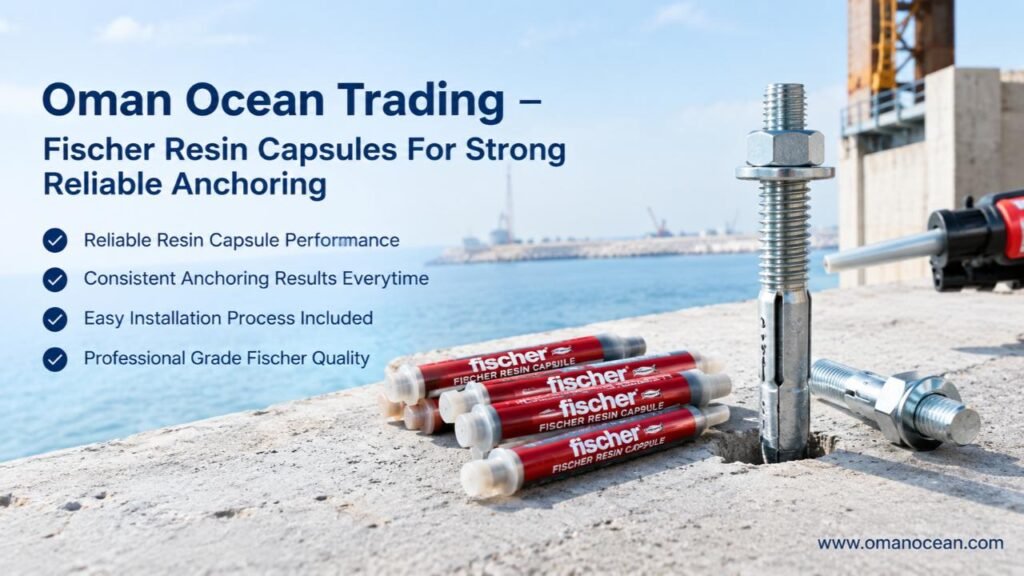
When you are tackling serious construction, structural repairs, or heavy-duty installation projects, standard plastic plugs or lightweight screws simply will not cut it. Heavy loads demand an anchor system that bonds directly with the concrete or masonry, turning your fixing point into a virtually indestructible joint. That is precisely where the Fischer Resin Capsule RM II comes into play. Whether you are anchoring massive steel beams, installing heavy machinery, or securing high-stress structural posts, relying on a system designed for high load capacity without creating expansion stress in your base material is essential. By opting for the Fischer Resin Capsule RM II, you give your project the rock-solid foundation and long-term peace of mind it truly deserves.
Key Features That Make Heavy-Duty Anchoring Simple and Reliable
Understanding how high-performance chemical anchors work does not require an advanced degree in structural engineering. At its core, this system replaces traditional mechanical expansion with a pre-measured, two-part chemical bonding agent contained inside a durable glass capsule. When you drive your threaded rod into the borehole, the glass shatters and thoroughly mixes the synthetic resin and hardening agent right where you need it most.
Here is a breakdown of the core benefits and standout characteristics that set this heavy-duty fixing method apart:
-
Stress-Free Anchoring: Traditional expansion anchors push outwards against the walls of the drilled hole, which can crack weaker concrete or restrict how close you can drill to the edge of a slab. Chemical capsules do not exert expansion pressure, allowing you to anchor close to borders and structural corners safely.
-
Pre-Dosed Precision: Measuring liquid resin manually from a tube can lead to messy overflow, wasted material, or improper mixing ratios. The sealed glass capsule holds the exact ratio of resin and catalyst needed for a specific hole size, ensuring reliable chemical curing every time.
-
Rapid Curing Time: Once mixed inside the borehole, the reaction takes place quickly. Depending on the ambient temperature, you can achieve full load-bearing capacity in a fraction of the time required by standard mortar solutions.
-
High Performance in Extreme Conditions: The chemical formulation holds up exceptionally well against dynamic vibrations, moisture, and extreme environmental fluctuations, preventing the anchor from loosening over time.
Why Choose a Chemical Capsule Over Liquid Injection Mortar?
If you have ever worked on an overhead installation or spent hours squeezing a manual caulking gun to pump thick chemical mortar into dozens of holes, you know how tiring and slow the process can be. While continuous injection cartridges have their place in large-scale rebar installations, pre-portioned glass capsules offer an incredibly clean, fast, and foolproof alternative for standard anchor points.
Using a pre-measured capsule completely eliminates the need for expensive dispensing guns, static mixing nozzles, and messy cleanup. You simply drop the capsule into a clean, drilled hole, attach your threaded stud to a rotary hammer drill, and drive it straight down. The spinning action breaks the glass into fine particles—which actually help reinforce the mortar—and creates a homogenous, high-strength bond within seconds. It is a streamlined method that minimizes human error and speeds up your workflow significantly on the job site.
Step-by-Step Guide for a Flawless Chemical Installation
Getting maximum holding power out of your anchors boils down to simple, proper execution. Even the strongest heavy-duty chemical anchor will fail if basic preparation steps are overlooked, so keeping your process clean and deliberate is key.
1. Drilling and Deep Cleaning
Drill your hole to the exact depth and diameter specified for your threaded rod size. Once the hole is drilled, clean out all the residual dust and debris using a combination of compressed air and a stiff wire brush. Blowing out the dust twice and brushing the walls removes loose particles that could prevent the resin from sticking directly to the solid concrete.
2. Inserting the Capsule
Drop the pre-measured capsule into the freshly cleaned hole, sealed end first. Make sure the capsule slides down smoothly to the bottom without forcing or crushing it prematurely by hand.
3. Driving the Threaded Rod
Attach your threaded anchor rod to your hammer drill using an appropriate setting tool. Set the drill to rotary hammer mode and drive the rod down firmly through the capsule until it hits the bottom of the hole. Stop the drill immediately once the rod reaches full depth to avoid over-stirring the setting resin.
4. Respecting the Curing Phase
Leave the anchor completely undisturbed while the chemical reaction completes. Once the recommended cure time has passed based on your site’s temperature, attach your fixture, apply the recommended torque setting with a wrench, and your installation is ready to handle its maximum weight load.
Final Thoughts on Achieving Maximum Structural Safety
Heavy installations demand absolute dependability because failure is simply not an option when dealing with overhead structural supports, outdoor metalwork, or dynamic equipment. Choosing a proven, stress-free chemical anchoring method ensures that your connections remain solid, secure, and weather-resistant over decades of heavy use. For top-tier construction materials, specialized structural fixings, and trusted engineering supplies tailored to your project needs, look no further than Oman Ocean Trading LLC to deliver the quality products and support required to get the job done right.