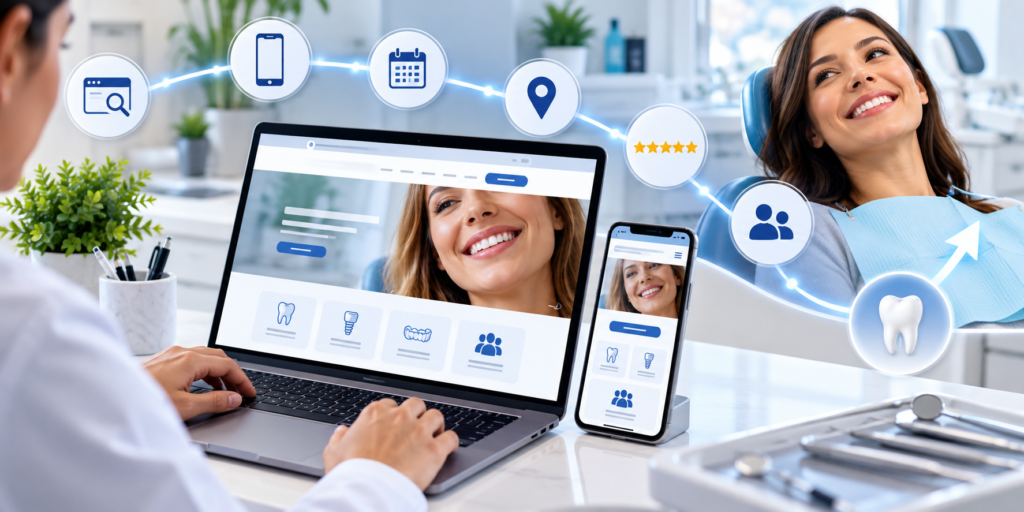
In 2026, dental practices’ journey is becoming even more digital, making website design an important part of building trust and turning visitors into patients.
Modern dental websites need to do more than look polished. They must communicate information clearly, work seamlessly across devices, support search visibility, and make the path to booking straightforward.
Work with the best dental website design company Australia, who focus on increasingly patient experience, accessibility, personalised content, AI-friendly information architecture, and conversion-focused design.
Patient Experience Is Becoming the Centre of Dental Website Design
A visually attractive website can create a positive first impression, but design needs to go further.
Patients often visit a dental website while trying to solve a specific problem. They may be experiencing tooth pain, researching dental implants, looking for a family dentist, or comparing cosmetic treatment options.
The website should help them find relevant information quickly.
Clear navigation, logical page structures, readable content, prominent contact options, and intuitive booking journeys reduce friction.
Instead of making visitors search through multiple pages, modern dental websites guide them naturally from their concern to useful information and, when appropriate, an appointment.
Mobile-First Design Is No Longer Optional
Many patients will discover and evaluate dental practices using smartphones.
A website that looks excellent on a desktop but becomes difficult to navigate on a smaller screen can quickly lose potential patients.
Mobile-first dental website design considers how users interact with content using touchscreens. Buttons need to be easy to tap, text needs to remain readable, images should load efficiently, and important information should not be buried beneath unnecessary elements.
Phone numbers, appointment buttons, locations, and opening hours should also be easy to access.
A strong mobile experience allows patients to move from search to decision-making without unnecessary frustration.
Faster Websites Create Better Patient Journeys
Website speed influences both user experience and digital performance.
Patients are unlikely to wait patiently for a page to load when several competing dental practices are only a search away.
Large images, excessive animations, poorly optimised scripts, and unnecessary plugins can all affect performance.
Modern dental websites increasingly prioritise efficient development, compressed media, clean code, caching, and other performance practices.
The objective is simple: provide the information patients need without making them wait for it.
AI-Friendly Content Architecture Is Changing Website Planning
Search is becoming more conversational, particularly as patients use AI-powered tools to research healthcare questions.
This makes website structure increasingly important.
Dental practices should organise information in a way that makes individual topics easy to understand. Treatment pages should clearly explain what the procedure involves, who may benefit, what patients can expect, and when professional assessment is appropriate.
Supporting FAQs and educational resources can answer specific patient questions in natural language.
This does not mean writing content exclusively for AI systems. The priority remains creating useful information for people. A well-structured website simply makes that information easier for both users and search technologies to interpret.
Treatment Pages Are Becoming More Comprehensive
A simple service list is no longer enough.
Patients considering treatment often have detailed questions before they contact a practice.
A strong treatment page can explain:
- What the treatment involves
- Why it may be recommended
- Who may be suitable
- What the process involves
- Recovery or aftercare considerations
- Potential alternatives
- Questions patients commonly ask
The level of detail should reflect the complexity of the treatment.
For major procedures, comprehensive content can help patients make informed decisions while positioning the practice as a credible source of information.
Trust Signals Are Becoming More Prominent
Choosing a dentist involves trust.
Patients want reassurance that they are dealing with qualified professionals who take their care seriously.
Dental websites can communicate credibility through genuine information about the clinical team, qualifications, experience, professional memberships, technology, patient reviews, and practice environment.
Authentic photography can also help.
Instead of relying heavily on generic stock images, practices can show their actual dentists, team, facilities, and patient-focused environment.
This makes the website feel more transparent and personal.
Real Patient Stories Can Strengthen Connection
Patients often want to know what the experience of visiting a practice is actually like.
Appropriately presented testimonials, reviews, and patient stories can provide useful social proof.
The emphasis should remain authentic.
Rather than filling pages with exaggerated claims, practices can use genuine patient feedback to communicate aspects of the experience such as professionalism, communication, comfort, and overall care.
Where before-and-after imagery is appropriate, it should also be presented responsibly and with suitable context.
Accessibility Is Becoming a Core Design Consideration
A dental website should be usable by as many people as possible.
Accessibility involves more than adding a statement to the footer. It includes practical design choices such as readable typography, sufficient contrast, meaningful image descriptions, clear navigation, keyboard accessibility, descriptive links, and logical page structures.
Accessible design can also improve usability for people who are simply browsing on a small screen or dealing with temporary visual or physical limitations.
Creating a website that is easier to use benefits a wider audience.
Personalised Patient Journeys Can Improve Engagement
Not every visitor arrives with the same goal.
A parent looking for children’s dentistry has different questions from a patient researching dental implants. Someone with an urgent dental problem needs a different path from someone exploring cosmetic treatment.
Modern website design can accommodate these differences through clear pathways.
For example, visitors can quickly choose between options such as:
- I’m looking for emergency care
- I’m interested in cosmetic dentistry
- I need family dental care
- I’m researching dental implants
These pathways can direct users toward relevant information rather than forcing everyone through the same website journey.
Online Booking Is Becoming More Seamless
Patients increasingly expect convenience when arranging healthcare appointments.
A modern dental website should make booking easy to understand and access.
An online booking system can allow patients to request or schedule appointments without making a phone call, depending on the practice’s systems and availability.
However, the booking experience needs to remain simple.
Too many forms, unnecessary questions, unclear availability, or confusing confirmation steps can discourage completion.
The website should make the next action obvious without overwhelming the patient.
Conversational Tools Need to Add Genuine Value
Chat tools and automated assistants are becoming more common on healthcare websites.
When implemented appropriately, they can help visitors find information, navigate services, answer basic administrative questions, or direct patients toward booking options.
However, they should not create the impression that automated technology is replacing professional dental advice.
A useful conversational tool supports the patient journey while clearly distinguishing administrative information from clinical guidance.
Video Is Becoming an Important Educational Format
Dental procedures can be difficult to understand through text alone.
Short educational videos can show patients what to expect from an examination, explain treatment concepts, introduce dentists, or demonstrate aspects of the patient experience.
Video can also make the practice feel more approachable.
However, quality matters more than quantity. A short, professionally presented explanation from a dentist can often be more useful than a large library of generic promotional videos.
Local Search and Website Design Are Becoming More Connected
Dental websites need to serve both users and local search visibility.
Location information should be clear, consistent, and easy to find. Individual practice locations may also require dedicated pages when a dental group operates across multiple areas.
These pages should provide genuinely useful local information rather than simply repeating the same content with different suburb names.
A strong combination of local SEO and thoughtful website design helps patients understand where the practice is located, what services are available, and why the location may be convenient for them.
Design Is Moving Toward Authenticity Over Excessive Visual Effects
Dental websites do not need to look like technology demonstrations.
Heavy animations, distracting transitions, autoplay media, and complicated interfaces can interfere with the patient journey.
The stronger trend is toward clean, sophisticated design that uses visual elements to support communication.
Thoughtful typography, authentic photography, clear spacing, subtle interaction, and a strong visual hierarchy can create a professional experience without distracting visitors from important information.
Data and Conversion Tracking Are Shaping Design Decisions
Website design should not end when a site launches.
Analytics and conversion data can show how visitors interact with the website.
Practices can examine which pages attract visitors, where users leave, which treatment pages generate enquiries, and whether booking journeys are being completed.
This information can guide ongoing improvements.
Instead of redesigning a website based entirely on personal opinions, practices can use real user behaviour to identify areas that need attention.
Why Choosing the Right Dental Website Design Partner Matters
The best dental websites combine design, development, SEO, content, user experience, and conversion strategy.
That requires more than a generic website template.
The best dental website design company Australia should understand how dental patients search for information, how healthcare websites need to communicate trust, and how digital experiences influence appointment decisions.
The right partner can build a website around the practice’s actual goals rather than simply delivering an attractive collection of pages.
Conclusion
Dental website design in 2026 is becoming increasingly focused on the complete patient journey.
Mobile usability, faster performance, AI-friendly content structures, comprehensive treatment pages, accessibility, authentic trust signals, personalised pathways, online booking, video education, and conversion tracking are all influencing how modern practices build their digital presence.
A successful dental website should not simply tell patients that a practice exists. It should help them understand their options, answer their questions, establish confidence, and make the next step feel easy.
PSM Digital Agency combines website design, development, SEO, content, and digital strategy to help dental practices create websites built around real patient behaviour.
Our approach focuses on clear communication, strong user experience, search visibility, and conversion opportunities rather than design for appearance alone.
Partner with PSM Digital, a best dental website design company in Australia, and get a digital experience that supports patients from their first search through to their next appointment.