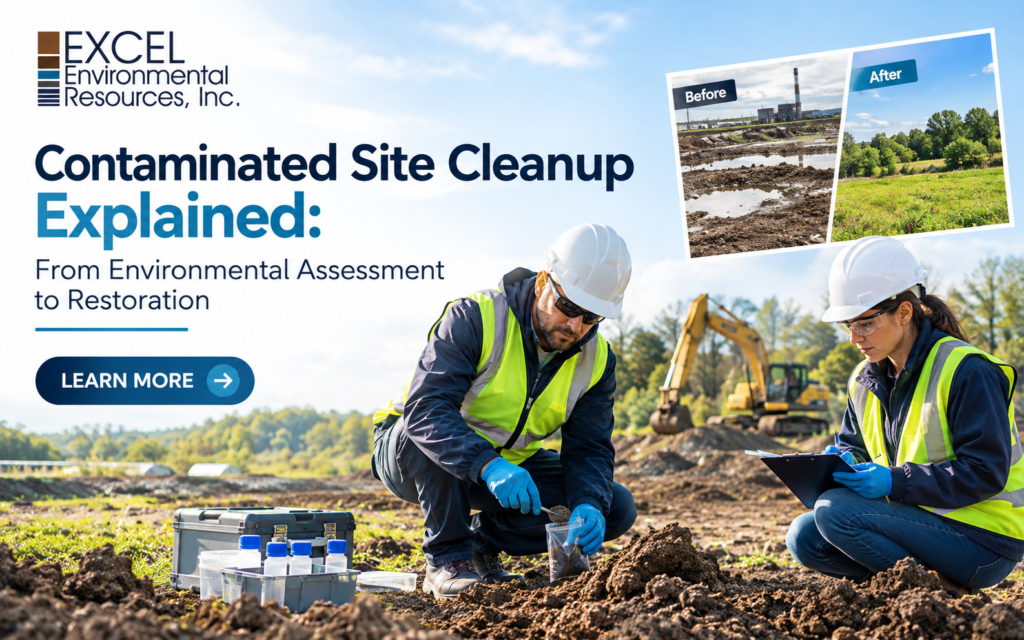
Environmental assessment is the first step toward safely cleaning up and restoring a contaminated site.
A property with suspected contamination does not necessarily mean the land cannot be used or redeveloped. Contaminated site cleanup is a structured process that begins with understanding the environmental conditions and ends with appropriate remediation, verification, and restoration. The right approach depends on the contaminants involved, their concentration, the affected soil or groundwater, regulatory requirements, and the property’s intended future use.
For property owners, developers, and businesses, starting with a professional environmental assessment is one of the most important steps. Excel Environmental Resources Inc has been serving clients since 1994, helping them evaluate environmental concerns and make informed decisions about investigation, remediation, and redevelopment.
What Is Contaminated Site Cleanup?
Contaminated site cleanup involves investigating, managing, and removing or controlling pollutants that may pose risks to people, property, or the environment. Depending on the findings, cleanup can involve excavation, treatment, containment, groundwater remediation, vapor mitigation, monitoring, or a combination of methods.
Contamination can originate from many sources, including:
- Former industrial operations
- Underground storage tanks
- Petroleum releases
- Improper chemical storage
- Manufacturing processes
- Historic waste disposal
- Spills and accidental releases
- Contaminated groundwater migrating onto or beneath a property
The objective is not simply to remove soil. A successful project addresses the source and extent of contamination while meeting applicable regulatory requirements and supporting the property’s future use.
Explore our reliable environmental oversight and vapor intrusion services socialbookmarkingwebsite
Discover dependable environmental litigation support for UST disputes in New Jersey thirdeyegen
Step 1: Start With an Environmental Assessment
Before selecting a cleanup method, environmental professionals need to understand what happened on the property and whether contamination is actually present.
A Phase I Environmental Site Assessment commonly examines historical property use, regulatory records, aerial photographs, environmental databases, and other available information. If potential environmental concerns are identified, a Phase II investigation may involve collecting samples of soil, groundwater, soil vapor, or other media.
This investigation helps answer critical questions:
- What contaminants may be present?
- Where are they located?
- How extensive is the impact?
- Could contamination migrate?
- Does the property require additional investigation or remediation?
- What regulatory obligations apply?
Skipping this stage can result in unnecessary excavation or, more seriously, leaving contamination undiscovered.
Step 2: Define the Nature and Extent of Contamination
Once sampling identifies contamination, additional investigation may be necessary to determine its boundaries.
For example, petroleum contamination discovered near an old fueling area may extend into surrounding soil or groundwater. Similarly, industrial solvents can migrate through subsurface materials and potentially create vapor intrusion concerns.
Environmental consultants use laboratory analytical results, site geology, groundwater flow information, and field observations to develop a clearer picture of the environmental conditions.
This information is critical for developing a cost-effective remediation strategy rather than treating the entire property as contaminated without evidence.
Step 3: Select the Appropriate Remediation Method
There is no universal cleanup method for every property. The appropriate solution depends on contaminant characteristics, site conditions, regulatory standards, and future land use.
Contaminated Soil Removal
Excavation can be appropriate when contaminated soil is concentrated in identifiable areas and can be safely removed.
Contaminated soil removal and disposal requires careful planning. Excavated material may need to be characterized, transported, and disposed of at an appropriately permitted facility.
Explore trusted environmental consulting solutions from Excel Environmental Resources longbets
Learn about professional environmental assessment and compliance services NextFreeAds
In-Situ Treatment
In-situ technologies treat contamination in place, reducing the need for extensive excavation. Depending on site conditions, approaches may include chemical oxidation, chemical reduction, or biological treatment.
These methods can be useful when contamination occurs beneath buildings, pavement, utilities, or other areas where excavation would be disruptive.
Groundwater Remediation
When contaminants have reached groundwater, the cleanup strategy becomes more complex. Groundwater may require active treatment, hydraulic control, monitored natural attenuation, or other site-specific approaches.
The selected technology should be based on contaminant behavior, hydrogeology, regulatory requirements, and long-term risk.
Vapor Intrusion Mitigation
Volatile contaminants beneath or near buildings can sometimes migrate as vapors into indoor spaces. Where a vapor intrusion pathway is identified, professionals may recommend additional investigation or mitigation measures.
Step 4: Work With the Right Environmental Professionals
A contaminated property often involves several specialists, and their responsibilities should be clearly defined.
A licensed site remediation professional NJ may be responsible for overseeing regulated remediation activities under New Jersey’s site remediation framework. Depending on the project, an LSRP can evaluate investigation results, oversee remediation decisions, submit required documents, and address regulatory obligations.
The distinction matters. A contractor should not be expected to make regulatory or scientific decisions that require environmental professional oversight.
A remediation contractor NJ, by contrast, typically performs physical cleanup activities. This can include excavation, contaminated material handling, treatment, transportation, disposal, or installation of remediation systems.
Step 5: Complete Cleanup and Verify the Results
Physical cleanup is only one part of the process. After remediation activities are completed, additional sampling or documentation may be needed to demonstrate that the work achieved the applicable cleanup objectives.
Depending on the project, verification can involve:
- Confirmation soil samples
- Groundwater monitoring
- Soil vapor evaluation
- Remediation documentation
- Waste disposal records
- Regulatory reporting
- Long-term monitoring
The final requirements depend on site conditions and the regulatory pathway governing the property.
New Jersey Considerations for Contaminated Properties
New Jersey properties can have complicated environmental histories, particularly former industrial facilities, manufacturing sites, service stations, and properties with historic underground storage tanks.
Working with professionals familiar with New Jersey’s regulatory framework can help property owners understand what investigations and approvals may be necessary.
A licensed site remediation professional NJ can be particularly important when a site enters a regulated remediation process. Property owners should determine the applicable requirements early rather than waiting until a sale, refinancing, construction project, or redevelopment deadline is approaching.
Excel Environmental Resources Inc has served clients since 1994, providing environmental assessment and remediation-related consulting services for properties with a range of environmental concerns. The company’s founder has helped shape an approach centered on practical investigation, sound environmental judgment, and responsible project management.
Choosing a Remediation Contractor
Selecting a remediation contractor NJ should involve more than comparing project prices.
Property owners should evaluate:
- Relevant experience with similar contamination
- Proper handling and disposal procedures
- Understanding of project specifications
- Safety practices
- Communication with the environmental consultant
- Documentation and project records
- Ability to work within the required schedule
A low initial bid may not represent the lowest overall project cost if unexpected issues, poor documentation, or improper material handling create additional work.
Discover comprehensive environmental consulting solutions from Excel Environmental Resources digitalmarketingdeal
Explore expert environmental consulting services including site assessments and compliance flipsnack
Common Mistakes That Can Complicate Cleanup
Property owners can reduce unnecessary problems by avoiding several common mistakes:
Delaying investigation: Environmental concerns are easier to address when identified early.
Assuming contamination is limited: Contaminants can migrate through soil and groundwater beyond the original source.
Starting construction too soon: Construction activities can interfere with investigation or remediation.
Focusing only on excavation: Removal is not always the most appropriate solution.
Ignoring documentation: Environmental records can be important for regulatory compliance and future property transactions.
Choosing solely on price: Technical experience and regulatory knowledge can be more important than the lowest initial estimate.
Experience Matters When Environmental Conditions Are Uncertain
Environmental restoration requires careful interpretation of scientific data and an understanding of regulatory requirements. An experienced consulting team can help property owners distinguish between suspected contamination, confirmed impacts, and conditions that actually require remediation.
Since 1994, Excel Environmental Resources Inc has worked with clients facing environmental assessment and cleanup challenges. The company’s founder has maintained a focus on practical solutions that balance environmental protection, regulatory obligations, and the client’s project objectives.
Whether a property requires investigation, soil remediation, groundwater evaluation, or coordination with a remediation contractor NJ, the process should begin with reliable information and a clearly defined strategy.
Plan Your Property’s Environmental Next Steps
The best time to investigate potential contamination is before it becomes a transaction or construction obstacle. A properly planned contaminated site cleanup project can help property owners understand environmental liabilities, select appropriate remediation technologies, and move toward responsible restoration.
If you own, purchase, or plan to redevelop a property with suspected environmental concerns, Excel Environmental Resources Inc can help evaluate the appropriate next steps based on site-specific conditions. Before reaching out, check the company’s Google Business Profile for reviews, business hours, directions, and contact information.
Frequently Asked Questions
1. How does contaminated site cleanup begin?
The process generally begins with an environmental assessment and review of the property’s historical use. If potential contamination is identified, additional sampling may determine the type, concentration, and extent of impacts. The results guide decisions about remediation, regulatory requirements, monitoring, and future property use.
2. Does every contaminated property require excavation?
No. Excavation is only one possible cleanup method. Depending on site conditions, professionals may consider in-situ treatment, containment, groundwater treatment, monitored natural attenuation, or other approaches. The appropriate strategy depends on contaminant characteristics, site geology, regulatory standards, and the property’s intended future use.
3. What does a remediation contractor NJ do?
A remediation contractor NJ generally performs physical cleanup work under an established environmental plan. Responsibilities may include excavation, material handling, transportation, disposal, treatment, and installation of remediation systems. Environmental consultants or an LSRP typically provide the technical and regulatory direction rather than the contractor.
4. When is a licensed site remediation professional NJ needed?
A licensed site remediation professional NJ may be required when a property enters New Jersey’s regulated site remediation process. An LSRP can oversee investigation and remediation activities, evaluate environmental information, prepare required submissions, and help address regulatory obligations based on the circumstances of the site.
5. How long does site cleanup take?
There is no standard timeline. A small, well-defined release may be addressed relatively quickly, while complex contamination involving groundwater, multiple source areas, or long-term monitoring can take considerably longer. Investigation findings, remediation technology, regulatory requirements, and site access all influence the project schedule.
6. Can contaminated property still be redeveloped?
Yes. Many environmentally impacted properties can be restored or managed for appropriate future uses after investigation and remediation. The redevelopment strategy depends on the contamination, cleanup requirements, engineering controls, and applicable regulatory standards. Professional environmental planning should occur before major construction decisions are made.