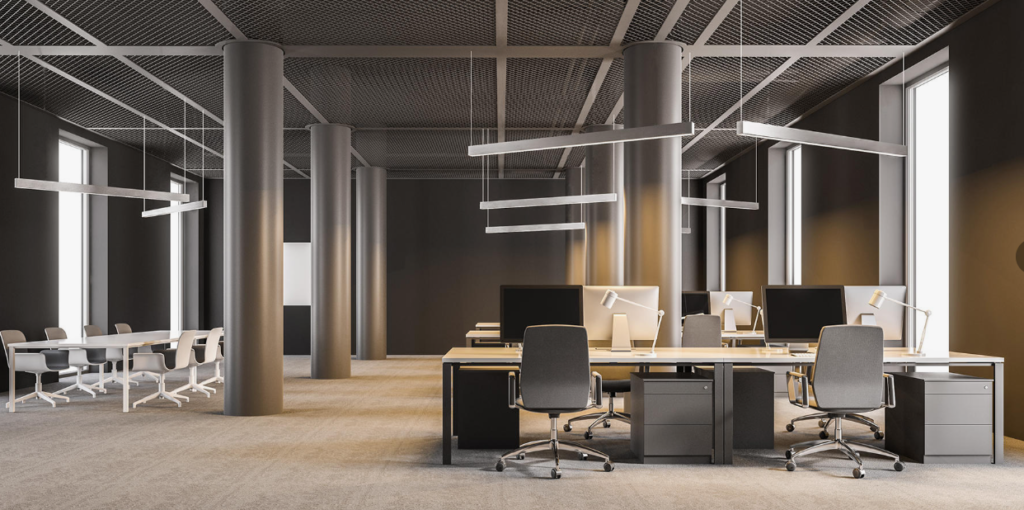
Lighting plays a fundamental role in how people experience a commercial space. It affects visibility, atmosphere, productivity, safety, and even the way customers perceive a brand. Well-planned commercial interior lighting can transform an ordinary workplace, retail environment, showroom, reception area, or service facility into a space that feels organized, welcoming, and purposeful. Instead of treating lighting as a basic utility, businesses can use it as an important part of interior design and daily operations, ensuring that employees have suitable working conditions while visitors can navigate and interact with the space comfortably.
Modern businesses also face growing expectations around energy efficiency, visual comfort, aesthetics, and operational costs. Customers notice whether a space feels inviting, while employees benefit from environments where lighting supports the tasks they perform throughout the day. commercial interior lighting therefore needs to balance practical performance with appearance, energy use, maintenance requirements, and the character of the business. A thoughtful lighting strategy can support everything from focused office work and product presentation to reception areas and customer-facing environments.
Understanding the Importance of Commercial Interior Lighting
Interior lighting has several functions within a commercial property, and each area may require a different approach. General lighting establishes overall visibility, task lighting provides focused illumination for specific activities, and accent lighting can draw attention to architectural details, displays, products, or branded elements. The most effective systems combine these layers instead of relying on a single lighting source throughout the building. Businesses should consider how people use each area, where employees spend extended periods, how customers move through the space, and which features deserve visual emphasis. A reception desk, for example, may require a welcoming appearance and clear visibility, while a workspace may prioritize comfortable illumination that minimizes glare. Understanding these differences helps businesses develop lighting that supports both practical requirements and the intended atmosphere.
Choosing the Right Lighting for Different Business Environments
Every commercial property has its own lighting requirements because activities, layouts, ceiling heights, finishes, and customer expectations vary considerably. Offices often need consistent illumination across workstations while avoiding distracting glare on computer screens. Retail spaces may require flexible lighting that makes merchandise appear clear and attractive, whereas restaurants can use warmer and more focused illumination to establish a particular atmosphere. Showrooms may combine broad overhead lighting with accent fixtures to emphasize selected products or displays. Industrial and service environments may prioritize visibility, durability, and task performance. The right solution begins with identifying the purpose of each space rather than selecting fixtures simply because they look appealing. This approach allows businesses to create a lighting plan that works with the architecture and supports the activities taking place within it.
Energy Efficiency and Operating Costs
Energy consumption is an important consideration for businesses that operate lighting systems for many hours each day. Modern LED technology can provide businesses with efficient illumination while offering flexibility in color temperature, fixture design, and control options. However, efficiency depends on more than simply replacing older lamps with newer ones. Businesses should consider fixture placement, lighting levels, occupancy patterns, controls, and how much illumination is actually needed in each area. Motion sensors, scheduling systems, and dimming controls can help reduce unnecessary energy use in suitable environments. A properly planned system can also make maintenance more predictable by reducing the frequency of lamp replacement and allowing businesses to organize servicing around operational requirements. When efficiency is considered during the planning stage, lighting can support long-term cost management without compromising the visual quality of the space.
Designing Lighting Around Brand Identity
Lighting can contribute significantly to the personality of a commercial environment. A business that wants a clean, contemporary appearance may choose crisp illumination and minimalist fixtures, while another may prefer warmer lighting to create a more relaxed atmosphere. The objective should not be to follow a trend but to create an environment that aligns with the business’s identity and the expectations of its customers. Accent lighting can highlight logos, architectural features, displays, artwork, or important areas without overwhelming the rest of the room. Consistency is particularly valuable for businesses operating multiple locations because similar lighting characteristics can help create a recognizable customer experience. Signworks Inc. can be part of a broader visual strategy in which signage, branding, and illumination work together to strengthen the presentation of a commercial property.
Improving Comfort, Productivity, and Visibility
A visually attractive lighting system is not necessarily an effective one if it creates excessive glare, shadows, uneven brightness, or uncomfortable contrast. Businesses should consider how lighting affects people who spend several hours inside the space. Employees working at desks, handling detailed tasks, serving customers, or operating equipment may require different illumination levels and distributions. Poorly positioned fixtures can create reflections on screens or make certain work surfaces difficult to see. On the other hand, overly bright lighting can make an environment feel harsh and uncomfortable. A balanced design distributes illumination appropriately while considering natural daylight, furniture placement, ceiling surfaces, wall colors, and the activities performed in each zone. Good planning can make a space easier to work in and more comfortable for customers without relying on excessive brightness.
The Role of Lighting Controls and Smart Technology
Lighting technology has developed beyond simple on-and-off switches. Businesses can now use controls that adjust illumination according to occupancy, time of day, daylight availability, or specific operating schedules. These systems can be particularly useful in larger commercial properties where different areas have different usage patterns. Meeting rooms, corridors, storage spaces, offices, and customer areas do not necessarily need identical lighting schedules. Zoning allows businesses to manage these areas independently, while dimming capabilities can provide greater control over brightness. Smart controls can also help facility managers understand usage patterns and identify opportunities to reduce unnecessary consumption. Technology should nevertheless be introduced according to actual business needs. A sophisticated system is most useful when employees can operate it easily and the controls provide a measurable practical benefit.
Maintenance and Long-Term Performance
Lighting should be evaluated as a long-term part of a commercial property’s infrastructure. Even high-quality fixtures require appropriate installation, inspection, cleaning, and occasional servicing. Dust, environmental conditions, changes to interior layouts, and aging components can influence lighting performance over time. Businesses should also consider how accessible fixtures are for maintenance before installation begins. A fixture that requires significant disruption to replace may create unnecessary operational difficulties. Proper planning can make routine maintenance easier and help preserve consistent illumination throughout the property. It is also useful to document fixture types and installation locations so that future repairs or upgrades can be handled efficiently. By considering maintenance from the beginning, businesses can protect the functionality and appearance of their lighting investment.
Creating a Future-Ready Commercial Lighting Strategy
A successful lighting plan should accommodate potential changes to the business rather than focusing exclusively on today’s layout. Offices may be reorganized, retail displays may move, departments may expand, and commercial spaces may be renovated over time. Flexible fixtures, adjustable systems, and appropriately designed electrical layouts can make future modifications easier. Businesses should also consider how new technology may integrate with an existing system without requiring a complete replacement. Planning for adaptability can be particularly valuable for growing organizations because the lighting system can evolve alongside the space. The objective is not to install the most complicated solution available, but to create a practical foundation that can accommodate changing operational needs while maintaining good visibility, comfort, efficiency, and visual consistency.
Conclusion
Effective commercial interior lighting is a combination of functionality, comfort, efficiency, aesthetics, and thoughtful planning. Businesses should evaluate each area according to how it is used, consider energy consumption and maintenance requirements, and select fixtures and controls that complement the property’s architecture and brand identity. From offices and retail environments to showrooms, reception areas, and service facilities, the right lighting can improve visibility while creating a more purposeful and welcoming environment. By treating lighting as an important component of the overall commercial experience rather than a simple electrical requirement, businesses can create spaces that work better today and remain adaptable for the future.