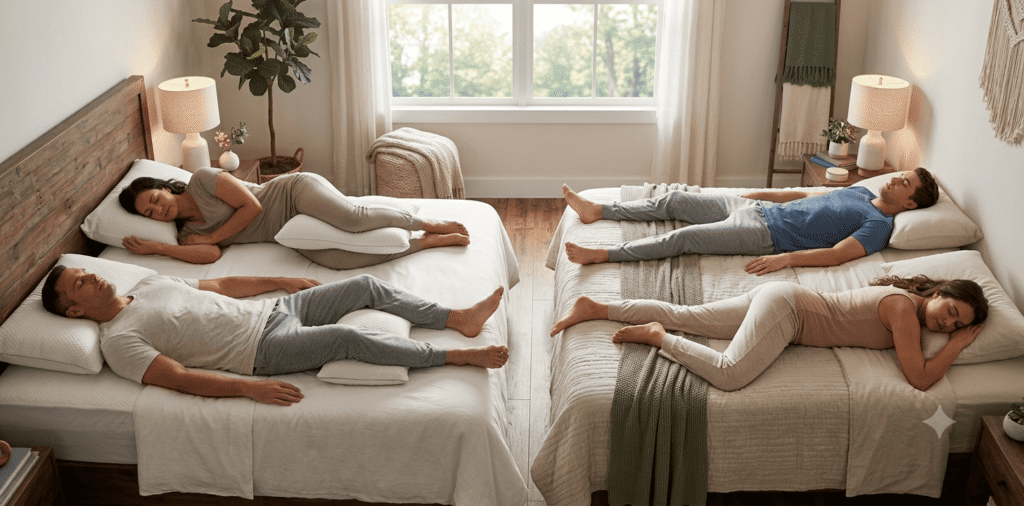
Getting quality sleep depends on far more than just the number of hours spent in bed, since how you position your body, and even which direction you face, can meaningfully influence how rested you feel each morning. Cultural traditions, scientific research, and personal comfort all play a role in this ongoing conversation, often leading to conflicting advice about what actually counts as the “best” way to sleep. The truth is that the ideal best direction and position can vary depending on your health needs, life stage, and personal circumstances, whether you’re managing a pregnancy, dealing with migraines, or simply sharing a bed with a partner.
This guide breaks down what research and common practice suggest about sleep direction and position, helping you find the setup that works best for you.
Why Sleep Direction and Position Both Matter
Both the direction you face and the position your body takes during sleep can influence circulation, digestion, breathing, and even how your brain processes rest throughout the night. While position tends to have more scientifically documented effects, particularly on spinal health and breathing, direction has long been discussed in various cultural and wellness traditions as having its own subtle influence. Understanding both factors together offers a more complete picture of how to set yourself up for genuinely restful sleep.
Which Direction Is Best for Sleeping?
Exploring the question of which direction is best for sleeping reveals a mix of traditional beliefs and some proposed physiological explanations, particularly around the earth’s magnetic field and its potential effects on the body. While scientific consensus on this topic remains limited, many people report feeling more rested when sleeping in a direction aligned with personal or cultural preference. Exploring this question can be a worthwhile part of your sleep routine, even if the effects are more subjective than universally proven.
Exploring the Best Sleeping Direction Scientifically
Taking a closer, more evidence-based look at the best sleeping direction helps separate genuine research from popular belief, since much of the available evidence remains inconclusive or limited in scope. Some studies have explored potential connections between sleep direction and blood pressure or heart rate, though results have generally been mixed rather than definitive. This makes sleep direction more of a personal or cultural consideration than a strictly science-backed recommendation at this stage.
Cultural Beliefs vs Scientific Evidence on Sleep Direction
Many cultures have long-standing beliefs about the ideal sleeping direction, often tied to religious, spiritual, or traditional medicine practices that predate modern scientific research. These beliefs can carry real personal significance and comfort for those who follow them, even without strong scientific backing behind the specific claims. Balancing respect for these cultural traditions with an understanding of what current research actually shows helps create a more informed, personalized approach to sleep direction.
Understanding the Best Sleeping Position Overall
Turning to physical posture, exploring the best sleeping position overall reveals that back and side sleeping are generally considered the healthiest choices for most people. These positions tend to support more natural spinal alignment compared to stomach sleeping, which often requires the neck to twist uncomfortably for extended periods. Understanding these general guidelines provides a helpful starting point before considering more specific personal circumstances.
How Sleeping Position Affects Health
Your sleeping position influences far more than just comfort, playing a direct role in spinal alignment, breathing quality, digestion, and even skin health over time. Poor positioning can contribute to issues like chronic back and neck pain, disrupted circulation, or increased snoring, while supportive positions can actively improve rest quality. Given how many hours we spend asleep over a lifetime, understanding this connection makes it clear why position deserves real consideration.
Back Sleeping: Pros and Cons
Back sleeping is often praised for its ability to evenly distribute body weight and support the spine’s natural curve, particularly when paired with a properly supportive pillow. However, this position can sometimes worsen snoring or sleep apnea symptoms in certain individuals, since gravity can cause the tongue and soft tissues to partially block the airway. Weighing these pros and cons against your own health profile helps determine whether back sleeping is truly the right choice for you.
Side Sleeping: Pros and Cons
Side sleeping remains one of the most popular and generally recommended positions, particularly for pregnant individuals and those prone to snoring, since it helps keep airways clearer than back sleeping. On the downside, side sleeping can sometimes contribute to shoulder or hip discomfort if not paired with adequate cushioning in those areas. Choosing the correct side, along with proper pillow support, can help minimize these potential downsides while still enjoying the position’s benefits.
Stomach Sleeping: Pros and Cons
Stomach sleeping is generally considered the least favorable position from a spinal health perspective, since it typically forces the neck into an unnatural twisted angle for extended periods. Some people find this position genuinely comfortable and even helpful for certain types of snoring, though the potential strain on the neck and lower back usually outweighs these benefits for most sleepers. Those who strongly prefer this position may benefit from a thinner pillow and additional support under the pelvis to help reduce strain.
The Spoon Position for Couples
For couples who enjoy close physical contact at bedtime, understanding the spoon position reveals why this particular arrangement remains such a popular choice for shared sleeping. This position allows both partners to maintain side sleeping, generally considered the healthier option, while still enjoying physical closeness and intimacy. Many couples find that starting the night in this position before naturally shifting to more independent postures offers a good balance of connection and comfort.
Common Couple Sleeping Positions and What They Mean
Beyond spooning, exploring various couple sleeping position arrangements reveals how physical closeness during sleep can reflect relationship dynamics and individual comfort preferences. Some couples prefer back-to-back sleeping to maintain independence while staying physically connected, while others favor positions that emphasize closeness throughout the night. Understanding these different patterns can help couples find a shared sleeping arrangement that balances comfort with connection.
Best Sleeping Position for a Baby with a Stuffy Nose
Parents navigating congestion in a young child often look for the best sleeping position for baby with stuffy nose situations that can safely ease breathing difficulties. This typically involves slightly elevating the head end of the crib mattress while always adhering to safe sleep guidelines rather than adding loose pillows or props near the baby. This gentle adjustment can help ease congestion while keeping the baby safely and securely positioned throughout the night.
Sleeping Position During the First Trimester of Pregnancy
Early in pregnancy, understanding the ideal sleeping position in first trimester months helps set the stage for healthy sleep habits as the pregnancy progresses. While most positions remain relatively comfortable during this early stage, beginning to favor side sleeping, particularly on the left side, can help the body adjust gradually before it becomes more medically important later in pregnancy. Starting these habits early often makes the transition smoother as physical changes become more pronounced.
Best Sleeping Position for Migraine Sufferers
For those managing frequent headaches, understanding the ideal migraine sleeping position can play a meaningful role in reducing the frequency or intensity of episodes. Sleeping on the back or side with proper neck support tends to work best, since poor neck alignment during sleep has been linked to triggering or worsening migraine symptoms. Avoiding stomach sleeping and ensuring consistent, supportive positioning throughout the night can offer real relief for migraine-prone individuals.
Using Yoga to Improve Your Sleeping Position
Incorporating gentle practices explored in yoga in sleeping position routines can help the body relax into healthier positions more naturally before drifting off to sleep. Certain poses and stretches performed before bed can ease muscle tension and improve flexibility, making it easier to settle into and maintain a supportive sleeping position throughout the night. This kind of pre-sleep routine offers a helpful complement to simply choosing the right position on its own.
The Fetal Position and Stomach Discomfort
For those who naturally curl up while sleeping, understanding the connection between fetal position stomach pain and this common sleeping style can help clarify when the position is helpful versus potentially problematic. While a loosely curled fetal position can ease certain types of discomfort, sleeping too tightly curled can sometimes restrict deep breathing or contribute to digestive discomfort for some individuals. Adjusting the tightness of the curl slightly often preserves the comfort benefits while minimizing any potential downsides.
How to Choose the Right Position Based on Health Conditions
Certain health conditions call for specific positioning considerations beyond general preference, including pregnancy, acid reflux, sleep apnea, and chronic back or neck pain. Understanding how your particular health circumstances interact with different sleeping positions helps you make more informed choices rather than relying solely on habit or comfort alone. Consulting with a healthcare provider about position recommendations can be especially valuable for those managing ongoing medical conditions.
Combining Direction and Position for Optimal Sleep
While position tends to carry more scientifically established benefits, combining a comfortable, supportive sleeping position with a direction that feels personally or culturally meaningful can create a more holistic approach to your sleep routine. There’s no harm in experimenting with different directional orientations while maintaining a healthy sleeping position, since the two factors aren’t mutually exclusive. Approaching both elements together allows you to build a sleep setup that feels both physically supportive and personally comfortable.
Common Mistakes People Make with Sleep Position
Many people default to whatever position feels most immediately comfortable without considering the longer-term effects on spinal health, breathing, or existing medical conditions. Others fail to adjust their pillow or mattress support to match their preferred position, undermining much of the potential benefit even when the position itself is a healthy choice. Avoiding these common oversights by pairing the right position with proper supportive bedding leads to noticeably better results.
Tips for Transitioning to a Healthier Sleep Setup
Switching to a new sleeping position or direction often requires patience, since the body tends to default back to familiar habits without conscious effort. Using supportive pillows strategically placed around your body can help train yourself into a new position gradually, rather than attempting an abrupt overnight change. Giving yourself several weeks to adjust, rather than expecting immediate results, tends to lead to a much more successful and lasting transition.
How Your Mattress and Pillow Support Position and Direction
Regardless of which position or direction you choose, having a mattress and pillow suited to your specific needs makes a significant difference in how comfortably you can maintain that setup throughout the night. A mattress that’s too soft or too firm can undermine even the healthiest sleeping position, while an improperly sized pillow can prevent proper neck alignment regardless of which way you’re facing. Investing in supportive, well-matched bedding is often just as important as the position or direction itself.
When to Consult a Doctor About Sleep Position
While most adjustments to sleep position and direction can be made independently based on personal comfort and general guidelines, certain situations call for professional input. If you’re managing a specific medical condition, recovering from an injury, or experiencing persistent pain that doesn’t improve with position changes, consulting a doctor or physical therapist is a wise step. Professional guidance ensures that any changes you make truly support your health rather than inadvertently causing further strain.
Conclusion
Finding the best direction and position to sleep ultimately comes down to a combination of general health guidelines, personal comfort, and any specific circumstances unique to your body or life stage. While scientific evidence around sleep direction remains limited, sleeping position carries much more established research supporting positions like back and side sleeping for overall spinal and breathing health. Whether you’re navigating pregnancy, managing migraines, sharing a bed with a partner, or simply looking to improve your general sleep quality, understanding how these different factors interact empowers you to make more informed choices. Taking the time to experiment thoughtfully with both direction and position is a simple yet meaningful step toward genuinely better rest.
FAQs
- Does the direction I sleep in actually affect my health?
Scientific evidence on sleep direction remains limited, though many people report personal or cultural significance tied to sleeping in a particular direction.
- What is generally considered the healthiest sleeping position?
Back and side sleeping are typically considered the healthiest options, since they support better spinal alignment compared to stomach sleeping.
- What sleeping position is best for pregnant women?
Side sleeping, particularly on the left side, is generally recommended throughout pregnancy to support healthy blood flow and reduce pressure on major blood vessels.
- Can sleeping position help reduce migraines?
Yes, sleeping on the back or side with proper neck support can help reduce the frequency or intensity of migraines linked to poor neck alignment during sleep.
- Is it safe for couples to sleep in close positions like spooning?
Yes, spooning allows both partners to maintain side sleeping while enjoying physical closeness, making it a comfortable and commonly recommended choice for couples.
- How can yoga help improve my sleeping position?
Gentle yoga poses and stretches before bed can ease muscle tension and improve flexibility, making it easier to settle into and maintain a supportive sleeping position.
- How long does it take to adjust to a new sleeping position?
Most people need several weeks of consistent effort for their body to fully adjust to a new sleeping position, so patience and gradual changes tend to work best.
Also Read:- Information on All Yoga Asanas and Their Benefits