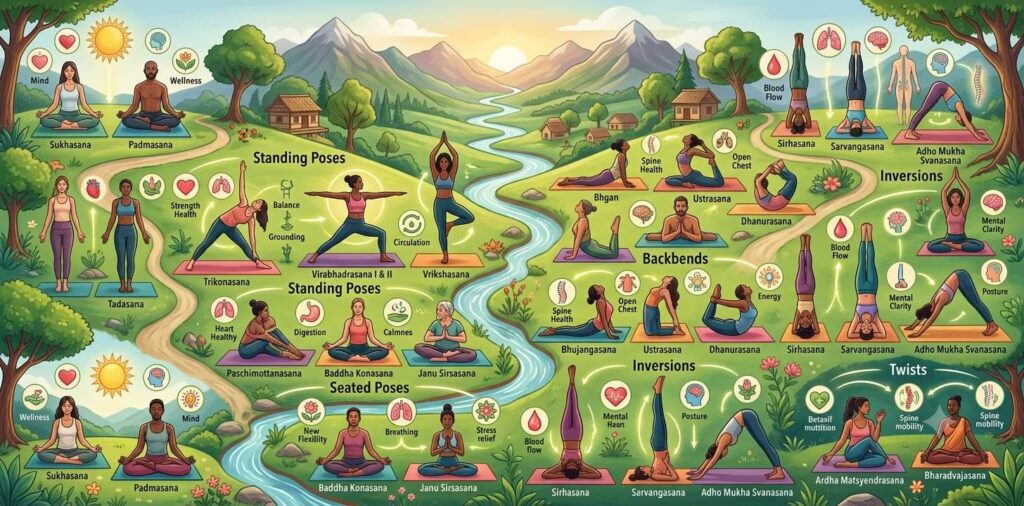
Yoga is an ancient practice that combines physical postures, breathing techniques, meditation, and mindfulness to improve overall health. Today, millions of people practice yoga to enhance flexibility, build strength, reduce stress, improve sleep, and support mental well-being. Whether you are a beginner or an experienced practitioner, understanding different yoga asanas and their benefits can help you choose the right practice for your goals. From standing poses and seated stretches to balancing postures and breathing exercises, every yoga asana offers unique physical and mental advantages.
What Are Yoga Asanas?
Yoga asanas are physical postures designed to strengthen the body, improve flexibility, enhance balance, and calm the mind. They form one of the most important aspects of traditional yoga practice and can be adapted for people of all ages and fitness levels.
Why Should You Practice Yoga Daily?
Practicing yoga regularly supports cardiovascular health, muscle strength, flexibility, posture, breathing efficiency, and emotional balance. Even 20–30 minutes of daily yoga can contribute to long-term health benefits.
Types of Yoga Asanas
Yoga includes several categories of poses, including:
- Standing poses
- Sitting poses
- Forward bends
- Backbends
- Twisting poses
- Balance poses
- Inversions
- Restorative poses
- Pranayama (breathing practices)
- Meditation
Each category serves a different purpose and contributes to overall wellness.
Yoga Asanas for Beginners
Beginners should start with simple Yoga Asanas that improve flexibility, posture, and confidence before progressing to advanced postures.
Surya Namaskar (Sun Salutation)
Surya Namaskar is one of the most complete yoga sequences. It combines twelve flowing movements that engage nearly every muscle group while improving circulation and flexibility.
Benefits of Surya Namaskar
The Benefits of Surya Namaskar include improved metabolism, better flexibility, stronger muscles, enhanced blood circulation, and increased energy throughout the day.
Bhujangasana (Cobra Pose)
The Bhujangasana Cobra Pose strengthens the spine, stretches the chest and abdomen, improves posture, and helps relieve mild back stiffness.
Ardha Matsyendrasana
ardha matsyendrasana is a seated spinal twist that improves spinal mobility, aids digestion, and enhances flexibility in the back and shoulders.
Dhanurasana (Bow Pose)
The benefits of dhanurasana include strengthening the back, improving posture, stretching the chest, and increasing flexibility throughout the body.
Hatha Yoga
The Benefits of Hatha Yoga include stress reduction, improved flexibility, better concentration, enhanced breathing, and increased overall physical fitness.
Vajrasana (Thunderbolt Pose)
The Benefits of Vajrasana include improved digestion, better posture, enhanced blood circulation, and a calm, focused mind. It is one of the few yoga poses that can be practiced after meals.
Kapalbhati Pranayama
Practicing kapalbhati for sleep benefits may improve respiratory function, mental clarity, energy levels, and relaxation when performed correctly.
Bhramari Pranayama
The Benefits of Bhramari Pranayama include reducing stress, calming the nervous system, improving concentration, and supporting better sleep quality.
Pran Mudra
The Pran Mudra Benefits include improved energy flow, enhanced immunity, reduced fatigue, and better focus during meditation.
Baddha Konasana (Butterfly Pose)
The Benefits of Baddha Konasana include increased hip flexibility, improved circulation in the pelvic region, and reduced lower-body stiffness.
Sirsasana (Headstand)
The Benefits of Sirsasana include improved balance, enhanced blood circulation to the brain, stronger shoulders, and better concentration. Beginners should learn this pose under qualified supervision.
Standing Yoga Poses
Standing yoga poses improve stability, strengthen the legs, enhance posture, and develop body awareness. They also help build endurance and improve coordination.
Sitting Yoga Poses
Seated postures gently stretch the hips, hamstrings, and lower back while promoting relaxation and mindfulness.
Backbend Yoga Poses
Backbends help improve spinal flexibility, expand the chest, strengthen the back muscles, and encourage better posture.
Twisting Yoga Poses
Twisting poses improve spinal mobility, stretch the torso, and help release muscle tension accumulated from prolonged sitting.
Balancing Yoga Poses
Balance poses strengthen the core, improve coordination, and enhance concentration by encouraging body awareness and stability.
Inversion Yoga Poses
Inversions, such as headstands and shoulder stands, challenge balance and strength while offering unique physical and mental benefits. They should always be practiced with proper guidance.
Breathing Techniques in Yoga
Pranayama exercises improve lung capacity, oxygen circulation, mental clarity, and emotional well-being. They are an essential part of a balanced yoga practice.
Meditation and Relaxation
Meditation complements yoga by reducing stress, calming the mind, improving emotional resilience, and enhancing overall mental health.
Tips for Safe Yoga Practice
To practice yoga safely:
- Warm up before beginning.
- Never force a pose.
- Focus on steady breathing.
- Practice regularly.
- Listen to your body.
- Use a yoga mat for stability.
- Stay hydrated.
- Seek guidance for advanced poses.
Conclusion
Yoga is much more than physical exercise—it is a holistic practice that nurtures the body, mind, and spirit. From beginner-friendly poses to advanced inversions, each yoga asana offers unique health benefits, including improved flexibility, strength, posture, balance, and mental clarity. Incorporating breathing exercises, meditation, and mindful movement into your daily routine can significantly enhance your overall well-being. Whether your goal is better fitness, stress relief, improved sleep, or long-term health, regular yoga practice provides a natural and sustainable path toward a healthier lifestyle.
FAQs
- Which yoga asana is best for beginners?
Simple poses such as Vajrasana, Bhujangasana, Tadasana, and Surya Namaskar are excellent for beginners.
- How long should I practice yoga daily?
Practicing yoga for 20–45 minutes daily is generally sufficient for maintaining good physical and mental health.
- Can yoga improve flexibility?
Yes. Consistent yoga practice gradually improves flexibility, joint mobility, and muscle elasticity.
- Which yoga pose is best for stress relief?
Bhramari Pranayama, Vajrasana, meditation, and gentle stretching poses are effective for reducing stress.
- Is Surya Namaskar a complete workout?
Yes. Surya Namaskar engages multiple muscle groups, improves cardiovascular fitness, flexibility, strength, and coordination.
- Can yoga help improve sleep?
Yes. Gentle yoga, breathing exercises, and meditation can relax the nervous system, reduce stress, and support better sleep quality.
- Is yoga suitable for all age groups?
Yes. Yoga can be adapted to suit children, adults, seniors, and people with varying levels of fitness and mobility.