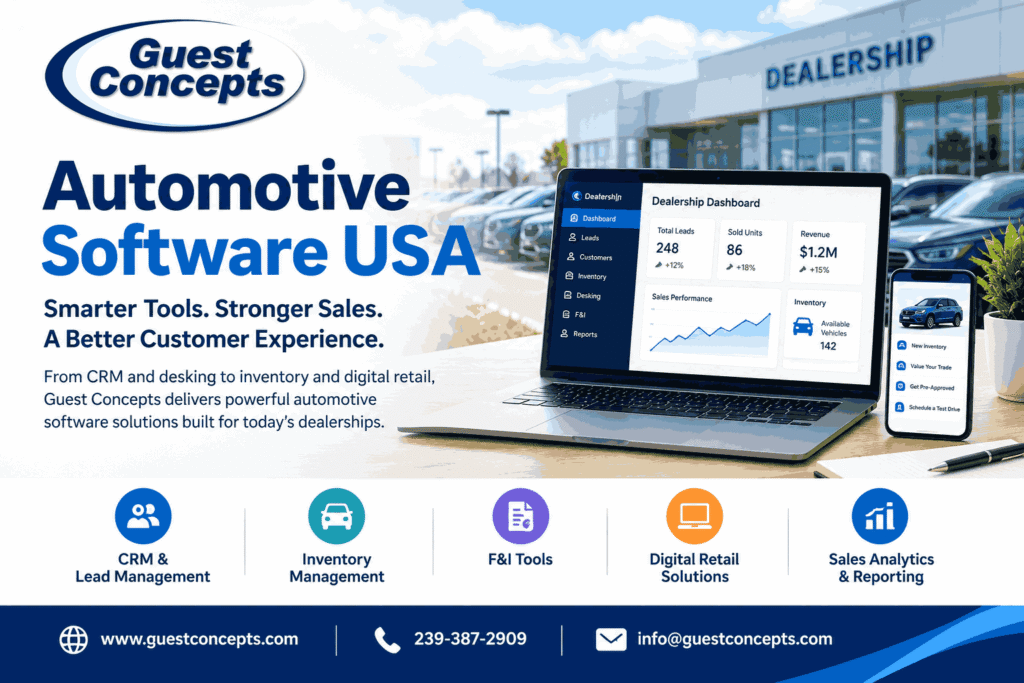
The automotive industry in the United States is changing faster than ever. Customers now expect a vehicle-buying experience that is quick, transparent, convenient, and connected across online and in-store channels. For dealerships, meeting these expectations requires more than a strong sales team—it requires the right technology. Automotive software USA solutions are helping dealerships manage sales, customer engagement, inventory, financing, and digital retail processes from connected platforms.
What Is Automotive Software?
Automotive software refers to digital tools designed specifically for dealerships, automotive groups, and vehicle retailers. These platforms can bring multiple dealership functions together, helping employees work more efficiently while giving customers a smoother buying experience.
Modern automotive software may include:
- Customer relationship management (CRM)
- Digital retailing tools
- Automotive desking software
- Inventory management
- F&I presentation tools
- Lead management
- Sales analytics and reporting
- Customer communication
- Online vehicle-buying capabilities
Instead of relying on disconnected spreadsheets and applications, dealerships can use integrated technology to organize important information and create more consistent workflows.
Why Automotive Software Matters for U.S. Dealerships
American car buyers increasingly research vehicles, compare prices, explore financing options, and communicate with dealerships online before visiting a showroom. This means dealerships need to connect the digital and physical parts of the customer journey.
Effective automotive software USA solutions can help dealerships respond to this shift by giving sales teams access to relevant customer and transaction information.
Faster Customer Response
Speed matters when a shopper submits an online inquiry. Lead management and automated communication tools can help sales teams organize incoming opportunities and follow up more consistently.
For example, a dealership receiving dozens of inquiries each day can use software to prioritize leads, track conversations, and identify opportunities requiring immediate attention.
More Efficient Sales Processes
Automotive desking software can simplify the process of presenting vehicle pricing, trade values, payment options, and deal structures. A centralized workflow can reduce repetitive manual tasks and make it easier for sales teams to keep information organized.
Better Customer Engagement
Today’s customers may interact with a dealership through websites, email, phone calls, text messages, and showroom visits. Automotive customer engagement software can help dealerships maintain continuity across these touchpoints.
When customer information is organized in one system, employees can spend less time searching for details and more time having productive conversations.
Key Features to Look For
Choosing automotive technology requires more than selecting a platform with the longest feature list. Dealerships should consider how effectively the software fits their existing processes.
Important capabilities may include:
CRM and lead management: Helps sales teams organize prospects, customer interactions, follow-ups, and opportunities.
Desking and payment presentation: Allows teams to present deal structures and payment options clearly while supporting a more transparent sales conversation.
Inventory management: Gives dealerships better visibility into available vehicles and helps connect inventory information with sales activities.
Digital retailing: Supports customers who want to begin or complete parts of the purchasing process online.
Analytics and reporting: Provides performance information that can help managers identify trends, bottlenecks, and opportunities for process improvement.
Integration capabilities: Software should work effectively with other dealership systems rather than creating another isolated data source.
How to Choose Automotive Software in the USA
Every dealership has different goals, inventory levels, customer volumes, and technology requirements. Before selecting a solution, decision-makers should evaluate:
- Business requirements: Identify the processes that need improvement first.
- Ease of use: Software should be practical for salespeople, managers, and other employees.
- Integration: Check compatibility with existing dealership systems.
- Scalability: Consider whether the platform can support future growth.
- Reporting: Look for useful, actionable performance insights.
- Customer experience: Evaluate how the technology affects the buyer journey.
- Vendor support: Reliable implementation and ongoing support are important for long-term adoption.
For larger dealer groups, scalability becomes especially important. Enterprise dealership software can help standardize processes across multiple locations while maintaining visibility for management teams.
The Future of Automotive Retail Technology
Automotive retail is moving toward increasingly connected customer journeys. Buyers may begin researching on a smartphone, communicate with a salesperson online, visit the dealership for a test drive, and complete financing or paperwork through digital tools.
This makes integration increasingly valuable. Instead of treating online and showroom interactions as separate experiences, dealerships can use technology to connect them.
The goal is not simply to automate every process. The most effective technology should help employees work smarter while making the buying experience easier for customers.
Conclusion
The right automotive technology can influence how efficiently a dealership manages customers, sales opportunities, inventory, financing, and digital interactions. For U.S. dealerships competing in an increasingly technology-driven market, choosing scalable and connected automotive software USA solutions can provide a stronger foundation for modern retail operations.
From CRM and lead management to desking, digital retailing, and analytics, the right tools can help dealerships create more organized workflows and deliver a more consistent customer experience.
If your dealership is looking to modernize its sales process and connect more parts of the automotive retail journey, Guest Concepts offers technology solutions designed around the evolving needs of automotive dealerships. Explore the available solutions at https://www.guestconcepts.com/ to learn how modern dealership technology can support your business.