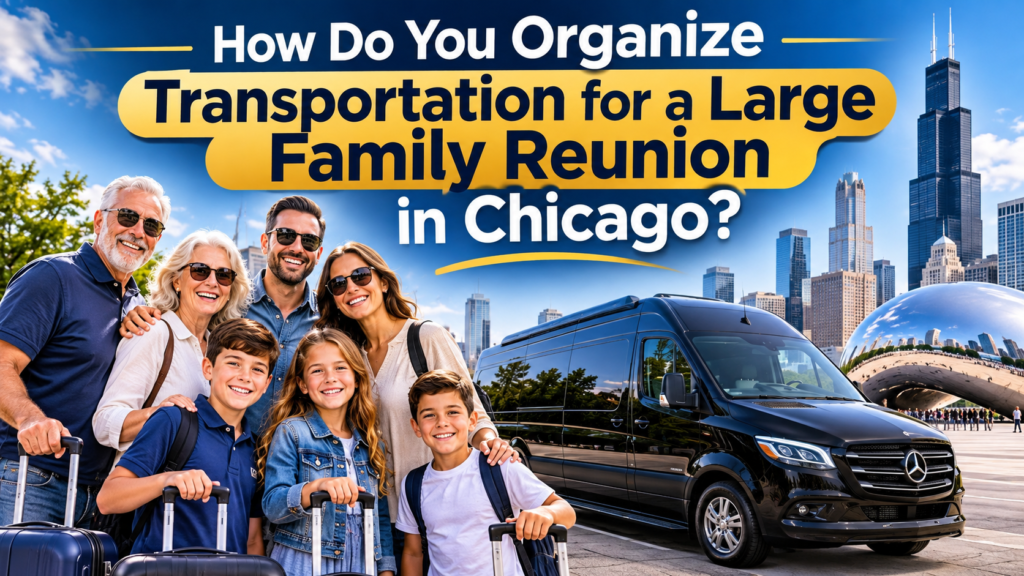
lanning a large family reunion in Chicago can be an exciting experience, especially when relatives are traveling from different cities to spend time together. However, organizing the event involves more than choosing a restaurant or reserving a gathering space. One important detail is figuring out how everyone will travel between meeting points, activities, and accommodations.
When a reunion includes grandparents, parents, children, and relatives who may not know the city, transportation can quickly become complicated. Some family members may arrive in their own vehicles, while others may depend on local transportation or need help getting from their hotels to the reunion location.
A clear transportation plan helps keep everyone connected, reduces confusion, and allows family members to spend more time together. With a little preparation, organizing group travel around Chicago can become a much simpler part of the reunion.
Start by Estimating How Many Family Members Will Attend
Before choosing transportation, determine how many people are expected to participate. The total number of relatives attending the reunion will influence the type of vehicles required and how the transportation schedule should be organized.
Create a basic guest list that includes adults, children, older relatives, and anyone who may need additional assistance. Ask family members to confirm whether they will need transportation or plan to drive themselves.
It is also helpful to distinguish between people attending the entire reunion and those joining only certain activities. For example, some relatives may attend the main family dinner but skip the afternoon sightseeing trip.
Having an accurate estimate prevents unnecessary bookings and makes it easier to select a transportation arrangement that accommodates the group comfortably.
Choose Convenient Meeting and Pickup Locations
Large family reunions often involve relatives staying at different hotels, homes, or short-term rentals. Asking everyone to travel independently to the same destination can create confusion, especially when some visitors are unfamiliar with Chicago.
Instead, consider establishing a few convenient meeting points.
A hotel where several relatives are staying may work as one pickup location. Another meeting point could be a family member’s home or a designated gathering area near the main event venue.
When selecting these locations, consider accessibility, available stopping areas, traffic conditions, and how easy they are for everyone to find.
Share the exact addresses with family members before the event. Avoid relying on general descriptions such as “meet downtown” or “near the restaurant.” Clear directions reduce the likelihood of people arriving at different entrances or waiting in the wrong location.
Select Transportation That Fits the Group
The right transportation arrangement depends on the size of the family, the number of planned stops, and how everyone will travel throughout the reunion.
A small family group may be comfortable using a few SUVs, while a larger gathering may benefit from passenger vans or multiple vehicles coordinated around the same schedule.
Some families prefer traveling together because it creates opportunities to socialize during the journey. Others may need separate transportation because relatives have different schedules or mobility requirements.
For families who want to coordinate travel in a dedicated vehicle, a Chicago Group Limo Service may be an option for arranging transportation between hotels, family gathering locations, restaurants, and other destinations.
Before confirming a reservation, check the actual passenger capacity and luggage space. The number of available seats is only one consideration. Everyone should have enough room to travel comfortably, particularly when children, older relatives, or additional belongings are involved.
Consider the Needs of Different Generations
One of the most important parts of organizing a family reunion is recognizing that not everyone has the same transportation needs.
Grandparents may prefer shorter walking distances and convenient pickup locations. Parents traveling with young children may need additional time for car seats and luggage. Teenagers and younger adults may be comfortable with a more active schedule involving several destinations.
A transportation plan should account for these differences rather than treating the entire group as if everyone has identical requirements.
When making arrangements, consider:
- Whether older relatives need easier vehicle access.
- Whether child safety seats are required.
- How much walking is involved at pickup and drop-off locations.
- Whether any passengers have mobility requirements.
- How much time the group needs to board and leave each location.
Discussing these needs in advance helps avoid last-minute problems and makes the experience more comfortable for everyone.
Create a Realistic Reunion Itinerary
A family reunion may include several activities over one or more days. The group might have a welcome dinner, a sightseeing afternoon, a family photo session, and a larger gathering at a reserved venue.
Trying to fit too many activities into a short period can make transportation difficult. Instead, build an itinerary that allows enough time for travel, meals, and family interaction.
Start by identifying the most important events and their locations. Then organize the schedule around those fixed commitments.
For example, a simple reunion day might include a morning pickup from selected hotels, an afternoon family activity, and an evening dinner reservation.
If the group plans to visit multiple destinations, consider arranging nearby activities together to reduce unnecessary travel across the city.
Leave some flexibility between activities. Family gatherings rarely run exactly according to schedule, especially when relatives have not seen one another for a long time and want additional time to talk.
Plan Around Chicago Traffic and Parking
Chicago offers many places for family gatherings, but moving a large group around the city requires some awareness of local traffic and parking conditions.
Downtown destinations, popular restaurants, entertainment districts, and major attractions can become busy during certain hours. Special events, road construction, and weekend traffic may also affect travel times.
Before finalizing the itinerary, review the locations and estimate how long each journey may take. Avoid scheduling consecutive activities with very little time between them.
Parking is another consideration. If several relatives are driving separate vehicles, finding enough convenient parking spaces near the same destination may be difficult or expensive.
A coordinated transportation arrangement can reduce the number of vehicles that need parking, although pickup and drop-off locations should still be checked in advance.
The goal is to make movement between activities predictable without creating an overly restrictive schedule.
Decide Whether to Use One Vehicle or Multiple Vehicles
Not every large family reunion can be accommodated by a single vehicle. The decision depends on the number of passengers, the group’s schedule, and the available vehicle options.
One vehicle may be suitable when the family is relatively small and everyone follows the same itinerary. Traveling together can make it easier to keep track of relatives and arrive at destinations as a group.
For larger gatherings, using multiple vehicles may be more practical. This allows the family to divide passengers into manageable groups while keeping pickup and arrival times coordinated.
For example, relatives staying at two different hotels could be assigned separate pickup arrangements. Both groups can then meet at the main reunion location at approximately the same time.
When comparing these options, consider the total number of passengers, luggage, travel time, and cost. The best arrangement is not always the one with the fewest vehicles. It is the one that makes the reunion easier to organize.
Keep Everyone Informed With One Communication Channel
Communication becomes increasingly important as the number of attendees grows.
If transportation details are shared through multiple conversations, some relatives may receive outdated pickup times or incomplete directions. This can lead to unnecessary calls and delays.
Creating a dedicated family group chat is a simple way to share updates.
Use it to communicate:
- Pickup times and meeting locations.
- The daily reunion itinerary.
- Destination addresses.
- Transportation contact information.
- Changes caused by weather or scheduling adjustments.
It may also help to assign one family member as the transportation coordinator. This person can communicate with the transportation provider, confirm passenger numbers, and share important updates with the rest of the family.
Having one main contact reduces the chance of receiving conflicting instructions from several relatives.
Organize Transportation for Family Meals and Special Activities
The main reunion gathering is often only one part of the celebration. Families may also arrange group dinners, museum visits, shopping trips, park outings, or other activities around Chicago.
Each activity may require a slightly different transportation plan.
A restaurant visit may involve a fixed reservation time and a specific drop-off location. A sightseeing day may require several stops and more flexibility. A family photo session may need additional time at the selected location.
When organizing these activities, confirm the destination addresses and estimated arrival times. If several stops are planned, provide the complete itinerary when making transportation arrangements.
It is also worth considering whether everyone needs to participate in every activity. Some relatives may prefer free time at the hotel, while others want to explore more of the city.
Allowing optional activities can make the reunion more enjoyable for people with different interests and energy levels.
Review the Transportation Budget
Transportation costs can become an important part of the reunion budget, particularly when relatives are traveling in a large group.
Before making reservations, decide how much the family is comfortable spending on transportation. Then compare available arrangements based on the number of passengers, planned destinations, and required service hours.
If several relatives are sharing the expense, agree on how the cost will be divided. Some families may prefer an equal contribution from each adult, while others may choose to include transportation in the overall reunion budget.
When requesting a quote, ask what the price includes. Confirm the service duration, waiting time, additional stops, overtime charges, and any other potential fees.
It is also useful to compare the cost of separate rides with the cost of a coordinated group arrangement. This provides a clearer picture of the overall expense rather than focusing only on the price of one vehicle.
Make Reservations Before the Reunion Date
Large family gatherings require coordination, and leaving transportation arrangements until the last minute can limit available choices.
Once the attendance estimate and itinerary are reasonably clear, begin contacting transportation providers.
Share the expected passenger count, pickup locations, destinations, schedule, and any special requirements. This information allows the provider to determine whether the requested arrangement is suitable.
Before confirming a reservation, review the booking details carefully. Make sure the date, pickup time, vehicle type, passenger capacity, and service duration are correct.
Ask about the process for making changes if the number of attendees increases or the itinerary needs to be adjusted.
Keep the reservation confirmation somewhere accessible so the transportation coordinator can refer to it when necessary.
Prepare a Backup Plan for Unexpected Changes
Even a well-organized reunion can experience unexpected changes.
A family member may arrive later than planned, the weather may affect outdoor activities, or the main gathering may run longer than expected.
It is helpful to identify which parts of the itinerary can be adjusted and which commitments must remain fixed.
For example, a restaurant reservation may have a specific arrival time, while a sightseeing stop may be flexible. Understanding these priorities makes it easier to manage changes without disrupting the entire day.
Keep transportation contact information available and communicate significant schedule changes as early as possible.
If the group is divided between several vehicles, make sure every coordinator receives the same updated information.
A little flexibility can prevent small disruptions from becoming major problems.
Make the Reunion About Spending Time Together
The purpose of a family reunion is to reconnect, share experiences, and create memories. Transportation should support those goals rather than become another source of stress.
Start by estimating attendance, understanding the needs of different relatives, selecting convenient pickup points, and creating a realistic itinerary. Then choose vehicles and booking arrangements that match the group’s size and schedule.
Clear communication and early planning can make a significant difference, especially when family members are visiting from different locations.
Whether the reunion involves a single dinner or several days of activities around Chicago, organizing transportation in advance helps everyone focus on the people they came to see.
A successful reunion does not depend on having an elaborate travel plan. It depends on making the important arrangements simple enough that the entire family can enjoy being together.