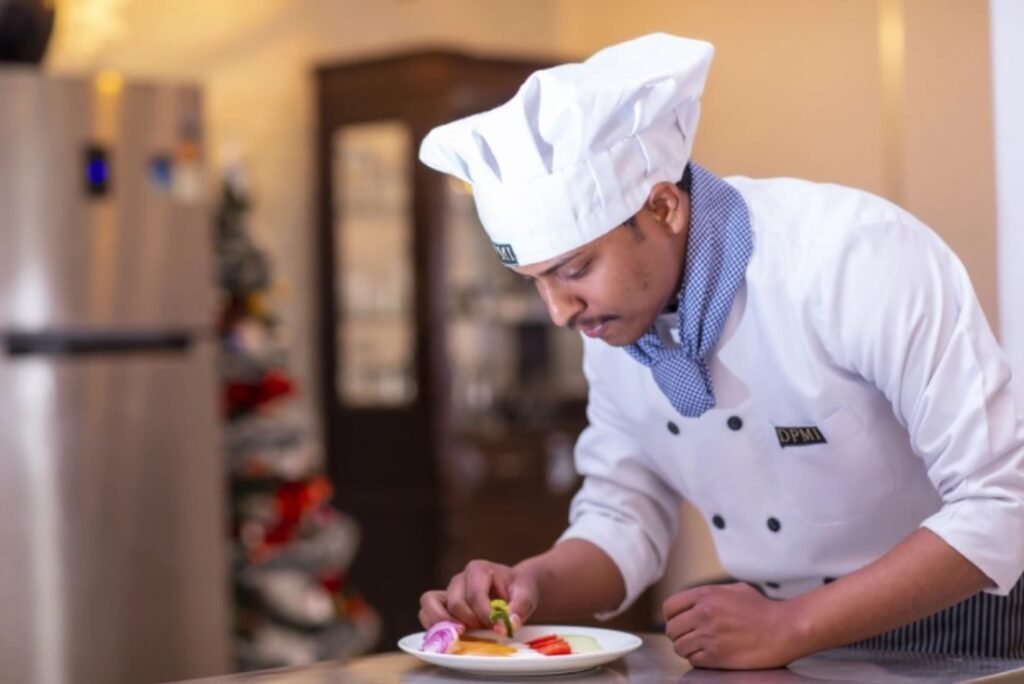
A hospitality degree can be useful if the person holding it can run a shift consistently and unsupervised. That is the standard DPMI School of Hotel Management sets on its Delhi campus, where students spend as much time in training kitchens and front office labs as in lecture halls. A maximum number of graduates get placed, a figure that reflects hands-on training over classroom theory alone.
For students weighing a Hotel Management Institute in Delhi NCR, the details worth checking are the ones DPMI leads with: recruiters from real hotel chains, hotel-style facilities, and instructors who have worked those floors themselves.
Front Office Skills That Set the Tone for the Guest Experience
Top institutions train students on this early, running front office labs where students handle mock check-ins, room allocation, billing queries, and guest complaints under time pressure. This kind of Hotel Management Course in Delhi NCR moves students past scripted greetings into the harder work of reading a guest’s mood and adjusting tone accordingly. Students build this skill set through daily front office drills covering:
- Reservation handling and room allocation
- Guest registration, billing, and checkout procedures
- Complaint resolution without escalating a guest’s frustration
- Telephone and email etiquette specific to hospitality settings
Housekeeping Operations and Attention to Detail
Housekeeping looks simple from outside a hotel room and looks entirely different once a student is assigned a floor with a fixed turnaround time. DPMI’s housekeeping training facilities put students through the same checklists, linen standards, and inspection routines used across the industry, down to how a bed is made and how a bathroom is inspected, so the habit of noticing small lapses becomes automatic rather than something they learn later, on the job, after a guest complaint. The housekeeping curriculum is broken into these working areas:
- Room inspection standards and turnaround timing
- Linen, laundry, and inventory management
- Safety and hygiene protocols for guest areas
- Coordination between housekeeping and front office during peak occupancy
Food Production and Culinary Fundamentals
DPMI’s training kitchens are where students first learn that professional cooking runs on discipline more than flair. Under working conditions, students practice knife skills, portion control, plating, and kitchen hygiene, building the same muscle memory that culinary teams rely on during a full house. This part of Hotel Management in Delhi leans heavily on repetition, because a rushed Friday dinner service leaves no room for hesitation over how to hold a knife or plate a dish under a ticket timer. Kitchen training at DPMI focuses on these core competencies:
- Basic to intermediate culinary techniques across cuisines
- Portion control, food costing, and wastage management
- Kitchen hygiene and food safety compliance
- Menu planning aligned with guest preferences and seasonality
Food and Beverage Service Skills
To serve a table effectively, one needs to have better coordination than meets the eye. The students get trained in the process of sequencing of service, tray presentation, table setting according to the meals of different time periods, as well as beverage knowledge including mixology basics. Timing the lessons of the Hotel Management Course in Delhi NCR is one of the essential skills that should not be acquired through an informal internship. The skills of service training include:
- Table setting and service sequencing for different meal periods
- Tray and crockery handling under time pressure
- Beverage service, including basic mixology and wine service
- Reading guest cues to adjust service pace
Event Management and Cross-Department Coordination
Weddings, conferences, and banquets require hotel staff to coordinate across departments that otherwise operate independently. Hence, students practice vendor coordination, floor planning, and timeline management before they encounter the pressure of a live event with a fixed start time, a seating chart that changes twice in the same afternoon, and a client watching the clock. The specific coordination skills developed during this module include the following:
- Event planning, budgeting, and vendor coordination
- Banquet and conference floor setup
- Timeline management for multi-department events
- Client communication under live event pressure
Soft Skills DPMI Treats as Non-Negotiable
Technical skills alone do not carry a hospitality career. DPMI upskills qualities for hotel professionals- multitasking, communication, analytical thinking, composure under pressure, and adaptability- gets built into daily coursework rather than treated as a one-off soft-skills workshop. These traits get reinforced through specific, practised habits, such as:
- Verbal and written communication across guest and staff interactions
- Multitasking across simultaneous guest requests
- Composure and decision-making during high-pressure service
- Adaptability to unexpected changes in schedules or guest needs
Conclusion
Hospitality is one of the few fields where the classroom and the job sit in the same room, which is how DPMI School of Hotel Management designs its training.
With a strong placement record, DPMI backs its training with outcomes rather than promises. For families evaluating a Hotel Management Institute in Delhi NCR, the practical question is simple: which one lets you practice the job first?