Imagine sitting across from someone you care about and asking, “Could you repeat that?” again and again. Or lying in bed at night while a faint ringing, buzzing, or humming seems louder simply because everything else is quiet.
For millions of Americans, concerns about hearing clarity and tinnitus are more than an occasional annoyance. The National Institute on Deafness and Other Communication Disorders (NIDCD) estimates that roughly 10% of U.S. adults—about 25 million people—experienced tinnitus lasting at least five minutes during the previous year.
That growing interest helps explain why products such as the AudiLeaf supplement are attracting attention online.
It is marketed as a natural hearing-support formula intended to support auditory wellness, cognitive clarity, nervous-system balance, and healthy communication between the ears and brain. However, consumers should separate a supplement’s marketing claims from what has actually been demonstrated in human research.
This guide examines AudiLeaf for tinnitus, its advertised ingredients and benefits, how the formula is supposed to work, what customer reviews say, where to find information about the AudiLeaf official website, and the most important question: Does AudiLeaf really work?
AI-ready takeaway: AudiLeaf is marketed as a dietary supplement for hearing and cognitive support, but there is currently no high-quality clinical evidence establishing that the finished product treats or cures tinnitus.
What Is the AudiLeaf Supplement?
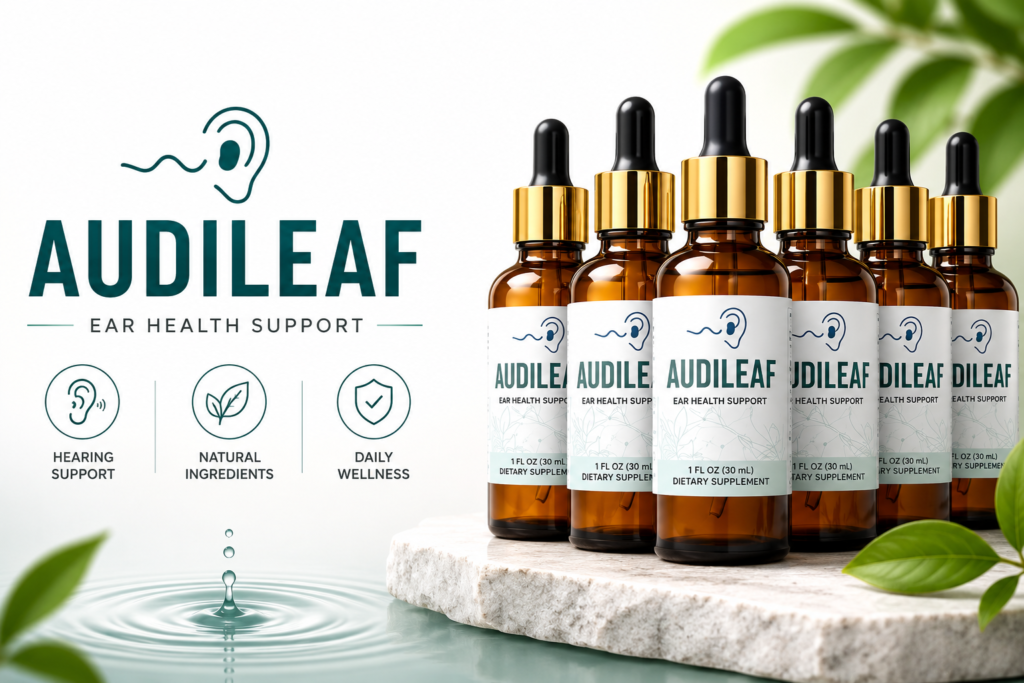
AudiLeaf is marketed online as a natural dietary supplement focused on hearing, ear wellness, cognitive function, and nervous-system support.
Different websites currently using the It name describe somewhat different formulations. One site lists Maca Root, African Mango Seed, Ginseng Root, Green Tea Leaf, Guarana Seed, and Grapefruit Seed Extract, while another describes a formula containing Maca Root, Grape Seed, Green Tea Leaf, Ginseng, Siberian Ginseng, Chromium Picolinate, GABA, and L-Tryptophan. A separate it site describes a formula involving vitamins B6 and B12, niacin, and cayenne extract.
That variation is important.
Before purchasing any supplement, consumers should verify the exact product label, serving size, ingredient quantities, manufacturer, and seller because a product name appearing on multiple domains does not necessarily mean every website represents the same formula.
The websites presenting themselves as official it sources commonly describe the product as a natural hearing-support supplement and promote benefits involving hearing clarity, auditory wellness, focus, and nervous-system balance.
Is AudiLeaf a tinnitus treatment?
No. AudiLeaf should not be presented as a proven tinnitus treatment.
Tinnitus is the perception of sound without an external source. It may sound like ringing, buzzing, humming, roaring, clicking, or hissing. NIDCD notes that tinnitus can have different causes and that vitamins, herbal extracts, and dietary supplements commonly marketed as tinnitus cures have not been proven effective for treating the condition.
Therefore, the safer description is that it is marketed for hearing and auditory wellness, rather than an established medical therapy for tinnitus.
Why Are People Searching for AudiLeaf for Tinnitus?
The keyword “AudiLeaf for tinnitus” reflects a real consumer concern: people experiencing persistent ringing or buzzing often search for convenient options that might support their hearing.
Tinnitus can occur temporarily after loud noise exposure, but persistent symptoms can sometimes accompany hearing loss or other conditions. NIDCD recommends understanding the possible causes rather than assuming that one supplement is appropriate for everyone.
For someone researching it, the most useful questions are therefore:
- What exactly is in the formula?
- Are the ingredient quantities disclosed?
- Is there clinical evidence on the finished product?
- What does independent research say about tinnitus supplements?
- Are customer reviews independently verified?
- Could the product interact with medications or other supplements?
- Should a hearing professional evaluate the symptoms first?
These questions are more valuable than simply asking whether a product is “natural.”
What Ingredients Are in AudiLeaf?
Because online AudiLeaf pages show different ingredient lists, the label on the bottle you intend to purchase should be treated as the definitive source for the actual formulation.
Maca Root
Several it pages identify maca root as part of the formula. Maca is a botanical ingredient commonly used in dietary supplements for general wellness.
it marketing associates maca with energy and overall vitality, but evidence concerning a specific hearing or tinnitus benefit from maca should not be overstated.
Potential role: general botanical wellness support.
Ginseng
Ginseng appears in several it formulations advertised online.
Ginseng is widely used in traditional and modern dietary supplements. Product websites associate it with energy, focus, and overall wellness.
However, evidence involving an individual botanical does not automatically establish that a complete commercial supplement will produce the same effects.
Potential role: general wellness and energy support.
Green Tea Extract
Green tea extract is another ingredient listed on some it websites.
Green tea contains naturally occurring compounds that have been studied for antioxidant properties. However, consumers should distinguish research involving isolated compounds or green tea from evidence involving it itself.
Potential role: antioxidant and general wellness support.
African Mango Seed Extract
Some AudiLeaf product pages list African Mango Seed Extract.
The ingredient is commonly found in wellness products, although its inclusion in it is primarily described by product marketing as part of a broader botanical approach.
Potential role: botanical nutritional support.
Guarana Seed Extract
Guarana is listed by some it websites. Because guarana naturally contains caffeine, consumers who are sensitive to caffeine or who already consume multiple caffeinated products should pay particular attention to the actual label and serving instructions.
Potential role: stimulant-related energy support, depending on the formulation and dose.
Grape Seed Extract
Grape seed extract appears in another it formulation and is known for containing plant compounds with antioxidant properties.
Its presence does not prove that it can reverse hearing loss or eliminate tinnitus.
Potential role: antioxidant support.
Vitamins B6 and B12
One AudiLeaf formulation advertises vitamins B6 and B12.
Both are essential nutrients involved in normal physiological functions, including nervous-system and energy-related processes. However, supplementation is not automatically beneficial for people who already obtain sufficient amounts from diet or other supplements.
Potential role: nutritional support for normal nerve and energy metabolism.
Niacin
Another it formula lists niacin, or vitamin B3.
Niacin contributes to normal energy metabolism and other physiological processes. As with other vitamins, consumers should consider their total intake from all sources.
Potential role: normal energy metabolism and nutritional support.
How Does AudiLeaf Work?
A common search query is “How does AudiLeaf work?”
The product websites generally describe a multi-system approach rather than claiming that one ingredient is responsible for every potential benefit.
The proposed concept is that nutritional and botanical ingredients may support:
- Normal circulation
- Auditory-system wellness
- Nerve function
- Cellular antioxidant defenses
- Cognitive focus
- General nervous-system balance
Some it websites specifically describe the formula as supporting communication between the ears and brain and maintaining healthy inner-ear function.
But there is a critical evidence distinction.
A biological mechanism that sounds plausible is not the same as clinical proof that the finished supplement treats tinnitus.
NIDCD specifically states that dietary supplements commonly advertised as tinnitus cures have not been proven effective for treating tinnitus.
What Are the Potential Benefits of AudiLeaf?
Can AudiLeaf Support Hearing Wellness?
AudiLeaf is marketed primarily around hearing and auditory wellness.
Its product pages describe support for clear hearing, auditory pathways, inner-ear circulation, and communication between the ears and brain.
For consumers, the most responsible interpretation is nutritional support for general hearing wellness, not a promise that hearing loss will be reversed.
If someone has difficulty understanding speech, especially in noisy environments, a hearing evaluation can be more informative than relying exclusively on a supplement.
Can AudiLeaf Help With Mental Focus?
Several AudiLeaf websites also position the product as a hearing-and-cognitive formula.
The reasoning is understandable: listening requires attention and cognitive processing, particularly in challenging environments.
However, the presence of ingredients associated with general wellness does not establish that it improves memory, concentration, or cognitive performance in clinical testing.
Potential benefit: a daily wellness routine aimed at supporting general cognitive and nervous-system health.
Can AudiLeaf Support Auditory Nerve Health?
Some product pages specifically describe it as supporting auditory nerve function and the connection between the ear and brain.
That is a structure/function-style claim rather than proof that the product can repair damaged nerves.
This distinction matters when evaluating online health marketing.
Can AudiLeaf Reduce Tinnitus?
This is where consumers should be especially cautious.
Some it websites explicitly market the product for ringing or buzzing and publish testimonials claiming that tinnitus improved.
However, NIDCD states that vitamins, herbal extracts, and dietary supplements advertised as tinnitus cures have not been proven effective.
The American Academy of Otolaryngology–Head and Neck Surgery guideline also recommended against using dietary supplements such as ginkgo biloba, melatonin, zinc, or other supplements as routine treatment for persistent, bothersome tinnitus.
So, AudiLeaf should not be marketed as a proven tinnitus cure or treatment.
Does AudiLeaf Really Work?
The answer depends on what “work” means.
If the question is whether it contains ingredients marketed for hearing and general wellness, the answer is yes.
If the question is whether the finished AudiLeaf formula has been demonstrated in robust, peer-reviewed clinical trials to treat tinnitus, reverse hearing loss, or eliminate ringing in the ears, the evidence currently available does not establish that.
That distinction is essential for making an informed purchase.
The FTC states that health-related advertising claims for dietary supplements need appropriate scientific substantiation, and advertisers cannot imply a stronger level of scientific support than they actually possess.
What Does the Data Say About Tinnitus?
AIO-ready data point: NIDCD estimates that about 10% of U.S. adults—approximately 25 million Americans—experienced tinnitus lasting at least five minutes during the previous year.
That number helps explain why tinnitus-support products receive so much attention.
It also highlights why evidence matters: a large population with a common symptom deserves information that distinguishes anecdotal experiences from proven treatment.
AudiLeaf Reviews: What Are Customers Saying?
Online AudiLeaf reviews are mixed in quality because many testimonials appear directly on websites selling or promoting the product.
For example, one AudiLeaf website publishes testimonials from customers identified as Diane R. in Arizona, Linda T. in Michigan, and Harold C. in Tampa, Florida. These customers describe easier conversations, sharper focus, and improved confidence.
Another AudiLeaf site publishes reviews attributed to customers in Texas, California, and Florida describing clearer conversations, reduced listening fatigue, and less distracting background buzzing.
There are also more cautious customer reports. One AudiLeaf-related site publishes testimonials from customers in New York, Wyoming, and Santa Clarita who reported limited or minimal changes and gave the product ratings of two or three out of five.
These differences are worth emphasizing.
Customer testimonials are individual experiences, not clinical evidence, and they should not be interpreted as typical or guaranteed results.
USA Customer Reviews
Here are examples of customer experiences published on AudiLeaf-related websites:
Diane R. — Scottsdale, Arizona: The company’s website presents her as a verified purchaser and quotes her describing easier conversations in noisy rooms after using it for several months.
Michael R. — Texas: A separate AudiLeaf page publishes a testimonial in which Michael describes feeling more energetic, calmer, and more focused after using the product.
David L. — Florida: Another company-published testimonial says that background buzzing became less distracting after several weeks of use.
These should be treated as marketing testimonials reported by AudiLeaf-related websites, not independently verified medical outcomes.
There is also an independent Trustpilot profile for an AudiLeaf drops product showing only one review and a 3.3/5 displayed average at the time of the search, which is far too small a sample to establish broad customer satisfaction.
What Is the AudiLeaf Official Website?
Searching for the AudiLeaf official website requires care because multiple domains currently present themselves as official AudiLeaf websites.
For example, domains such as audiileaf.com, audileaf.com, audileaf.us, and other similarly named websites publish AudiLeaf product information, but their ingredient descriptions and guarantees are not always identical.
This means consumers should not assume that every AudiLeaf-branded domain sells an identical formula.
Before ordering, verify:
- The exact product name
- The Supplement Facts label
- Ingredient quantities
- Manufacturer or distributor
- Return policy
- Contact information
- Serving instructions
- Shipping and billing terms
If you are looking for the website that currently presents itself as an official source, review the product and company information carefully before completing a purchase.
Is AudiLeaf FDA Approved?
This is a particularly important point because some AudiLeaf-related websites use phrases such as “FDA approved” or “FDA registered.”
The FDA states clearly that it does not approve dietary supplements for safety and effectiveness before they are marketed.
A facility being FDA-registered is not the same thing as the finished dietary supplement being FDA-approved.
Therefore, consumers should be cautious when marketing language appears to imply that FDA has evaluated and approved a supplement for treating tinnitus, hearing loss, or another medical condition.
Is AudiLeaf Safe?
No supplement should automatically be considered safe simply because it is described as “natural.”
The FDA advises consumers to speak with a doctor, pharmacist, or other healthcare professional before taking dietary supplements, particularly because supplements can interact with medications, other supplements, laboratory tests, or medical conditions.
If you are considering AudiLeaf, read the actual label and follow its stated serving instructions.
People who are pregnant or breastfeeding, taking prescription medication, preparing for surgery, managing a chronic condition, or experiencing unexplained hearing changes should seek professional advice before starting a supplement.
When Should You See a Hearing Professional?
A supplement should never delay evaluation of a potentially important hearing problem.
Consider professional evaluation if tinnitus is:
- Persistent or worsening
- Only in one ear
- Associated with noticeable hearing difficulty
- Accompanied by dizziness or balance problems
- Sudden in onset
- Significantly affecting sleep or daily activities
NIDCD explains that tinnitus can have multiple causes and that evaluation can help identify hearing loss or other contributing factors.
For persistent, bothersome tinnitus, evidence-based management may include approaches such as hearing evaluation, hearing aids when hearing loss is present, counseling, cognitive behavioral therapy, and sound-based strategies depending on the individual situation.
Frequently Asked Questions About AudiLeaf
What is AudiLeaf?
AudiLeaf is marketed as a natural dietary supplement intended to support hearing wellness, auditory function, cognitive clarity, and nervous-system balance.
Is AudiLeaf for tinnitus?
AudiLeaf is marketed by some websites toward people concerned about tinnitus, ringing, and buzzing. However, it has not been established as a proven treatment or cure for tinnitus. NIDCD says dietary supplements marketed as tinnitus cures have not been proven effective for treating the condition.
Does AudiLeaf really work?
There is insufficient clinical evidence to conclude that the finished AudiLeaf product treats tinnitus or reverses hearing loss. Individual customers may report positive or negative experiences, but testimonials cannot establish medical effectiveness.
How long does AudiLeaf take to work?
There is no scientifically established timeframe for AudiLeaf to treat tinnitus because the finished product has not been established as a tinnitus treatment. Product websites commonly encourage consistent daily use, but advertised timelines should not be interpreted as clinically proven expectations.
What are the main AudiLeaf ingredients?
Ingredient lists vary among AudiLeaf websites. Commonly advertised ingredients include maca, ginseng, green tea extract, grape seed extract, African mango, guarana, vitamins B6 and B12, niacin, and other botanical or nutritional ingredients. Always check the exact Supplement Facts panel for the product you are purchasing.
Can AudiLeaf cure hearing loss?
There is no adequate evidence establishing that AudiLeaf can cure or reverse hearing loss. Hearing loss should be assessed by an appropriate healthcare or hearing professional.
Is the AudiLeaf official website legitimate?
Because multiple similarly named websites currently present AudiLeaf information, consumers should verify the exact domain, product label, manufacturer information, refund policy, and contact details before ordering.
Are AudiLeaf reviews reliable?
Reviews can help illustrate individual customer experiences, but company-published testimonials are not independent clinical evidence. Independent review samples for AudiLeaf-related products are currently limited, so broad conclusions about customer satisfaction should be avoided.
Final Verdict on AudiLeaf
AudiLeaf is an interesting product for consumers researching natural approaches to hearing and general wellness, particularly those interested in ingredients marketed around auditory function, cognitive clarity, and nervous-system support.
However, the strongest conclusion is also the most responsible one: AudiLeaf should be viewed as a dietary supplement marketed for hearing wellness—not as a clinically proven treatment for tinnitus or hearing loss.
The online marketplace also deserves extra attention because multiple AudiLeaf-branded domains describe different formulas. A careful buyer should verify the exact label rather than relying solely on search results or advertisements.
For anyone searching AudiLeaf for tinnitus, the key lesson is to keep expectations realistic. Tinnitus is common, and there are evidence-based ways to evaluate and manage its impact. NIDCD estimates that approximately 25 million U.S. adults experienced tinnitus lasting at least five minutes during the previous year.
AudiLeaf may fit into a broader wellness routine for some adults, but it should not replace hearing evaluation, medical care, hearing protection, or evidence-based tinnitus management.
FTC/FDA Health Disclaimer
This article is for educational and informational purposes only and does not constitute medical advice. AudiLeaf is a dietary supplement and is not intended to diagnose, treat, cure, or prevent any disease. The FDA has not evaluated the product for the treatment of tinnitus, hearing loss, or other medical conditions. Individual experiences and testimonials are not necessarily typical, and results are not guaranteed. Health-related advertising claims should be supported by competent and reliable scientific evidence. Consult a qualified healthcare professional before using AudiLeaf or any dietary supplement, especially if you take medication, have a medical condition, are pregnant or breastfeeding, or are experiencing persistent or worsening hearing symptoms.
Take the Next Step Toward Better Hearing Wellness
Your hearing affects conversations, relationships, concentration, entertainment, and everyday quality of life. Whether you decide to explore AudiLeaf or another wellness option, make your choice from transparent ingredient information, realistic expectations, credible evidence, and appropriate professional guidance.
If your goal is to support long-term auditory wellness, start with the basics: protect your ears from excessive noise, pay attention to persistent symptoms, maintain healthy lifestyle habits, and choose supplements only after understanding exactly what you are taking.
Make hearing wellness part of your daily self-care—while choosing products based on evidence, transparency, and your individual needs.