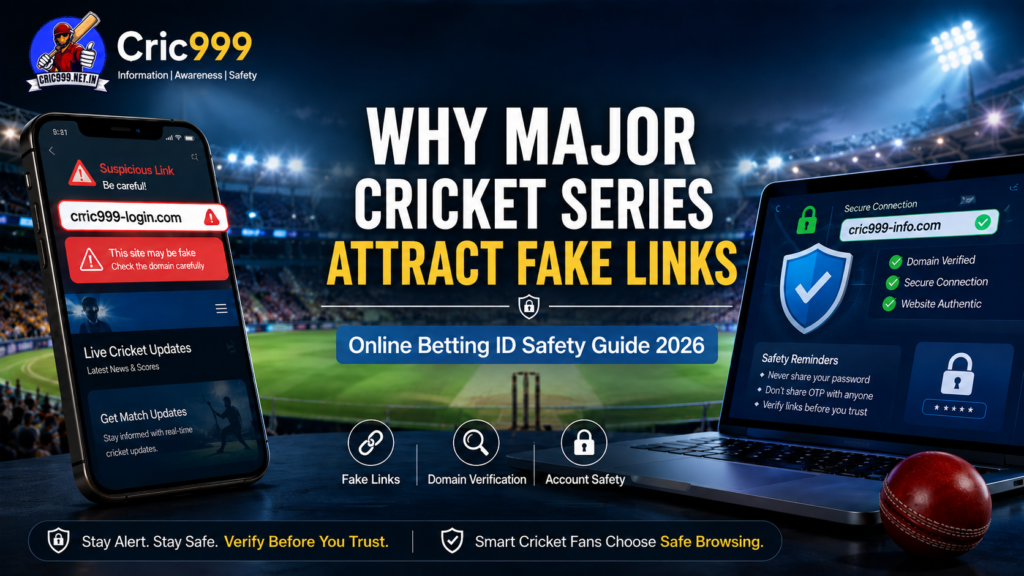
Fake Online Betting ID links often appear more frequently during major cricket series because search activity, social-media discussions and user interest rise sharply. Scammers may try to exploit this attention through clone domains, phishing pages and misleading links.. That surge in attention can also create opportunities for scammers who publish misleading pages, impersonation websites or suspicious Online Betting ID links designed to attract hurried clicks. The cricket event itself is not the problem; criminals simply try to exploit increased search demand. Understanding how these scams work can help users protect their accounts, passwords and personal information.
Why Major Cricket Series Become Attractive to Scammers
High-profile cricket tournaments create a sudden increase in searches around team names, players, fixtures and live updates. During these periods, users may click quickly because they want information immediately.
Scammers may take advantage of this urgency by creating pages that use trending cricket terms, copied branding or misleading headlines. Social platforms and messaging apps can make the problem worse because suspicious links can spread rapidly through forwarded messages.
Excitement around a close match can also reduce careful checking. A user who would normally inspect a website address may overlook small differences when trying to access information quickly.
How Fake Online Betting ID Links Are Distributed
Search-Result Impersonation
Fraudulent websites may target popular cricket-related search terms in an attempt to appear relevant. A page can use familiar phrases while leading visitors to a completely unrelated or suspicious website.
Users should therefore evaluate the actual domain rather than trusting a page simply because it appears in search results.
Social-Media and Messaging Links
Suspicious links may be distributed through Telegram, WhatsApp, Instagram or other platforms. Messages can include claims about account verification, urgent access or limited-time opportunities.
Links from unknown profiles or unsolicited messages should always receive extra scrutiny.
Clone Websites
A clone website copies the design, colours, logo or layout of another site to appear familiar. However, its domain name may contain an extra letter, missing character or unusual extension.
Visual similarity alone does not prove that a website is genuine.
Fake Login or Registration Pages
Some phishing pages imitate login or registration forms to collect phone numbers, passwords or account credentials. Others may request an OTP or other sensitive information.
An Online Betting ID login page that unexpectedly asks for information outside normal account procedures can be a warning sign.
7 Warning Signs Users Should Check Before Clicking
- Misspelled domain names: Look carefully for extra letters, missing characters or unusual spellings in the website address.
- Unexpected subdomains: A familiar brand name appearing somewhere in a long web address does not necessarily mean the domain belongs to that brand.
- Requests for passwords or OTPs: Legitimate security practices generally do not require users to share passwords or one-time passwords through messages or unknown forms.
- Unrealistic guarantees: Claims promising guaranteed rewards, profits or outcomes should be treated cautiously.
- Inconsistent contact information: Missing business details, contradictory information or unverifiable contact pages can indicate a poorly established or suspicious website.
- Pressure to act immediately: Messages demanding instant verification or threatening account loss are common phishing techniques.
- Unknown social-media sources: A link received from an unfamiliar account should not be trusted merely because it includes cricket-related branding.
Why HTTPS Is Not Enough
Many users assume that a padlock symbol automatically means a website is trustworthy. HTTPS mainly indicates that information sent between the browser and website is encrypted.
It does not independently verify the identity or honesty of the website owner. Fraudulent websites can also obtain HTTPS certificates.
Users should therefore examine the exact domain spelling, website identity, contact information, privacy details and the source from which the link was received. When searching for an Online Betting ID, these additional checks are more useful than relying on the padlock alone.
How Cric999 Encourages Safer Online Behaviour
Cric999 approaches cricket-related digital activity from an educational perspective. Readers are encouraged to verify web addresses carefully, question unexpected links and avoid sharing sensitive credentials with unknown sources.
Good digital habits also include using strong, unique passwords, protecting OTPs and checking whether a website appears consistent before entering personal information. These habits are useful not only during major cricket series but across everyday online activity.
What to Do If You Find a Suspicious Link
If a website or message appears suspicious, avoid entering login information or sharing an OTP. Close the page and do not download unknown files or applications.
Instead of following the same link again, search independently for the organisation’s official website and compare the domain carefully.
If credentials may already have been exposed, change the affected password immediately and avoid reusing that password on other accounts. Users in India can also consult official cybersecurity guidance from CERT-In and consider reporting suspected cybercrime through official government cybercrime reporting channels.
Conclusion
Major cricket series create large spikes in online attention, and scammers may attempt to exploit that activity through phishing pages, clone domains and misleading links. Users searching for an Online Betting ID or other cricket-related services should verify domains carefully instead of trusting the first search result, advertisement or social-media message they see. Cric999 promotes a more responsible approach built around verification, account security, privacy awareness and careful online decision-making.
Frequently Asked Questions
Why do fake Online Betting ID links increase during major cricket series?
Major series create higher search volumes and more social-media activity. Scammers may try to exploit this increased attention by publishing misleading pages or distributing suspicious links where users are already actively searching for cricket-related information.
Does HTTPS mean an Online Betting ID website is genuine?
No. HTTPS means the connection between your browser and the website is encrypted, but it does not prove that the website itself is legitimate. Users should still verify the domain name, website identity and source of the link.
How can I identify a clone cricket website?
Check for unusual domain spellings, copied layouts, inconsistent contact information and unexpected login requests. Be particularly cautious when the link comes from an unknown social-media profile, messaging account or shortened URL.
What should I do if I entered my password on a suspicious website?
Change the password immediately and do not reuse the same password elsewhere. Enable available account-security features, review the account for unfamiliar activity and remain alert for additional suspicious messages or login attempts