Modern aviation is entering a new era where aircraft are no longer just advanced machines—they are becoming intelligent systems capable of analyzing data, learning from operations, and supporting real-time decision-making. With commercial aircraft generating massive volumes of operational data on every flight, airlines now have unprecedented opportunities to improve safety, efficiency, and passenger experience. This transformation is being driven by AI in aviation and artificial intelligence in aviation, enabling aircraft to predict maintenance needs, optimize flight routes, assist pilots, and enhance overall operational performance.
When combined with Machine Learning (ML), these intelligent systems continuously improve by learning from historical and real-time aircraft data. From predictive maintenance and fuel optimization to smarter air traffic management and AI-assisted cockpits, these technologies are reshaping every aspect of modern aviation. In this article, you’ll learn how AI and Machine Learning work in aviation, why they are becoming essential for next-generation aircraft, and how they are making air travel safer, more efficient, and more sustainable.
What Is AI and Machine Learning in Aviation?
Artificial Intelligence and Machine Learning have become two of the most influential technologies shaping the future of aviation. Although they are often mentioned together, they serve different purposes while working toward the same goal—making aircraft and aviation operations smarter, safer, and more efficient. Understanding these technologies helps explain why modern aircraft are evolving far beyond traditional automated systems.
Understanding Artificial Intelligence in Aviation
Artificial Intelligence (AI) refers to computer systems designed to perform tasks that typically require human intelligence. These tasks include analyzing large volumes of data, recognizing patterns, making informed decisions, solving complex problems, and even adapting to changing situations.
In aviation, AI goes beyond traditional automation. Conventional automation follows fixed instructions programmed by engineers. For example, an autopilot system performs predefined actions under specific conditions but cannot learn from new experiences. AI, however, can analyze incoming data, identify unusual situations, and provide intelligent recommendations based on previous learning and operational insights.
This capability is why artificial intelligence in aviation is transforming the industry. Airlines use AI to optimize flight scheduling, manufacturers leverage it to improve aircraft design, maintenance teams rely on it for predictive diagnostics, and airports implement AI to streamline passenger movement and security operations. Instead of simply executing commands, AI continuously supports smarter and faster decision-making across aviation ecosystems.
What Is Machine Learning in Aviation?
Machine Learning (ML) is a specialized branch of Artificial Intelligence that enables systems to learn from data without being explicitly programmed for every possible scenario. Rather than following static rules, ML algorithms identify trends, recognize patterns, and improve their predictions as more data becomes available.
In aviation, aircraft generate enormous amounts of information from sensors monitoring engines, hydraulic systems, avionics, weather conditions, and flight performance. Machine Learning processes this data to detect hidden patterns that human operators may overlook. As a result, airlines can predict equipment failures before they occur, optimize maintenance schedules, improve fuel efficiency, and enhance overall operational reliability.
The relationship between AI and Machine Learning can be understood simply: AI is the broader concept of creating intelligent systems, while Machine Learning is one of the primary techniques used to make those systems intelligent. AI provides the overall capability to make decisions, whereas ML supplies the learning mechanism that enables continuous improvement through experience.
To understand how these technologies are reshaping every aspect of modern aviation—from predictive maintenance to autonomous flight systems—explore our complete guide on AI in Aviation.
Why Modern Aircraft Need AI More Than Ever
The aviation industry is facing growing challenges, including increasing passenger demand, rising fuel costs, complex aircraft maintenance, stricter environmental regulations, and higher expectations for safety and on-time performance. At the same time, pilots and flight crews must process vast amounts of operational data while making critical decisions under pressure.
Traditional automation alone is no longer enough to handle these evolving demands. AI-powered aircraft use real-time data to predict maintenance needs, optimize flight routes, improve fuel efficiency, and support pilots with intelligent decision-making, helping airlines operate more efficiently and safely.
As aviation continues to evolve, AI is shifting from a competitive advantage to a business necessity. Airlines that embrace intelligent technologies are better equipped to reduce operational costs, improve passenger satisfaction, enhance safety, and remain competitive in the future of aviation.
How AI and Machine Learning Are Making Modern Aircraft Smarter
Artificial Intelligence and Machine Learning are transforming every stage of an aircraft’s lifecycle—from pre-flight inspections to in-flight operations and post-flight maintenance. Instead of relying solely on reactive processes, today’s intelligent aviation systems continuously collect, analyze, and learn from operational data to improve performance, safety, and efficiency. The result is a new generation of aircraft capable of making faster, data-driven decisions while supporting pilots, engineers, airlines, and passengers alike.
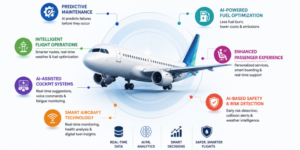
Predictive Aircraft Maintenance
One of the most impactful applications of AI is predictive aircraft maintenance. Traditionally, aircraft maintenance followed fixed schedules or was performed after a fault occurred, often leading to unnecessary inspections or unexpected failures. Today, modern aircraft use thousands of sensors to continuously monitor engines, landing gear, avionics, hydraulics, and other critical systems.
AI analyzes this real-time sensor data alongside historical maintenance records to detect early signs of wear and predict potential component failures before they occur. This allows airlines to schedule repairs proactively, reducing aircraft downtime, preventing costly breakdowns, and improving fleet reliability.
AI also performs continuous component health analysis by monitoring factors such as vibration, temperature, and system performance. As a result, airlines can extend equipment lifespan, lower maintenance costs, and keep more aircraft in service.
Leading manufacturers are already using this approach. Airbus Skywise helps airlines monitor aircraft health and optimize maintenance planning, while Boeing AnalytX uses predictive analytics to improve maintenance efficiency and reduce unscheduled repairs. These real-world implementations demonstrate how AI is making aircraft maintenance smarter, more reliable, and cost-effective.
Intelligent Flight Operations
Every flight involves thousands of decisions that affect safety, fuel efficiency, punctuality, and passenger satisfaction. AI helps airlines make smarter operational decisions by analyzing real-time data from weather systems, air traffic, airport operations, and aircraft performance.
One of its biggest applications is flight route optimization. AI identifies the most efficient routes by evaluating weather conditions, wind patterns, airspace restrictions, and traffic congestion, helping reduce flight time and fuel consumption. It also improves weather forecasting by predicting turbulence, storms, and other hazards more accurately using historical and real-time data.
AI further enhances operations through fuel optimization, delay prediction, and dynamic flight planning. By continuously calculating the ideal flight speed, altitude, and route, it reduces fuel burn and operating costs. At the same time, airlines can anticipate delays, adjust schedules proactively, and modify flight paths in response to changing weather or air traffic conditions.
To learn more about how intelligent technologies are transforming airline operations beyond the aircraft itself, explore our guide on AI in airlines.
AI-Assisted Cockpit Systems
Modern cockpits are becoming smarter with AI-powered decision support systems that assist pilots rather than replace them. By analyzing aircraft performance, weather conditions, navigation data, fuel status, and surrounding air traffic in real time, AI provides actionable recommendations that help pilots make faster and more informed decisions.
AI also enhances cockpit efficiency through voice-enabled controls, allowing pilots to access information using natural language commands. In addition, fatigue monitoring systems can detect signs of reduced alertness, while AI-powered emergency support evaluates flight conditions and recommends the safest course of action. Together, these intelligent systems improve situational awareness, reduce pilot workload, and enhance overall flight safety.
Smart Aircraft Technology for Real-Time Monitoring
A key feature of smart aircraft technology is real-time monitoring of aircraft performance throughout all flight stages. Thousands of IoT sensors collect live data from engines, landing gear, electrical systems, hydraulics, and cabin components, which AI analyzes to detect abnormalities before they become serious issues.
Aircraft health monitoring systems give maintenance teams continuous visibility into component conditions, enabling early alerts even while the aircraft is in flight. This helps engineers prepare repairs in advance, reducing downtime and improving operational efficiency.
AI-powered real-time diagnostics also speed up troubleshooting by quickly identifying the root cause of technical issues. Additionally, digital twin technology creates a virtual model of the aircraft, allowing engineers to simulate performance, predict maintenance needs, and optimize fleet management without affecting real operations.
AI-Powered Fuel Optimization
Fuel represents one of the largest operating expenses for airlines, making optimization a strategic priority. AI enables airlines to improve fuel efficiency through continuous analysis of aircraft performance and operational conditions.
Machine Learning predicts fuel consumption by considering aircraft weight, weather conditions, runway length, altitude, engine performance, and historical flight data. These highly accurate predictions help airlines plan fuel loads more efficiently.
Taxi optimization reduces unnecessary fuel burn while aircraft move between gates and runways. AI analyzes airport traffic and recommends the shortest taxi routes, minimizing idle engine time before takeoff and after landing.
Weight optimization also contributes to improved efficiency. AI helps airlines balance passenger seating, baggage distribution, cargo loading, and fuel allocation to reduce unnecessary aircraft weight while maintaining operational safety.
Together, these intelligent optimizations significantly reduce fuel costs and lower carbon emissions, helping airlines meet increasingly demanding environmental sustainability goals.
Enhanced Passenger Experience
Artificial Intelligence is transforming the passenger journey by making air travel more personalized, efficient, and convenient. AI-powered recommendation engines suggest relevant in-flight entertainment based on passenger preferences, while virtual chatbots provide instant support for bookings, flight updates, and baggage inquiries.
AI also streamlines airport operations through smart boarding systems and facial recognition technology, reducing wait times during check-in, security, and boarding. Additionally, AI-powered baggage tracking keeps passengers informed about their luggage in real time, improving transparency and reducing travel-related stress.
Inside the cabin, intelligent systems automatically adjust lighting, temperature, and airflow based on flight conditions and passenger comfort, creating a more enjoyable and personalized travel experience.
AI-Based Safety & Risk Detection
Safety is the aviation industry’s top priority, and AI is helping airlines identify and prevent risks before they become serious incidents. By analyzing real-time data from cameras, radar, sensors, and aircraft systems, AI can detect runway hazards, monitor surrounding air traffic, and provide pilots with early collision warnings.
Machine Learning also predicts bird strike risks and delivers more accurate weather alerts by analyzing historical and real-time environmental data. In addition, AI-driven risk assessment platforms combine maintenance records, operational data, and flight conditions to identify potential safety issues before they escalate. This proactive approach helps airlines improve safety, reduce operational risks, and ensure more reliable flight operations.
Real-World Examples of Artificial Intelligence in Aviation
The value of artificial intelligence in aviation is best demonstrated through its real-world adoption by leading aircraft manufacturers and airlines. Rather than treating AI as an experimental technology, these organizations are integrating it into daily operations to improve efficiency, reduce costs, and enhance safety. The common goal is not simply to automate tasks but to achieve measurable business outcomes through data-driven decision-making.
Airbus
Airbus has been at the forefront of aviation digitalization with its Skywise platform, an open aviation data ecosystem that connects airlines, aircraft manufacturers, and maintenance providers. By analyzing operational and maintenance data from thousands of aircraft, Skywise helps airlines identify potential technical issues before they become major failures.
The platform enables predictive maintenance by continuously monitoring aircraft health and recommending maintenance actions based on real-time performance rather than fixed schedules. This approach has helped airlines reduce unscheduled maintenance events, shorten aircraft downtime, improve fleet availability, and lower overall maintenance costs.
Boeing
Boeing has invested heavily in AI-driven aircraft analytics through its AnalytX platform. The company combines operational, engineering, and maintenance data to generate actionable insights that improve airline performance.
Instead of reacting to equipment failures after they occur, Boeing’s analytics solutions help airlines anticipate maintenance needs, optimize flight operations, and improve aircraft reliability. These capabilities contribute to higher fleet utilization, fewer operational disruptions, and more efficient maintenance planning, ultimately reducing operational expenses while increasing aircraft availability.
Delta Air Lines
Delta Air Lines leverages Artificial Intelligence to improve operational efficiency across its network. AI analyzes flight schedules, weather conditions, airport congestion, crew availability, and aircraft positioning to optimize day-to-day operations.
This intelligent decision-making enables Delta to minimize delays, improve on-time performance, and allocate operational resources more effectively. By identifying potential disruptions before they impact passengers, the airline can make proactive adjustments that improve both customer satisfaction and operational reliability.
Lufthansa
Lufthansa has integrated AI-assisted maintenance into its technical operations to improve aircraft reliability and reduce maintenance-related delays. By analyzing aircraft sensor data and historical maintenance records, AI helps engineering teams detect early warning signs of component wear and system degradation.
This predictive approach enables maintenance to be performed at the most appropriate time, reducing unnecessary inspections while preventing unexpected failures. The result is increased aircraft availability, lower maintenance costs, and improved scheduling efficiency across the airline’s fleet.
Emirates
Emirates continues to advance smart airport initiatives by incorporating AI into multiple stages of the passenger journey. Intelligent systems support automated check-in, biometric identity verification, baggage handling, and passenger flow management throughout airport operations.
These technologies reduce waiting times, streamline airport processes, and improve resource utilization while delivering a smoother travel experience. At the same time, operational teams gain valuable insights that help optimize airport capacity and improve service quality as passenger volumes continue to grow.

Benefits of AI-Powered Aircraft
The aviation industry is adopting AI because it delivers measurable improvements across safety, operational efficiency, maintenance, sustainability, and customer experience. By continuously analyzing operational data, AI-powered aircraft make faster and more informed decisions than traditional systems, helping airlines reduce costs while improving reliability.
Traditional Aircraft vs. AI-Powered Aircraft
| Traditional Aircraft | AI-Powered Aircraft |
|---|---|
| Reactive maintenance | Predictive maintenance |
| Manual inspections | AI diagnostics |
| Fixed routes | Dynamic route optimization |
| Limited automation | Intelligent decision support |
| Delayed issue detection | Real-time monitoring |
Beyond technological advancements, AI provides tangible business benefits that directly impact airline performance.
- Improved operational efficiency: AI automates complex data analysis, enabling airlines to optimize flight schedules, maintenance planning, and operational workflows with greater accuracy.
- Enhanced passenger safety: Continuous monitoring and predictive analytics allow potential risks to be identified earlier, helping airlines prevent incidents before they occur.
- Lower maintenance costs: Predictive maintenance reduces unnecessary inspections, prevents unexpected equipment failures, and extends the lifespan of expensive aircraft components.
- Fuel savings: AI optimizes flight routes, aircraft weight distribution, engine performance, and taxi operations, significantly reducing fuel consumption across entire fleets.
- Reduced delays: By anticipating operational disruptions, weather conditions, and maintenance requirements, AI enables airlines to make proactive decisions that minimize flight delays and cancellations.
- Better fleet utilization: Real-time aircraft health monitoring ensures more aircraft remain available for scheduled operations, maximizing return on fleet investments.
- Greater sustainability: Lower fuel consumption and optimized flight operations reduce carbon emissions, helping airlines meet environmental targets while lowering operating expenses.
Collectively, these benefits demonstrate why AI-powered aircraft are becoming a strategic necessity for airlines seeking long-term competitiveness in an increasingly demanding aviation industry.
Challenges of Implementing AI in Aviation
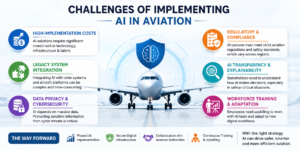
While AI offers significant benefits, its implementation in aviation comes with technical, financial, and operational challenges. High deployment costs, legacy system integration, and the need to modernize existing infrastructure can make AI adoption complex, especially for airlines operating older fleets. Additionally, AI relies heavily on operational data, making data privacy, cybersecurity, and regulatory compliance critical priorities.
Another challenge is ensuring AI transparency, as pilots, engineers, and regulators need to understand how AI systems generate recommendations for safety-critical decisions. Airlines must also invest in workforce training so employees can effectively use AI-powered tools alongside traditional aviation systems.
These challenges can be addressed through phased AI implementation, secure digital infrastructure, close collaboration with aviation authorities, and continuous employee training. With the right strategy, airlines can successfully adopt AI while maintaining the highest standards of safety, reliability, and operational excellence.
Future Trends in Smart Aircraft Technology
The future of smart aircraft technology is being shaped by rapid advancements in Artificial Intelligence. As AI becomes more integrated into aviation, future aircraft will make faster, data-driven decisions that improve safety, operational efficiency, and sustainability.
Emerging innovations such as AI copilots, Generative AI, and autonomous aircraft systems will assist pilots, simplify maintenance, automate reporting, and enhance flight operations. At the same time, Digital Twins and Edge AI will enable real-time aircraft monitoring and faster data processing, helping airlines predict issues and optimize performance more effectively.
Another key trend is Explainable AI, which will make AI-driven recommendations easier for pilots and regulators to understand, while AI-powered air traffic management will reduce congestion and improve flight coordination. AI will also support sustainable aviation by optimizing fuel consumption and lowering carbon emissions.
Businesses looking to develop next-generation aviation solutions can benefit from partnering with a Machine Learning Development Company Dubai that specializes in building intelligent, AI-driven software for the evolving aviation industry.
Why Airlines Should Invest in AI Today
Artificial Intelligence has become a strategic investment for airlines looking to improve efficiency, reduce costs, and stay competitive. By optimizing maintenance, fuel consumption, scheduling, and daily operations, AI delivers a strong return on investment while enhancing passenger satisfaction through more reliable and personalized travel experiences.
AI also helps airlines strengthen operational resilience with predictive maintenance, real-time monitoring, and data-driven decision-making. As the aviation industry continues to evolve, early AI adoption enables airlines to meet future regulatory requirements, support sustainability goals, and gain a long-term competitive advantage.
Partnering with an experienced provider of Airline Software Development in Dubai can help airlines implement scalable AI solutions that improve operational performance and prepare them for the future of intelligent aviation.
Why Choose SISGAIN for AI-Powered Aviation Software Development?
SISGAIN helps airlines, airports, and aviation businesses harness the power of AI to build smarter, safer, and more efficient operations. With expertise in AI, Machine Learning, and aviation software development, we deliver customized solutions tailored to your business needs.
From predictive maintenance and intelligent flight operations to aircraft health monitoring and passenger experience applications, our scalable solutions are designed to improve operational efficiency, reduce costs, and support long-term growth. We also ensure seamless integration with existing systems while maintaining high standards of security and compliance.
Whether you’re looking to implement AI in aviation or develop next-generation aviation software, SISGAIN is your trusted technology partner for driving innovation and digital transformation.

Conclusion
The aviation industry is undergoing one of the most significant technological transformations in its history, with Artificial Intelligence and Machine Learning driving the shift toward smarter, more connected aircraft. From predictive maintenance and intelligent flight operations to AI-assisted cockpits and real-time aircraft monitoring, these technologies are enabling airlines to operate more safely, efficiently, and sustainably than ever before.
Beyond operational improvements, AI is enhancing the entire passenger journey through personalized services, faster airport processes, and improved reliability. At the same time, intelligent systems help airlines reduce maintenance costs, optimize fuel consumption, minimize delays, and make faster, data-driven decisions that improve overall fleet performance.
As aviation continues to embrace digital transformation, AI-powered aircraft will become the industry standard rather than a competitive differentiator. Airlines, manufacturers, and aviation service providers that invest in AI today will be better positioned to meet future regulatory requirements, improve operational resilience, and deliver exceptional customer experiences.
In an increasingly competitive aviation landscape, adopting AI and Machine Learning is no longer just about embracing innovation—it’s about building a smarter, safer, and more sustainable future for modern aviation.
Frequently Asked Questions
What is AI in aviation?
AI in aviation refers to the use of intelligent systems that analyze flight data, improve decision-making, and optimize operations such as maintenance, routing, and safety.
How is Machine Learning used in aviation?
Machine Learning is used to analyze aircraft data and predict patterns such as equipment failures, fuel usage, weather impacts, and operational efficiency improvements.
Can AI replace pilots?
No, AI cannot replace pilots. It acts as a support system that assists pilots with real-time data, recommendations, and safety alerts.
What are AI-powered aircraft?
AI-powered aircraft are modern aircraft equipped with intelligent systems that help optimize performance, improve safety, and enable predictive maintenance and smart operations.
How does AI improve aircraft safety?
AI improves safety by detecting risks early, monitoring aircraft systems in real time, predicting failures, and providing alerts for potential hazards like weather or technical issues.