Importing packaged goods into India is not only about customs clearance and logistics. There is another critical legal requirement that many importers overlook until they face penalties or shipment delays: compliance with the Legal Metrology law. If you import pre-packed commodities, you are legally treated as a manufacturer under Indian law, and you must follow strict labeling and registration rules before selling those products in the Indian market.
This is where Legal Metrology Registration for Importers becomes essential. Without this registration, imported goods can be seized, fined, or even banned from sale.
Understanding the Legal Metrology Law in India
The framework is governed by the Legal Metrology Act, 2009 and the Legal Metrology (Packaged Commodities) Rules, 2011. These rules are designed to protect consumers by ensuring transparency in quantity, pricing, labeling, and packaging of goods sold in the market.
The law applies to anyone who manufactures, packs, imports, or sells pre-packaged commodities. Importers often assume the responsibility lies with the foreign manufacturer, but Indian law clearly states that the importer is accountable for compliance once the goods enter the country.
Why Importers Are Treated Like Manufacturers
When you import pre-packed goods, you are introducing them into the Indian retail system. Since Indian authorities cannot regulate foreign manufacturers directly, the legal responsibility shifts to the importer.
This means you must ensure:
- Proper labeling as per Indian standards
- Correct declaration of quantity and price
- Display of importer details on the packaging
- Registration with the Legal Metrology Department
Failing to do this can result in detention of goods at ports, heavy penalties, and legal action.
What Happens If You Import Without Registration?
Many importers realize the importance of compliance only after facing issues such as:
- Shipments held at customs warehouses
- Fines imposed by Legal Metrology inspectors
- Seizure of goods from warehouses or retail outlets
- Loss of business reputation and delays in market entry
Authorities regularly conduct inspections, and non-compliance is easy to detect through packaging errors.
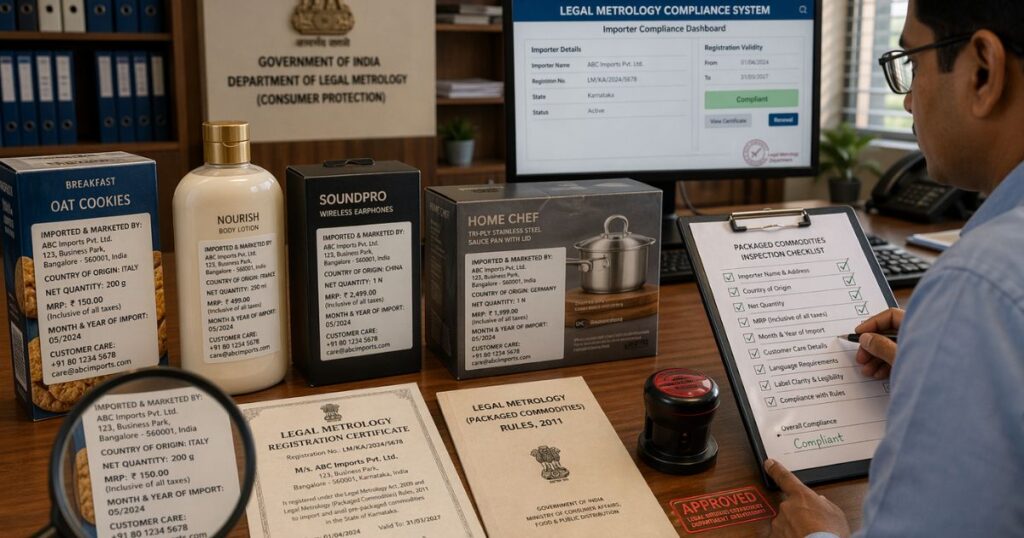
Mandatory Declarations on Imported Packages
As per the rules, every imported package must clearly mention:
- Name and address of the importer
- Country of origin
- Net quantity (weight, volume, number)
- Maximum Retail Price (MRP) inclusive of all taxes
- Month and year of import/packing
- Customer care details
These declarations must be printed or affixed before the goods are sold or distributed.
The Role of Legal Metrology Registration
Legal Metrology Registration in India is proof that you are authorized to import and sell pre-packed goods while complying with all measurement and labeling standards. This registration is issued by the Controller of Legal Metrology in the respective state where your business operates.
Without this certificate, you cannot legally distribute imported packaged products in the Indian market.
Products That Require This Registration
This requirement applies to a wide range of products, including:
- Food items and beverages
- Cosmetics and personal care products
- Electronics and appliances
- Household goods
- Hardware items
- Consumer packaged commodities of any type
If the product is pre-packed and sold by weight, volume, or number, the law applies.
Benefits of Being Compliant
While many see this as a legal burden, proper registration actually provides business advantages:
- Smooth customs clearance
- Faster distribution and retail onboarding
- Trust and credibility with distributors and retailers
- Protection from legal penalties
- Long-term operational stability
Compliance helps importers avoid disruptions and focus on business growth.
How Om Garuda Group Helps Importers
Navigating Legal Metrology rules can be confusing, especially for first-time importers. Documentation, labeling formats, declarations, and state-wise procedures require expert handling.
Om Garuda Group assists importers with end-to-end registration support, including documentation preparation, application filing, coordination with authorities, and guidance on correct labeling practices to ensure complete compliance.
With professional assistance, the process becomes smooth, fast, and error-free.
Conclusion
Legal Metrology compliance is not optional for importers in India. It is a mandatory legal requirement that directly affects your ability to sell imported goods in the market. Ignoring this step can lead to serious financial and legal consequences.
By securing the required registration and following proper labeling standards, importers can operate confidently without the risk of penalties or shipment delays. Ensuring compliance from the beginning is always easier than correcting mistakes after enforcement action.
For importers looking to enter the Indian market smoothly, understanding and fulfilling Legal Metrology requirements is a crucial first step.