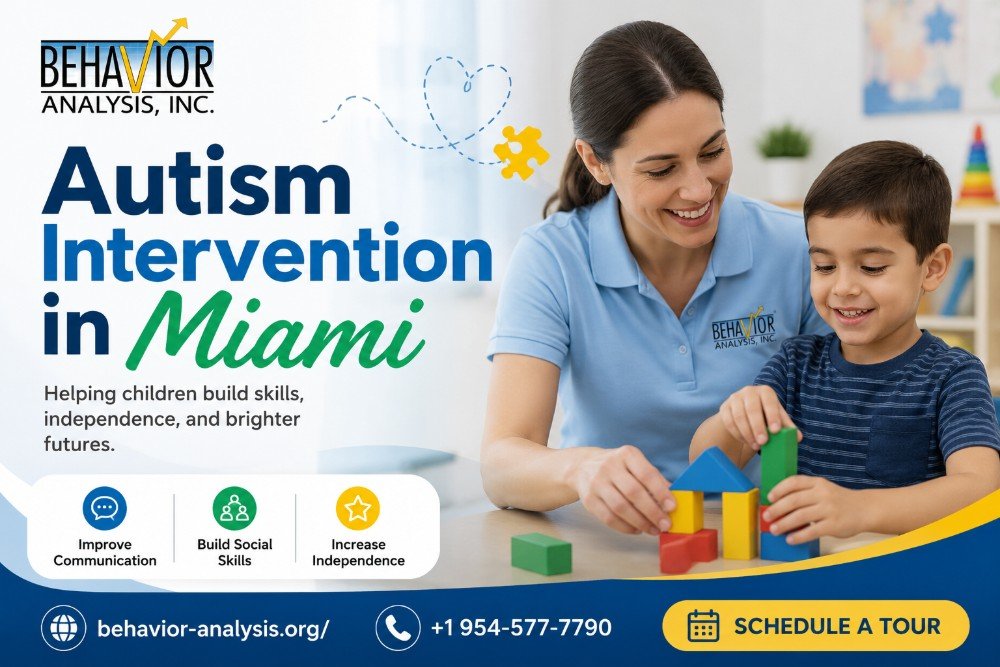
Every child with autism has unique strengths, needs, and developmental goals. Autism Intervention in Miami can help children build practical skills, improve communication, and participate more confidently in everyday activities. Early, individualized support can also help families understand their child’s needs and create strategies that encourage meaningful progress at home, school, and in the community.
For families in Miami and surrounding areas, choosing an intervention approach that matches a child’s abilities and goals can make an important difference. Behavior Analysis Inc. provides individualized autism support through evidence-based Applied Behavior Analysis (ABA) programs designed around each child’s needs.
What Is Autism Intervention?
Autism intervention refers to structured services and strategies that support children with autism in developing skills and managing challenges that may affect daily life. Intervention can address areas such as communication, social interaction, learning, behavior, self-care, and independence.
ABA is one commonly used approach. It focuses on understanding how behavior develops and using evidence-based strategies to encourage useful skills. Rather than following a single plan for every child, professionals can assess individual strengths and challenges and develop goals based on those findings.
Why Early Autism Intervention Matters

Early childhood provides many opportunities for learning and development. When children receive appropriate support during these years, they can practice important skills in settings where they naturally use them.
Autism Intervention in Miami can support early development by helping children work toward goals such as:
- Communicating wants, needs, and feelings
- Developing social interaction skills
- Following routines and instructions
- Improving school-readiness skills
- Learning daily living and self-care activities
- Reducing behaviors that interfere with learning
- Building independence in familiar environments
Early intervention does not mean every child will follow the same developmental path. Instead, it gives families and professionals an opportunity to identify meaningful goals and provide consistent support.
Supporting Communication and Social Skills
Communication can look different from one child to another. Some children may have difficulty expressing their needs, while others may struggle with conversations, social cues, or responding appropriately in different situations.
Autism intervention can provide structured opportunities to practice communication and social skills. A program may teach a child how to request help, participate in conversations, respond to others, take turns, or communicate appropriately across different environments.
These skills can become especially useful when children move between home, school, recreational activities, and community settings.
Building Everyday Life Skills
Children with autism may need additional support when learning everyday routines. Tasks such as getting dressed, eating, organizing belongings, following a schedule, or completing household routines can require step-by-step teaching.
Professionals can break complex activities into manageable steps and provide opportunities for children to practice them. Over time, consistent practice can help children become more independent.
At Behavior Analysis Inc., individualized ABA programs may address communication, behavior, social skills, community-based skills, and daily routines. Programs can serve children, teens, and young adults according to their individual needs.
The Role of Individualized Support
One of the most important aspects of effective intervention involves creating goals around the individual child rather than relying on a one-size-fits-all program.
Professionals may begin by assessing a child’s current skills, behaviors, environment, and areas of difficulty. They can then establish measurable goals and monitor progress over time.
Individualized Autism Intervention in Miami may include strategies that focus on:
- Communication and language development
- Social and play skills
- Positive behavior development
- Academic and school-readiness skills
- Daily living skills
- Community participation
- Parent and caregiver education
Regular progress monitoring also allows professionals to adjust strategies when a child’s needs or abilities change.
How Families Can Participate
Family involvement can strengthen the consistency of intervention. Parents and caregivers spend significant time with their children, so learning how to use appropriate strategies during everyday routines can reinforce skills outside therapy sessions.
Parent training may help caregivers understand why certain behaviors occur, how to respond effectively, and how to encourage positive skills at home. Consistent communication between families and professionals can also help everyone work toward shared goals.
Autism Intervention in Miami for Different Stages of Development
Autism support does not end in early childhood. Children, teenagers, and young adults can continue developing new skills as their environments and responsibilities change.
Younger children may focus on communication, social development, and school readiness. School-age children may work on classroom behavior, academic participation, friendships, and independence. Teens and young adults may benefit from support focused on community participation, daily living, social skills, and greater independence.
Behavior Analysis Inc. serves families in Kendall, South Miami, Coral Gables, Pinecrest, and surrounding Miami-Dade communities. Its programs can support individuals across different developmental stages.
Choosing the Right Autism Intervention
Families considering intervention can start by asking several practical questions. Does the provider create individualized goals? Does the team monitor progress? Are parents involved in the process? Does the program address skills that matter in the child’s everyday environment?
Families should also consider whether the provider has qualified professionals and whether the approach aligns with the child’s specific needs.
The right Autism Intervention in Miami should focus on meaningful skill development, measurable progress, and support that fits naturally into the child’s daily life.
Conclusion
Autism intervention can give children structured opportunities to learn, communicate, interact, and become more independent. Early support can be particularly valuable, but children and young adults can benefit from individualized intervention at different stages of development.
For Miami families, Behavior Analysis Inc. offers ABA-based autism services designed to address individual developmental and behavioral goals. By combining assessment, individualized planning, skill-building, family involvement, and progress tracking, intervention can help children work toward greater participation and independence.