How Forward-Thinking Companies Are Using Drone Technology to Cut Costs, Reduce Risk, and Make Better Decisions Faster
Every competitive advantage in business eventually comes down to the same thing — better information, acted on faster than anyone else. The company that knows more about its assets, its land, its infrastructure, and its operations than its competitors is the company that makes smarter decisions, avoids costly surprises, and consistently delivers more value to its clients.
For generations, gathering that information meant deploying people. Boots on the ground, ladders against walls, vehicles across fields, inspectors on scaffolding. The methods were familiar, the costs were accepted, and the limitations were simply part of doing business. But across industries that manage physical infrastructure, large properties, and complex outdoor operations, a fundamental shift is underway — and it is being driven from above.
Aerial technology has quietly crossed the threshold from emerging capability to operational necessity in a remarkably short period of time. What began as an interesting experiment in a handful of forward-thinking companies has become a standard component of how serious organizations in construction, energy, agriculture, logistics, and real estate manage their most important work.
The Economics of Looking Down
The financial argument for aerial data collection is straightforward once the numbers are examined honestly. Consider a utility company responsible for hundreds of miles of power line infrastructure. Traditional inspection requires crews, vehicles, access arrangements, and significant time — with results that are limited by what inspectors can observe from the ground or from manual climbing positions.
An aerial inspection of the same infrastructure captures thermal anomalies, structural irregularities, vegetation encroachment, and hardware degradation across the entire network in a fraction of the time, with documentation that is complete, searchable, and comparable across inspection cycles. The cost reduction is substantial. The improvement in data quality is transformative. And the reduction in risk to inspection personnel is incalculable.
Multiply that across the dozens of applications where aerial data collection replaces or supplements traditional methods — construction site monitoring, crop health assessment, roof and facade inspection, topographic surveying, emergency response planning, environmental monitoring — and the cumulative economic case becomes one of the most compelling in operational technology.
The speed advantage alone changes the economics of entire workflows. Decisions that previously required weeks of data gathering can be made in days. Project phases that depended on survey data delivered after the fact can be managed in near real time. Problems that were discovered only when they had already become expensive can be identified and addressed while they are still manageable.
Industries Leading the Adoption
Construction and infrastructure development have emerged as among the heaviest adopters of aerial data solutions, and the reasons are practical rather than aspirational. Site mapping, progress documentation, earthwork volume calculations, and safety monitoring are all tasks that aerial platforms perform with greater accuracy and efficiency than ground-based alternatives.
The energy sector — oil and gas, renewables, and utilities alike — has embraced aerial inspection as both a safety imperative and an operational efficiency tool. Wind turbine blade inspections, solar panel thermal surveys, pipeline right-of-way monitoring, and substation documentation are all applications where the aerial advantage is decisive.
Agriculture has been transformed by the ability to collect multispectral and thermal data across large acreages quickly enough to act on it within the same growing cycle. Irrigation mapping, disease and pest identification, stand count assessment, and drainage analysis are all delivering measurable yield improvements and input cost reductions for operations that have integrated aerial data into their seasonal planning.
Real estate, insurance, and land development have found in aerial imaging a tool that improves every stage of the asset lifecycle — from initial site assessment and acquisition due diligence through development documentation and final marketing presentation.
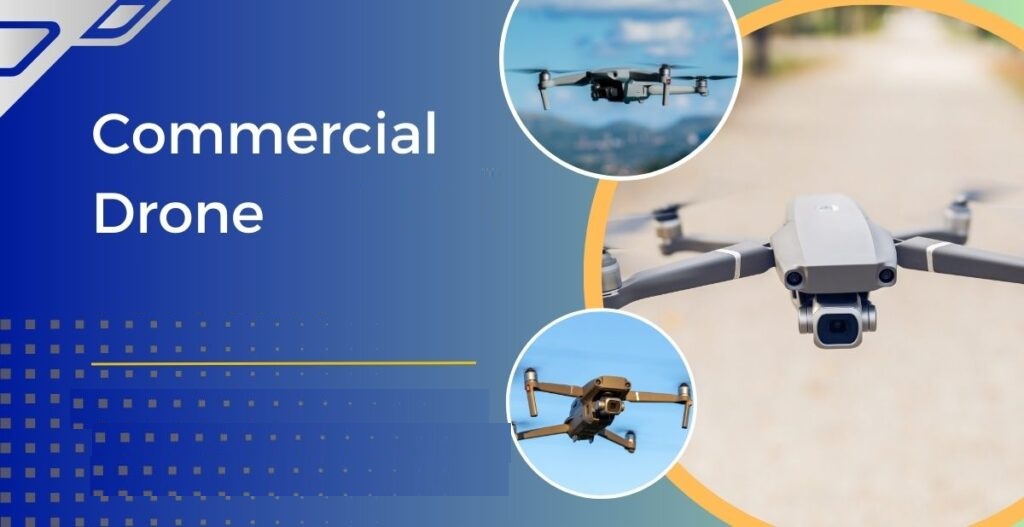
This is precisely where commercial drone services demonstrate their most compelling value proposition — delivering the kind of comprehensive, accurate, and timely aerial data that allows organizations across every sector to operate with a level of confidence and efficiency that ground-based methods simply cannot provide.
The Partner Behind the Platform
Aerial technology is only as valuable as the expertise applied to it. Sensor selection, flight planning, regulatory compliance, data processing, and deliverable quality all require deep technical knowledge and proven operational experience to execute at a standard that genuinely serves business objectives.
The difference between an aerial data product that drives decisions and one that sits unused in a folder is the difference between a provider who understands your industry and one who simply operates aircraft. Methodology, analytical capability, and the ability to translate raw aerial data into actionable business intelligence are what separate meaningful aerial partnerships from transactional service relationships.
Intelligence From Every Altitude
The most valuable perspective on any operation is often the one you have never had before. Skyintelli, Inc delivers the technical depth, certified expertise, and industry-specific analytical capability that transforms aerial data into genuine competitive advantage. From infrastructure inspection and precision agriculture to construction monitoring and high-resolution commercial imaging, Skyintelli, Inc gives organizations the aerial intelligence they need to operate smarter, safer, and more efficiently — at every altitude and across every industry they serve.