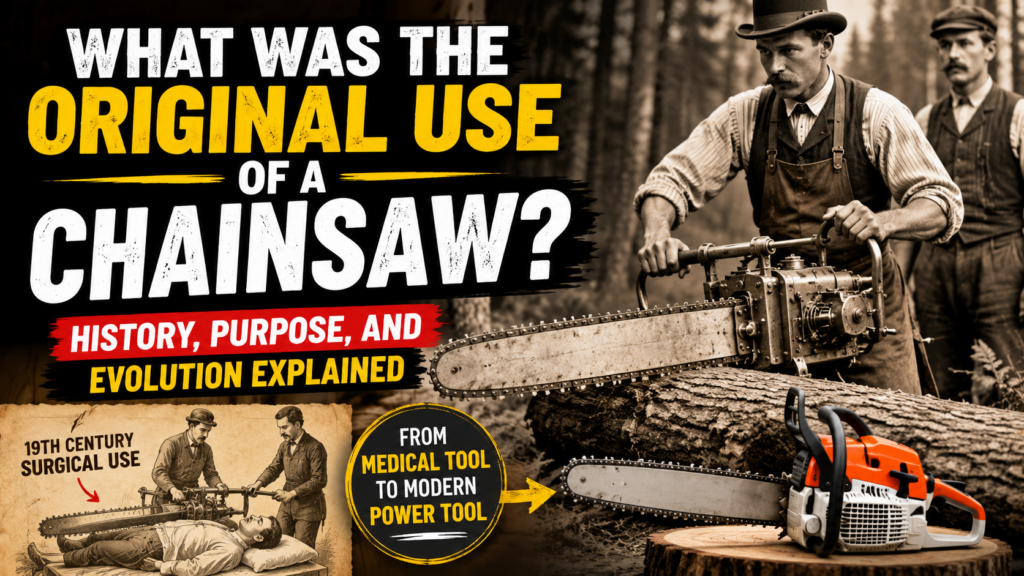
What was the original use of a chainsaw: History, Purpose, and Evolution Explained
Introduction to what was the original use of a chainsaw
When most people think of a chainsaw today, they imagine a powerful tool used for cutting trees and heavy woodwork. However, the history behind this machine is far more surprising and fascinating. The question what was the original use of a chainsaw often shocks people because its initial purpose had nothing to do with forestry or construction.
The chainsaw has a unique origin rooted in the medical field, specifically in surgical procedures. Over time, this tool evolved into the mechanical device we recognize today. In this article, we will explore the origins, early uses, transformation, and modern applications of the chainsaw in detail.
The Invention of the Chainsaw
Early Development
The earliest version of the chainsaw was developed in the late 18th century by two Scottish doctors, John Aitken and James Jeffray. Their invention was designed for medical use rather than cutting wood.
The Original Design
The original chainsaw was a small, hand-cranked device with a chain of small teeth attached to it. It was quite different from the large, motorized machines used today.
What was the original use of a chainsaw in medicine?
Use in Childbirth Procedures
To fully understand what was the original use of a chainsaw, it is important to look at its role in early medical practices. The chainsaw was initially used in a procedure called Symphysiotomy.
This procedure involved cutting through cartilage and bone to widen the pelvis during difficult childbirth cases, allowing the baby to pass through more easily.
Why It Was Necessary
During the 18th and early 19th centuries, medical technology was limited. Doctors needed tools that could perform procedures quickly and efficiently. The chainsaw helped reduce the time required for such surgeries compared to traditional methods.
Challenges of Early Chainsaw Use
Pain and Risk
At that time, anesthesia was either unavailable or very limited. This made procedures extremely painful and risky for patients.
Infection Concerns
Medical hygiene standards were not as advanced, leading to a high risk of infection after surgery.
Limited Precision
The early chainsaw, though innovative, lacked the precision of modern surgical tools.
Transition from Medical Tool to Mechanical Device
Decline in Medical Use
As medical science advanced, safer and more precise surgical tools were developed. This led to the decline of chainsaw use in medicine.
Rise in Industrial Use
The concept of a chain with cutting teeth inspired engineers to adapt the design for industrial purposes. This marked a turning point in the history of the chainsaw.
Evolution into a Wood-Cutting Tool
Introduction of Mechanical Chainsaws
In the early 20th century, inventors began developing motorized chainsaws for cutting wood. These machines were larger and powered by engines.
Improvements in Design
Over time, chainsaws became:
- More efficient
- Easier to handle
- Safer to operate
This transformation completely changed how the tool was perceived and used.
Modern Use of Chainsaws
Forestry and Logging
Today, chainsaws are widely used in the forestry industry for cutting trees and processing timber.
Construction Work
Chainsaws are also used in construction for cutting wooden structures and materials.
Household Use
Many homeowners use chainsaws for gardening, trimming branches, and maintaining their yards.
Why the History Surprises People
Unexpected Origins
The answer to what was the original use of a chainsaw is surprising because people associate the tool with outdoor work, not medical procedures.
Contrast with Modern Use
The transformation from a surgical instrument to a powerful mechanical tool highlights how technology evolves over time.
Technological Advancements in Chainsaws
Safety Features
Modern chainsaws include features such as:
- Chain brakes
- Anti-vibration systems
- Protective guards
Electric and Battery Models
Today’s chainsaws are available in electric and battery-powered versions, making them more environmentally friendly and easier to use.
Ethical and Historical Perspective
Medical Practices of the Past
The use of chainsaws in surgery reflects the limitations and challenges of early medicine.
Progress in Healthcare
Advancements in medical science have eliminated the need for such invasive and painful procedures.
Interesting Facts About Chainsaws
Compact Beginnings
The original chainsaw was much smaller than today’s versions.
Manual Operation
Early chainsaws required manual effort rather than engine power.
Rapid Evolution
The chainsaw has undergone significant changes in a relatively short period.
Lessons from the History of Chainsaws
Innovation Through Necessity
The invention of the chainsaw shows how necessity drives innovation.
Adaptation Over Time
Technologies can evolve and find entirely new purposes beyond their original intent.
Importance of Advancements
Continuous improvement in tools and techniques leads to better efficiency and safety.
Conclusion
In conclusion, the question what was the original use of a chainsaw reveals a surprising and fascinating history. Originally designed as a medical tool for assisting in childbirth procedures, the chainsaw has evolved into a powerful and essential device used in forestry, construction, and household tasks.
This transformation highlights the incredible journey of innovation and adaptation over time. Understanding the origins of such tools not only broadens our knowledge but also helps us appreciate the advancements that have shaped modern technology.
Frequently Asked Questions (FAQs)
1. What was the original use of a chainsaw?
The answer to what was the original use of a chainsaw lies in medicine—it was initially used in a surgical procedure called Symphysiotomy to assist in childbirth.
2. Who invented the first chainsaw?
The first chainsaw was developed by John Aitken and James Jeffray in the late 18th century.
3. Why was a chainsaw used in childbirth?
The chainsaw helped doctors perform procedures faster by cutting bone and cartilage to widen the pelvis during difficult deliveries.
4. When did chainsaws stop being used in medicine?
Chainsaws gradually stopped being used in medical procedures as safer and more advanced surgical tools were developed.
5. How did chainsaws become wood-cutting tools?
The design of the chainsaw was later adapted by engineers for industrial purposes, eventually becoming a powerful tool for cutting wood.
6. Are modern chainsaws similar to the original ones?
No, modern chainsaws are motorized, larger, and much safer, while early versions were small, manual, and designed for medical use.
7. Why is the history of chainsaws surprising?
The history is surprising because the answer to what was the original use of a chainsaw reveals that it began as a medical instrument rather than a woodworking tool.