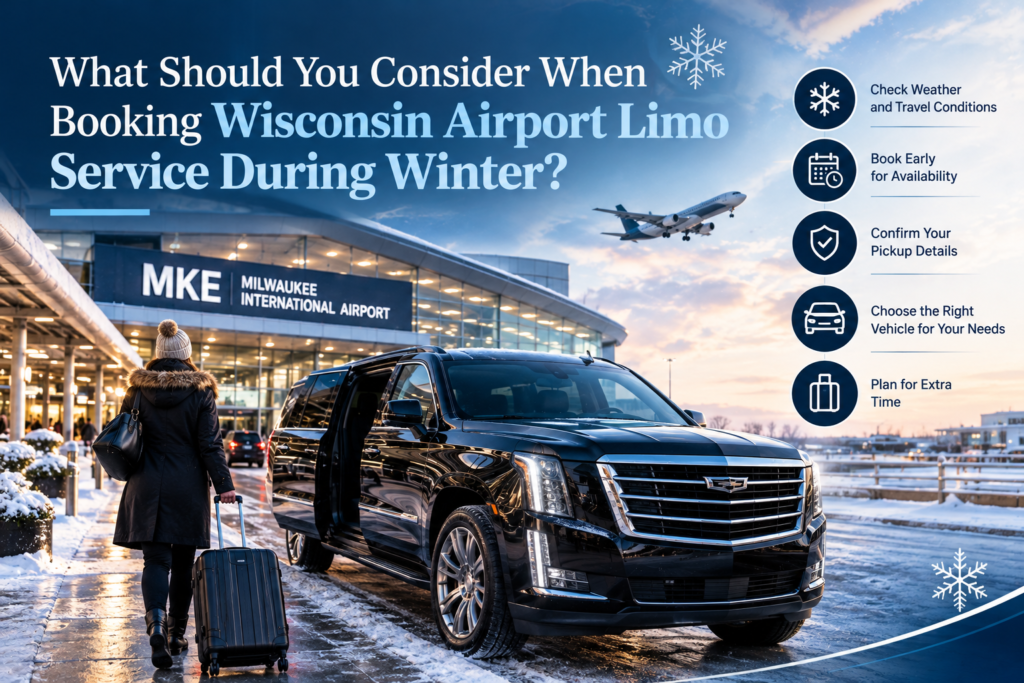
Winter travel in Wisconsin requires more preparation than transportation during milder months. Snowfall, icy roads, reduced visibility, and changing weather conditions can affect driving times and make airport trips more challenging. Whether you are leaving for a business trip, visiting family, or heading to an important flight, arranging transportation in advance can help you plan your journey more carefully.
Booking a private airport transfer during winter involves more than selecting a pickup time. Travelers should consider road conditions, vehicle suitability, scheduling flexibility, communication, and the details of the reservation before confirming their plans.
1. Check the Weather Forecast Before Your Travel Date
Wisconsin winter weather can change quickly. A forecast that initially shows light snow may develop into conditions that affect visibility and road safety.
Check the forecast for your pickup location, the route to the airport, and the airport area itself. Conditions can vary considerably between communities, particularly when traveling across a longer distance.
If snow or freezing rain is expected, allow additional time for the journey. Avoid basing your departure plan entirely on the usual driving time because weather-related delays may affect even familiar routes.
It is also helpful to monitor weather updates on the day of travel. If conditions deteriorate, communicate with your transportation provider to discuss any necessary adjustments to the pickup schedule.
2. Schedule Your Pickup With a Reasonable Time Buffer
One of the most important winter travel decisions is determining when to leave.
Snow-covered roads, reduced speeds, traffic incidents, and temporary road closures can increase the time needed to reach an airport. A journey that normally takes a predictable amount of time may require a larger allowance during a winter storm.
Start by checking your airline’s recommended arrival time and any check-in or baggage deadlines. Then work backward to establish a departure time that accounts for the expected journey and potential delays.
For longer trips across Wisconsin, consider the weather along the entire route rather than only at your starting point. Conditions outside the city may be different from those near the airport.
A realistic schedule provides more flexibility and reduces the pressure associated with arriving just before an airline deadline.
3. Confirm the Vehicle Is Suitable for Winter Conditions
The vehicle used for an airport transfer should be appropriate for the expected weather and road conditions.
When arranging transportation, ask about the vehicle category and whether it is properly equipped and maintained for winter driving. Appropriate tires, functioning heating and defrosting systems, and general vehicle maintenance are important considerations during cold weather.
An SUV may offer additional passenger or luggage space, but vehicle size alone does not guarantee better traction or safety. Road conditions, tires, driver experience, and appropriate driving practices remain essential.
If you are traveling with several passengers or carrying bulky winter clothing and suitcases, confirm that the selected vehicle has sufficient seating and luggage capacity.
The objective is to choose transportation that suits the journey while allowing the driver to make safe decisions according to current conditions.
4. Share Your Exact Pickup Location and Destination
Winter conditions can make meeting a driver more complicated, particularly when snowbanks limit access to a driveway or when a pickup location is on a narrow residential street.
Provide the complete pickup address and destination airport when requesting a reservation. If the property has a specific entrance, a long driveway, or another detail that could affect vehicle access, explain this in advance.
Travelers staying at hotels, apartment buildings, or commercial properties should also confirm the appropriate pickup area.
When comparing a Wisconsin Airport Limo Service, make sure the provider receives the full itinerary and understands any access concerns that may affect the pickup.
Clear directions help reduce confusion and make it easier to coordinate the journey when winter weather limits visibility or changes normal access to a property.
5. Understand How Winter Weather May Affect Pricing and Scheduling
Before confirming a reservation, ask how the provider handles weather-related delays and changes to the itinerary.
Find out whether the quoted price includes the planned route and whether additional waiting time, extended travel, or a revised pickup schedule could affect the final cost.
You should also ask what happens if a severe weather warning makes the original travel plan impractical. The provider may have specific procedures for rescheduling, cancellation, or communicating significant changes.
Do not assume that every transportation company follows the same policies. Reviewing the terms before booking helps you understand your options if the weather becomes worse than expected.
If your flight is important or difficult to reschedule, consider how much flexibility you have before committing to the journey.
6. Plan for Airport Access and Terminal Requirements
Airport procedures remain important even when the weather is the main concern.
Confirm which terminal you need, whether your airline has published any travel advisories, and where your driver should drop you off. If your airport offers several terminals or separate departure areas, provide the correct information when booking.
Passengers should also check their airline’s requirements for check-in, baggage drop, and boarding. Arriving at the airport is only one part of meeting the flight schedule.
If your journey involves a regional airport followed by a connection at a larger airport, confirm the requirements for each flight and determine whether any additional ground transportation is necessary.
Keeping these details organized can help you avoid last-minute confusion when winter conditions already make travel more demanding.
7. Keep Communication Open on the Day of Travel
Reliable communication is particularly valuable when snow or ice affects a scheduled airport transfer.
Keep your phone charged and make sure you have the transportation provider’s contact details and reservation confirmation available. Confirm the agreed pickup time and ask how updates will be communicated if road conditions change.
If you receive a weather alert or your flight schedule changes, notify the relevant parties as soon as possible. Early communication gives everyone a better opportunity to evaluate the situation and determine whether an adjustment is possible.
Passengers should also be ready at the agreed pickup time. In difficult weather, avoid assuming that an unconfirmed change to the schedule will automatically be accommodated.
Clear communication cannot eliminate delays, but it can reduce misunderstandings and help you respond more effectively to changing circumstances.
8. Prepare for Delays Beyond the Transportation Provider’s Control
Even a carefully planned trip can be affected by road closures, accidents, severe storms, or airport disruptions.
Before departure, check your airline’s flight status and review the available options if the flight is delayed or canceled. Keep essential travel documents, medications, chargers, and other important items accessible rather than placing everything in checked luggage.
If the weather becomes severe, follow official road and weather advisories. Safety should take priority over maintaining an original departure time.
It is also sensible to understand your airline’s rebooking policy and keep important contact information readily available. These preparations can make unexpected disruptions easier to manage.
9. Confirm Your Reservation Before Winter Travel
A final reservation check can help prevent avoidable problems.
Review the pickup address, scheduled time, destination airport, passenger count, luggage requirements, and agreed price. Confirm that the provider has your current contact information and knows about any special travel requirements.
For a long-distance transfer, verify the planned route and discuss how severe weather might affect the schedule. If you are traveling during a holiday period, booking in advance may also give you more time to compare available arrangements.
Keep a copy of your confirmation so you can quickly reference the agreed details if questions arise.
The more clearly the journey is planned, the easier it becomes to identify potential issues before the day of travel.
Conclusion
Booking airport transportation during a Wisconsin winter requires careful attention to weather, timing, vehicle suitability, pickup access, and communication. Checking forecasts, allowing extra travel time, confirming reservation details, and understanding scheduling policies can help you prepare for the conditions you may encounter.
No transportation arrangement can guarantee an exact arrival time during severe winter weather. However, thoughtful planning and realistic expectations can make airport travel easier to coordinate while keeping safety at the center of every decision.
Before confirming your winter airport transfer, review the details of the journey with your transportation provider and stay informed about road conditions and airline updates. A well-prepared plan gives you a clearer understanding of the trip and helps you make informed decisions when winter weather affects travel.