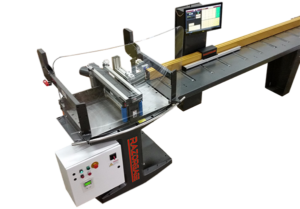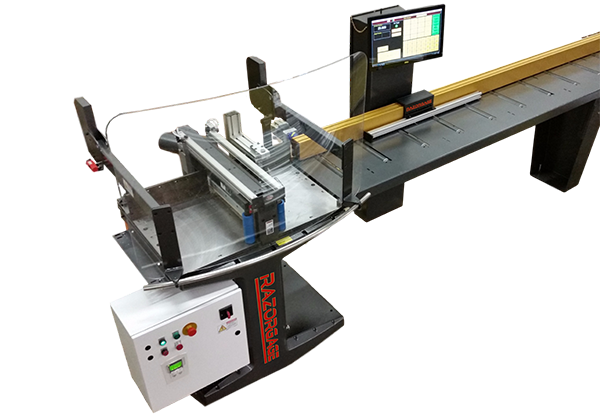
Every shop has that one cut that went wrong. A tape slipped, somebody read 31 3/16 as 31 5/16, and a good board ended up in the scrap bin. It happens to everyone, and it is exactly the problem automated material positioning was built to solve. Instead of trusting a tape measure and a tired eye at the end of a long shift, a machine moves the stock to the right spot and holds it there. The saw cuts, the stop moves, and the next length is ready. RazorGage has been building this kind of equipment in Ames, Iowa since 2001, and the idea is still simple: fewer mistakes, less waste, faster work.
How Does It Actually Work on the Shop Floor?
In a manual setup, the operator slides a board against a stop, checks the tape, locks it down and cuts. Then the whole routine repeats for the next length. With automated material positioning, a programmable stop or pusher takes over that job. You load a cut list, and the system moves to each length in order, one after another.
RazorGage builds machine-tool-grade programmable saw stops and automatic pushers for exactly this purpose. The operator mostly feeds material and makes the cut, while the positioner handles the measuring. That sounds like a small change, but the repeatability is what matters. A cut that is accurate once is nice. A cut that is still accurate on the 400th piece is what keeps a production day on schedule.
Where Do Accuracy and Repeatability Come From?
Software gets the attention, but accuracy really comes from the hardware. The RazorGage RG3, for example, uses a hardened and ground Hiwin linear bearing rail with two recirculating ball bearing blocks. In plain words, the carriage rides on a rigid, smooth track and does not wobble as it moves.
Dealer listings for the RazorOptimal also mention a planetary gear reduction system with near zero backlash. Backlash is the little bit of slack in gears when they change direction. If the gears have slack, the stop lands a hair off, and that hair adds up over a day of cutting. Tight gears, a stiff carriage and a good rail are what let a shop trust the number on the screen instead of double-checking every piece.
What Makes the RazorOptimal Different From a Basic Stop System?
A basic positioner moves to a length. The RazorOptimal goes a step further and thinks about the board itself. Your crew marks defects like knots and splits with a crayon, and the system scans the board length along with those marks. The software then picks the combination of parts that fits best into the clean sections between the marks. Less good lumber goes to waste, and nobody has to stand there working out the layout by hand.
It also comes in more than one flavor. You can get it with an up-cut saw, or with an 18-inch down-cut saw if you want the machine to drill pocket holes and scribe face frame layout marks automatically. There are add-ons too, such as inkjet printing straight onto the part, paper labels and a sorting assist called RazArray. Parts come off the saw already marked, which makes assembly noticeably calmer.
Do You Still Need an Operator?
Yes, and that is a good thing. The operator loads material, marks defects and keeps things moving. The machine just removes the guesswork and the repetitive measuring, which is the part people tend to get tired of first.
How Does It Fit Into the Software You Already Use?
Most shops already design cabinets in some program, and nobody wants to retype a cut list. RazorGage’s AutoList software accepts .CSV files from design programs like Cabinet Vision, CabnetWare, KCD, Microvellum and Mozaik, plus a number of others. Once the file is in, the cut list shows up on the operator’s touch screen, already sorted and organized by material.
The software runs on Windows, so file sharing works the way it does on any other office computer. The controllers have built-in Wi-Fi, and the system can store thousands of cut lists. That means the jump from design to saw takes a few clicks, not a stack of handwritten notes that somebody has to decode.
Who Gets the Most Out of It?
Cabinet makers and door manufacturers are the obvious users, and that is who RazorGage mostly serves. In an article marking the company’s 25th anniversary, Woodshop News described its goal as making accurate, reliable automated cutting available to shops of every size. That fits the product range, which starts with affordable stop systems like the XT-PC with its rugged Android tablet and climbs up to full optimizing saws.
The honest answer is that the payoff depends on what you cut. A shop that runs the same lengths again and again will feel the benefit quickly. A shop that cuts one-off pieces all day may need to think harder about it. A good way to decide is to look at where your time actually goes: measuring, sorting, or dealing with defects. Whichever one it is, there is probably a machine on the RazorGage line aimed at it.
Is It Time to Upgrade the Way You Cut?
If your saw still depends on a tape and a steady hand, it is worth seeing what a positioner can do in your own shop. Better accuracy, less scrap and tidier parts are the usual reasons people switch. Whether you start with a simple programmable stop or go straight to a RazorOptimal system, the thinking is the same, and automated material positioning is the foundation underneath it. RazorGage will talk you through the options without pushing anything you do not need.
Frequently Asked Questions
What is automated material positioning?
It is a system that moves your material to an exact programmed length using motors and a controller, so you do not measure each cut by hand. It improves accuracy and speeds up repeat cuts.
What does the RazorOptimal do?
The RazorOptimal scans a board’s length and your crayon defect marks, then arranges parts to fit the clean areas. It cuts, advances the stock and can print part information on the material.
Can RazorGage systems work with my cabinet design software?
Yes, in most cases. AutoList reads .CSV cut lists from programs like Cabinet Vision, Mozaik, Microvellum and KCD, then sorts the materials on the touch screen.
Does RazorGage offer pocket hole drilling?
It does. The RazorOptimal can be set up with an 18-inch down-cut saw that drills pocket holes and scribes face frame layout marks automatically.
Is automated positioning only for large factories?
No. RazorGage makes affordable stop systems for smaller shops as well as optimizing saws for high-volume work, so you can start small and add features later.
Contact Us:
Address: 57006 241st Street, Ames, IA 50010
Phone: 515.232.3188
Email: sales@RazorGage.com