In today’s highly connected world, businesses must establish a strong online presence to attract customers, build trust, and increase revenue. This is where professional best digital marketing services play a crucial role. Digital marketing has evolved into a comprehensive ecosystem of strategies designed to help businesses reach their target audience across search engines, social media platforms, websites, email campaigns, and other digital channels. Understanding the different types of digital marketing services can help organizations choose the right approach for sustainable growth and long-term success.
As consumer behavior continues shifting toward digital experiences, businesses that invest in effective marketing strategies are better positioned to compete, adapt, and thrive in an increasingly crowded marketplace.
Understanding Digital Marketing
Digital marketing refers to the promotion of products, services, or brands through online channels and digital technologies. Unlike traditional marketing, digital marketing allows businesses to reach highly targeted audiences, measure campaign performance, and optimize strategies based on real-time data.
Modern digital marketing combines creativity, technology, analytics, and customer psychology to create meaningful interactions between businesses and consumers.
Whether the goal is increasing website traffic, generating leads, improving brand awareness, or boosting sales, digital marketing provides powerful tools to achieve measurable outcomes.
Why Digital Marketing Matters
The modern customer journey begins online.
Consumers use search engines, social media platforms, video content, reviews, and websites to research businesses before making purchasing decisions.
Digital marketing helps organizations:
- Increase visibility.
- Reach targeted audiences.
- Generate qualified leads.
- Build customer relationships.
- Improve brand credibility.
- Track marketing performance.
- Increase return on investment.
- Support business growth.
Without a strong digital presence, businesses risk losing opportunities to competitors who are more visible online.
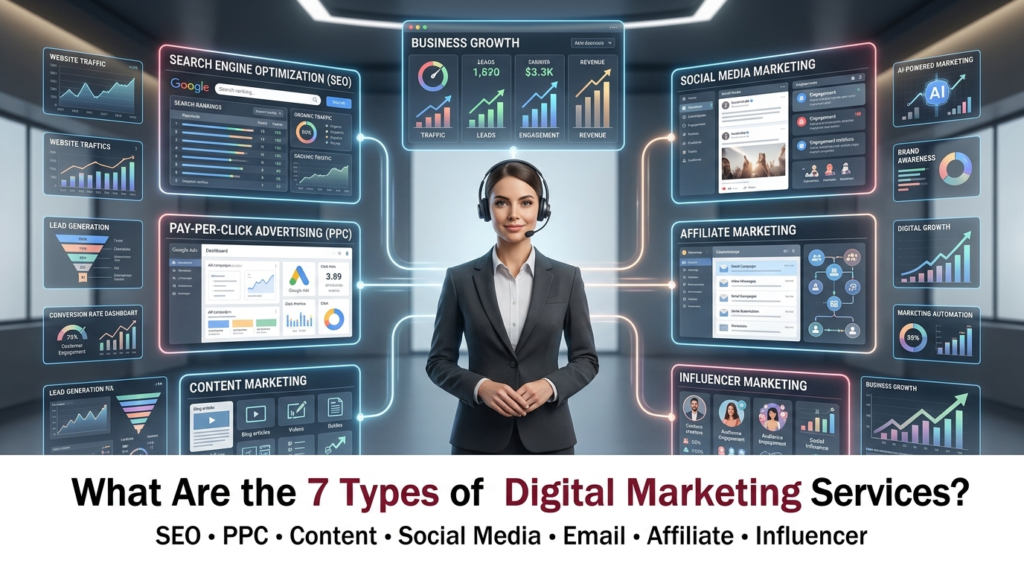
The 7 Main Types of Digital Marketing Services
While digital marketing encompasses many specialized techniques, seven core services form the foundation of most successful online marketing strategies.
- Search Engine Optimization (SEO)
Search Engine Optimization is the process of improving a website’s visibility in organic search engine results.
When users search for products, services, or information online, SEO helps businesses appear prominently in search results.
SEO involves:
- Keyword research.
- Technical optimization.
- Content creation.
- Link building.
- Local search optimization.
- Website performance improvements.
The goal is to increase organic traffic by making a website more relevant and valuable to both users and search engines.
Benefits of SEO
- Long-term visibility.
- Higher credibility.
- Targeted traffic.
- Cost-effective lead generation.
- Improved user experience.
Unlike paid advertising, SEO continues generating results long after optimization efforts begin.
- Pay-Per-Click Advertising (PPC)
Pay-Per-Click advertising allows businesses to place ads on search engines, social media platforms, and other websites.
Advertisers pay only when users click on their ads.
Popular PPC platforms include:
- Google Ads.
- Microsoft Advertising.
- Facebook Ads.
- Instagram Ads.
- LinkedIn Ads.
- YouTube Ads.
PPC offers immediate visibility and allows businesses to target specific audiences based on demographics, interests, locations, and search behavior.
Benefits of PPC
- Instant traffic.
- Highly targeted campaigns.
- Measurable results.
- Flexible budgeting.
- Rapid lead generation.
PPC is often used alongside SEO to maximize online visibility.
- Content Marketing
Content marketing focuses on creating valuable, relevant, and engaging content that attracts and retains audiences.
Rather than directly promoting products or services, content marketing provides information that helps users solve problems or make informed decisions.
Common content formats include:
- Blog articles.
- Guides.
- Case studies.
- Videos.
- Infographics.
- White papers.
- E-books.
- Webinars.
High-quality content builds trust, establishes authority, and supports other marketing channels such as SEO and social media.
Benefits of Content Marketing
- Increased website traffic.
- Enhanced brand authority.
- Improved customer engagement.
- Lead generation opportunities.
- Long-term marketing value.
Content remains one of the most effective tools for building meaningful relationships with audiences.
- Social Media Marketing
Social media marketing involves promoting businesses through platforms where users interact, share content, and engage with brands.
Popular social media channels include:
- Facebook.
- Instagram.
- LinkedIn.
- X.
- TikTok.
- Pinterest.
- YouTube.
Social media strategies focus on building communities, increasing brand awareness, and fostering customer engagement.
Key Social Media Activities
- Content publishing.
- Community management.
- Influencer collaborations.
- Paid advertising.
- Audience engagement.
- Brand storytelling.
Successful social media marketing helps businesses remain visible and connected with their customers.
Benefits of Social Media Marketing
- Greater brand awareness.
- Improved customer relationships.
- Enhanced audience engagement.
- Increased website traffic.
- Lead generation opportunities.
As social media usage continues growing, businesses increasingly rely on these platforms to strengthen their digital presence.
- Email Marketing
Email marketing remains one of the most effective and profitable digital marketing channels.
It enables businesses to communicate directly with customers through personalized messages delivered to their inboxes.
Email marketing campaigns may include:
- Newsletters.
- Promotional offers.
- Product updates.
- Educational content.
- Event invitations.
- Customer retention campaigns.
Unlike social media platforms, businesses maintain direct access to their email subscribers.
Benefits of Email Marketing
- High return on investment.
- Personalized communication.
- Customer retention.
- Lead nurturing.
- Increased conversions.
When executed properly, email marketing creates lasting customer relationships and encourages repeat business.
- Affiliate Marketing
Affiliate marketing is a performance-based strategy in which businesses partner with individuals or organizations that promote their products or services.
Affiliates earn commissions when their promotional efforts result in sales or conversions.
This approach allows businesses to expand their reach without paying upfront advertising costs.
Affiliate marketing commonly involves:
- Bloggers.
- Content creators.
- Industry experts.
- Influencers.
- Niche websites.
The success of affiliate marketing depends on strong partnerships and transparent performance tracking.
Benefits of Affiliate Marketing
- Cost-effective promotion.
- Expanded audience reach.
- Performance-based spending.
- Increased brand exposure.
- Additional sales opportunities.
Many organizations use affiliate marketing to complement broader digital marketing efforts.
- Influencer Marketing
Influencer marketing leverages the credibility and audience of influential individuals within specific industries or communities.
Influencers create content that promotes products, services, or brands to their followers.
This strategy is particularly effective because consumers often trust recommendations from people they follow and admire.
Influencer campaigns may include:
- Product reviews.
- Sponsored content.
- Brand partnerships.
- Live demonstrations.
- Social media collaborations.
- Event promotions.
Benefits of Influencer Marketing
- Increased trust.
- Expanded audience reach.
- Higher engagement rates.
- Authentic brand promotion.
- Enhanced social proof.
Influencer marketing has become a powerful tool for businesses seeking to build credibility and connect with niche audiences.
How These Services Work Together
Although each digital marketing service offers unique benefits, the most successful strategies integrate multiple channels.
For example:
- SEO drives organic traffic.
- Content marketing provides valuable information.
- Social media increases engagement.
- Email marketing nurtures leads.
- PPC generates immediate visibility.
- Influencer marketing builds trust.
- Affiliate marketing expands reach.
Together, these services create a comprehensive marketing ecosystem that supports customer acquisition and retention.
Integrated strategies often deliver stronger results than relying on a single channel alone.
Choosing the Right Digital Marketing Services
Not every business requires the same marketing mix.
The ideal strategy depends on factors such as:
- Industry.
- Target audience.
- Business goals.
- Budget.
- Competition.
- Customer behavior.
- Growth objectives.
For example, local businesses may prioritize SEO and local search optimization, while eCommerce brands may invest heavily in PPC, influencer marketing, and social media advertising.
A customized approach ensures marketing resources are allocated effectively.
Emerging Trends in Digital Marketing
Digital marketing continues evolving as technology advances and consumer behavior changes.
Several trends are shaping the future of the industry.
Artificial Intelligence
AI-powered tools help marketers automate tasks, analyze data, personalize experiences, and optimize campaigns more efficiently.
Voice Search Optimization
As voice assistants become more common, businesses must adapt content for conversational search queries.
Video Marketing
Short-form and long-form video content continue driving engagement across digital platforms.
Personalization
Consumers increasingly expect customized experiences tailored to their interests and behaviors.
Marketing Automation
Automation tools improve efficiency by streamlining repetitive tasks such as email campaigns, lead nurturing, and customer segmentation.
Businesses that embrace these innovations often gain competitive advantages in rapidly changing markets.
Common Digital Marketing Mistakes to Avoid
Many businesses struggle to achieve results because they make avoidable mistakes.
Common issues include:
- Ignoring analytics.
- Inconsistent branding.
- Poor audience targeting.
- Low-quality content.
- Neglecting SEO.
- Failing to optimize for mobile users.
- Lack of strategic planning.
- Overlooking customer experience.
Avoiding these mistakes helps improve campaign effectiveness and long-term performance.
Measuring Success in Digital Marketing
Successful digital marketing relies on continuous monitoring and optimization.
Important performance indicators include:
- Website traffic.
- Lead generation.
- Conversion rates.
- Customer acquisition costs.
- Social engagement.
- Email open rates.
- Return on investment.
- Revenue growth.
Regular analysis helps businesses identify opportunities and make informed marketing decisions.
Conclusion
Digital marketing has become an essential component of modern business growth. The seven primary types of digital marketing services—SEO, PPC, content marketing, social media marketing, email marketing, affiliate marketing, and influencer marketing—each play a unique role in helping businesses attract, engage, and convert customers online. While individual services provide value on their own, the greatest results often come from integrated strategies that combine multiple channels into a cohesive marketing plan.
As technology and consumer expectations continue evolving, businesses that invest in comprehensive digital marketing strategies will be better positioned for long-term success. For organizations seeking expert guidance in SEO, content marketing, social media management, paid advertising, brand development, lead generation, and performance-driven marketing solutions, Vibrant Logics delivers innovative digital strategies designed to help businesses strengthen their online presence and achieve sustainable growth in an increasingly competitive digital landscape.