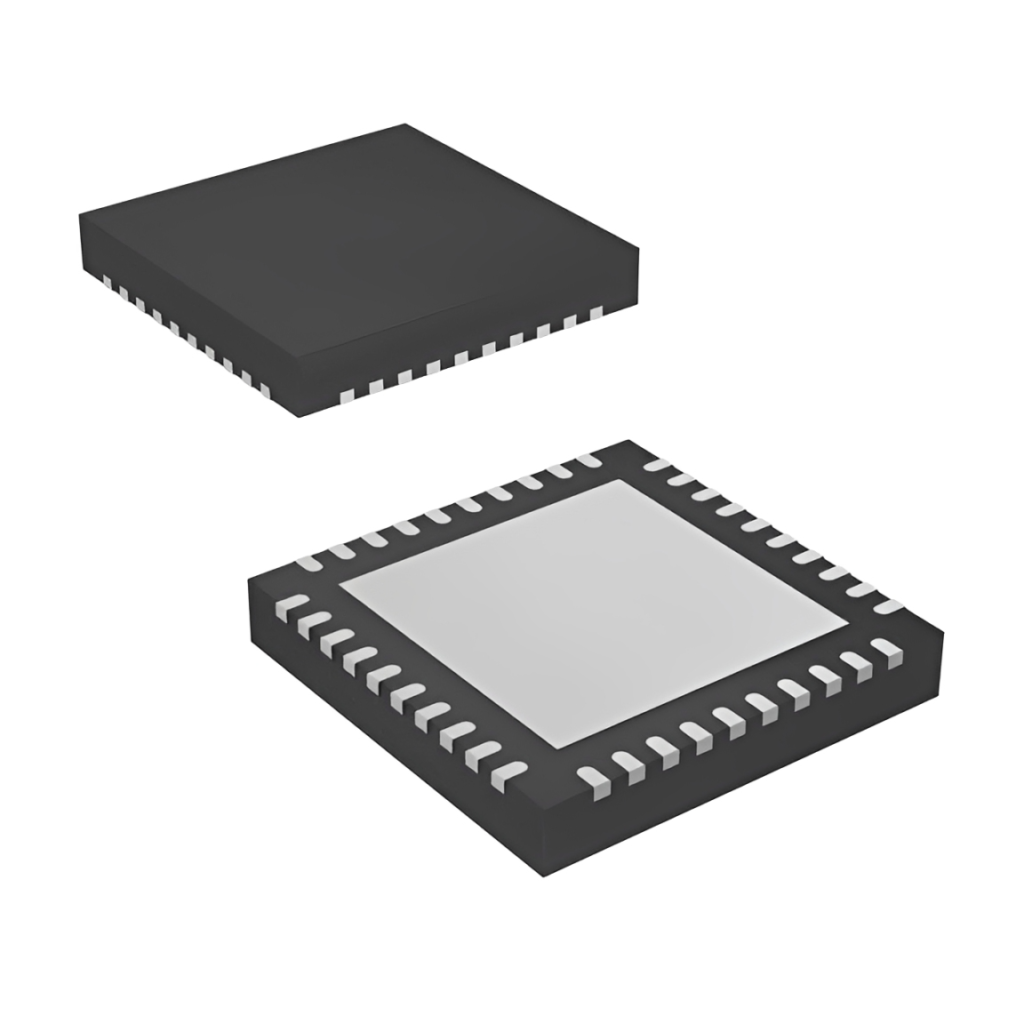
Universal Asynchronous Receivers & Transmitters
Modern electronics depend on efficient communication between processors, sensors, modules, controllers, and peripheral devices. Whether information is travelling inside an industrial controller, between a microcontroller and a GPS module, or from a development board to a computer, engineers need a communication method that is reliable, understandable, and easy to integrate. Universal Asynchronous Receivers & Transmitters, commonly known as UARTs, continue to satisfy these requirements across a wide variety of electronic systems.
UART technology is particularly valuable because it allows two digital devices to exchange serial data without requiring a shared clock signal. Instead, both devices agree on communication parameters before transmission begins. This simple principle has supported decades of electronic design and continues to be used in new products today.
The continued importance of UART is not based only on its long history. Modern Universal Asynchronous Receivers & Transmitters can include buffering, interrupt handling, configurable data formats, automatic baud-rate detection, flow control, and integration with Direct Memory Access. These capabilities allow UART-based communication to support both simple prototypes and sophisticated embedded applications.
What Is the Fundamental Role of a UART?
A UART acts as an intermediary between a processor and a serial communication connection.
Processors often handle information internally as groups of bits. Serial communication, however, sends information sequentially across a signal line. The UART performs the conversion required between these two formats.
On the transmitting side, the UART receives data from the processor, adds the necessary framing information, and sends the resulting bit sequence through its transmit line. At the receiving side, another UART observes the incoming signal, identifies the frame, collects the transmitted bits, and reconstructs the original information.
This hardware-assisted process can provide several important functions:
- Serial conversion of processor data
- Reconstruction of received serial information
- Start and stop-bit management
- Baud-rate timing
- Optional parity generation and checking
- Buffer management
- Error reporting
- Transmission and reception status monitoring
Because many of these functions happen independently of the main processor, developers can implement communication without manually controlling the timing of every transmitted bit.
Why Is UART Described as Asynchronous?
The term asynchronous refers to the absence of a separate clock signal shared between communicating devices.
Synchronous interfaces normally use a clock line that tells connected devices when to transmit or sample each bit. UART communication uses a different method. Each device operates according to its own clock source, while both are configured to approximately the same communication speed.
When information is ready to be transmitted, a start bit indicates the beginning of the frame. The receiver detects this transition and begins sampling the following bits using its configured timing.
Important communication parameters normally include:
- Baud rate
- Data length
- Parity mode
- Stop-bit configuration
As long as both sides use compatible settings and their clocks remain sufficiently accurate, communication can proceed without a shared clock line.
This reduces wiring requirements and simplifies the connection between devices.
How Is UART Data Organised for Transmission?
UART communication uses structured frames so the receiver can determine where information begins and ends.
When no transmission is occurring, the line normally remains in an idle state. A start bit changes the line state and signals that a frame is beginning.
The transmitted frame may contain:
- One start bit
- Five to nine data bits, depending on hardware
- An optional parity bit
- One or more stop bits
Eight data bits are widely used, but UART hardware may support alternative formats for specialised applications.
The start bit provides initial synchronisation. The receiver then samples the data bits at expected intervals. If parity is enabled, the parity bit is checked before the stop section confirms that the frame has completed correctly.
This framing method introduces a small amount of overhead, but it enables dependable asynchronous communication without requiring continuous synchronisation between the two devices.
Why Does Baud Rate Selection Matter?
Baud rate determines the speed at which symbols are transmitted across the UART connection. In common UART configurations, the baud rate closely corresponds to the number of transmitted bits per second.
Frequently used baud rates include:
- 9,600
- 19,200
- 38,400
- 57,600
- 115,200
- 230,400
Some modern UART peripherals can operate at considerably higher rates.
Choosing the highest possible baud rate is not always the best approach. Communication speed must be balanced against timing accuracy, transmission distance, signal integrity, and processor capability.
A slower baud rate may be suitable for:
- Low-frequency sensor measurements
- Configuration commands
- Diagnostic information
- Simple control messages
Higher rates may be preferred for:
- Larger data streams
- High-frequency measurements
- Firmware communication
- Continuous device telemetry
Designers should also account for clock accuracy. As transmission speed increases, timing errors may become more significant.
How Does Full-Duplex UART Communication Work?
UART communication can support full-duplex data exchange when independent transmit and receive lines are available.
The primary connections are usually:
- TX for transmission
- RX for reception
- Ground for common reference
The TX output of the first device connects to the RX input of the second device. The second device’s TX output connects to the first device’s RX input.
Because transmission and reception use separate signal paths, both devices can communicate at the same time.
This is useful in applications where continuous interaction occurs. For example, an embedded controller might receive sensor data while simultaneously transmitting configuration commands.
Full-duplex operation can provide responsive communication without requiring one device to wait for the other to finish transmitting before sending a response.
Where Are Universal Asynchronous Receivers & Transmitters Commonly Used?
UART technology appears in almost every major area of embedded electronics.
Typical applications include:
- Microcontroller development
- Industrial automation
- Robotics
- GPS and GNSS modules
- Bluetooth communication modules
- Wireless transceivers
- Modems
- Barcode readers
- Point-of-sale equipment
- Medical devices
- Test and measurement instruments
- Data loggers
- Automotive control systems
- Smart appliances
- Security equipment
The versatility of Universal Asynchronous Receivers & Transmitters comes from their ability to support straightforward device-to-device communication without requiring a complicated network architecture.
Many peripheral manufacturers also provide UART-compatible interfaces, giving developers a broad selection of modules that can be integrated into existing designs.
Why Is UART Valuable in Embedded Development?
During embedded-system development, understanding what is happening inside the processor is essential.
UART provides a convenient way to send internal system information to an external computer or serial terminal. Developers may configure firmware to transmit status messages whenever important events occur.
These messages can contain:
- Startup sequences
- Firmware revisions
- Sensor readings
- Network status
- Configuration parameters
- Error conditions
- Memory information
- Device temperatures
- Communication statistics
This approach gives engineers visibility into system behaviour even when the target hardware has no display.
Serial debugging can also be valuable when other debugging interfaces are unavailable or impractical. Because UART communication is relatively simple, a USB-to-UART adapter and terminal application may be enough to investigate many issues.
What Is the Importance of UART Buffers?
Without buffering, the processor would need to respond immediately whenever data arrived. If it failed to read the information in time, subsequent bytes could overwrite previous data.
Modern UART peripherals frequently include FIFO buffers to reduce this risk.
A FIFO, or First-In, First-Out buffer, stores information temporarily and maintains the order in which bytes were received.
Benefits of buffering include:
- Reduced processor workload
- Improved tolerance to software delays
- Lower risk of data loss
- More efficient interrupt handling
- Better continuous-data performance
Transmit buffers can also store information that is waiting to be sent.
Larger buffers are particularly useful in operating systems or multitasking embedded environments where the processor may temporarily be occupied with higher-priority operations.
How Do Interrupts Improve UART Efficiency?
Polling is one way for software to determine whether UART activity has occurred. However, repeatedly checking communication registers wastes processor time.
Interrupts provide a more efficient method.
A UART peripheral can generate an interrupt when a specific condition occurs, allowing the processor to perform other tasks until its attention is required.
UART interrupts may be generated when:
- Data has been received
- A transmission register becomes available
- A FIFO reaches a threshold
- An error is detected
- Transmission completes
Interrupt-driven communication is especially useful in real-time embedded systems where the processor must handle several peripherals simultaneously.
Instead of constantly checking the UART, the processor responds only when an event occurs.
How Does Direct Memory Access Work With UART?
Applications transferring large amounts of serial data may benefit from Direct Memory Access, commonly called DMA.
DMA allows data to move between the UART peripheral and system memory with minimal processor involvement.
Without DMA, the CPU may need to read or write each byte individually. With DMA, a dedicated controller handles much of the transfer automatically.
This can provide advantages such as:
- Lower CPU utilisation
- Faster continuous data handling
- Reduced interrupt frequency
- More predictable processor performance
- Improved efficiency in high-throughput systems
DMA is particularly useful when UART carries sensor streams, wireless data, logs, or other sustained information.
What Communication Errors Can Occur?
UART communication is reliable when properly configured, but several types of errors may occur.
A framing error happens when the receiver does not detect the expected stop condition. This may result from incorrect baud-rate settings, electrical interference, or corrupted timing.
A parity error occurs when the received parity value does not match the expected calculation.
An overrun error happens when incoming information arrives faster than the processor or buffer can handle it.
Other possible issues include:
- Noise-related bit errors
- Break conditions
- Incorrect data length
- Wrong stop-bit configuration
- Voltage incompatibility
- Ground reference problems
Robust software should detect and manage these conditions rather than assuming every received byte is valid.
How Can Error Handling Improve Reliability?
Professional UART implementations usually include software mechanisms that respond to communication faults.
Depending on the application, error handling may involve:
- Rejecting corrupted frames
- Clearing the receive buffer
- Logging communication faults
- Restarting the UART peripheral
- Requesting retransmission
- Using acknowledgements
- Applying checksums
- Monitoring communication timeouts
Critical applications may use higher-level protocols on top of UART.
For example, application software may add packet identifiers, lengths, checksums, acknowledgements, or sequence numbers. These mechanisms make it easier to identify missing or corrupted information.
UART itself remains the physical data-transfer mechanism while software provides additional reliability.
Why Is Flow Control Sometimes Necessary?
A transmitting device may be capable of sending information faster than the receiver can process it.
Flow control provides a method for temporarily stopping or regulating transmission.
Hardware-based flow control often uses signals such as:
- RTS, or Request to Send
- CTS, or Clear to Send
These signals allow devices to indicate whether they are ready to transmit or receive more information.
Software flow control can achieve a similar result using special control characters.
Flow control is particularly useful when:
- Processing speeds differ
- Large messages are transmitted
- Buffers are limited
- Operating-system delays are possible
- Continuous data transfer is required
For simple low-speed communication, additional flow control may not be needed.
What Electrical Factors Influence UART Performance?
UART defines the data-handling method, but electrical characteristics strongly influence real-world reliability.
Engineers must verify that connected devices use compatible logic voltages.
Common logic levels include:
- 1.8 V
- 2.5 V
- 3.3 V
- 5 V
Connecting incompatible devices without level translation can result in incorrect logic detection or component damage.
Other electrical considerations include:
- Cable capacitance
- Ground quality
- Signal rise and fall times
- Electromagnetic noise
- Connector resistance
- Power-supply stability
- Transmission distance
For short PCB-level connections, basic logic UART may be sufficient. Longer or noisier links often require dedicated transceiver circuitry.
How Can UART Work With RS-232 and RS-485?
UART is sometimes confused with RS-232 or RS-485, but these technologies describe different parts of the communication system.
UART defines how data is framed and processed.
RS-232 and RS-485 primarily define electrical signalling characteristics.
A UART can therefore be connected to an RS-232 or RS-485 transceiver.
RS-232 may be used for communication between equipment and computers, while RS-485 is commonly selected for longer distances and electrically noisy industrial environments.
Using a transceiver allows the simplicity of UART data handling to be combined with more robust physical-layer communication.
How Does UART Compare With SPI?
SPI is another popular serial interface, but its architecture differs significantly from UART.
SPI normally uses a shared clock line, along with separate data signals and device-selection lines.
Advantages of SPI can include:
- Higher transfer speeds
- Precise clock-based timing
- Efficient communication with peripherals
UART may offer advantages when:
- Fewer wires are preferred
- Direct point-to-point communication is sufficient
- Asynchronous operation is desirable
- Devices already provide serial UART interfaces
Neither technology is universally superior. Selection depends on application requirements.
How Does UART Compare With I2C?
I2C is designed to allow several devices to communicate over a shared bus.
It generally uses a clock line and a bidirectional data line. Connected devices can be identified through addresses.
UART typically does not provide built-in addressing and is more naturally suited to direct communication between two endpoints.
I2C may be preferable for:
- Multiple sensors on one board
- Short internal connections
- Systems requiring device addressing
UART may be preferable for:
- Direct module connections
- Debugging ports
- Communication with modems or GPS devices
- Independent asynchronous links
The choice depends on architecture rather than one protocol being inherently better.
What Should Engineers Check Before Implementing UART?
A successful UART design should consider both software and hardware requirements.
Important checks include:
- Confirm voltage compatibility
- Select the required baud rate
- Match frame settings
- Calculate expected data throughput
- Determine buffer requirements
- Decide whether flow control is necessary
- Evaluate cable length
- Consider electrical noise
- Implement suitable error recovery
- Verify processor resource availability
Testing should be performed under realistic operating conditions rather than only on a laboratory bench.
Temperature, cable routing, power fluctuations, processor load, and electromagnetic interference can all influence communication behaviour.
Why Are Dedicated UART Components Sometimes Required?
Many microcontrollers contain integrated UART peripherals, but dedicated UART devices are still useful.
External UART components can provide additional serial ports when the processor does not have enough built-in interfaces.
They may also offer:
- Multiple UART channels
- Larger FIFOs
- Alternative host interfaces
- Advanced flow control
- Higher transmission speeds
- Improved interrupt management
Dedicated UART devices can therefore expand the communication capability of existing systems without requiring a different processor.
How Does UART Support Scalable Embedded Design?
UART can contribute to modular system architecture.
A complex product may contain separate modules responsible for sensing, communication, control, display functions, or data storage. UART connections can allow these modules to exchange commands and status information without requiring every function to be integrated into a single processor.
This approach can simplify:
- Hardware development
- Firmware separation
- Product upgrades
- Module replacement
- Fault isolation
- Testing
Modular communication can also help engineering teams develop different subsystems independently.
What Is the Future Role of UART in Electronic Systems?
High-speed interfaces such as USB, Ethernet, PCI Express, and advanced wireless technologies are increasingly important, but they do not eliminate the need for simple serial links.
Many electronic devices still need low-cost communication for configuration, monitoring, diagnostics, module integration, and control.
Universal Asynchronous Receivers & Transmitters remain well suited to these roles because they require limited hardware resources and are supported by a vast range of processors and electronic modules.
Emerging embedded applications, including connected sensors, automation systems, edge devices, intelligent instruments, robotics platforms, and industrial controllers, continue to include UART interfaces alongside more advanced communication technologies.
Why Do Universal Asynchronous Receivers & Transmitters Remain a Practical Engineering Choice?
The enduring value of UART comes from its ability to solve a common engineering challenge without adding unnecessary complexity.
It provides serial communication with relatively few signals, adaptable data rates, configurable frame structures, and strong support across embedded hardware. Modern implementations can also combine buffering, interrupts, DMA, flow control, and software-level error detection to support more demanding applications.
For simple device configuration, UART may require only a few connections and a small amount of software. For advanced embedded systems, the same fundamental technology can support structured protocols, continuous data streams, diagnostics, and communication between independent modules.
Universal Asynchronous Receivers & Transmitters therefore remain far more than a legacy interface. They continue to serve as practical communication building blocks across industrial electronics, consumer devices, instrumentation, automotive systems, embedded computing, and engineering development.
As electronics continue to become more intelligent and interconnected, designers will still require interfaces that are straightforward, reliable, flexible, and cost-effective. UART meets these requirements while remaining easy to understand, implement, test, and maintain. For these reasons, Universal Asynchronous Receivers & Transmitters are likely to remain an important part of electronic communication architecture for many years to come.