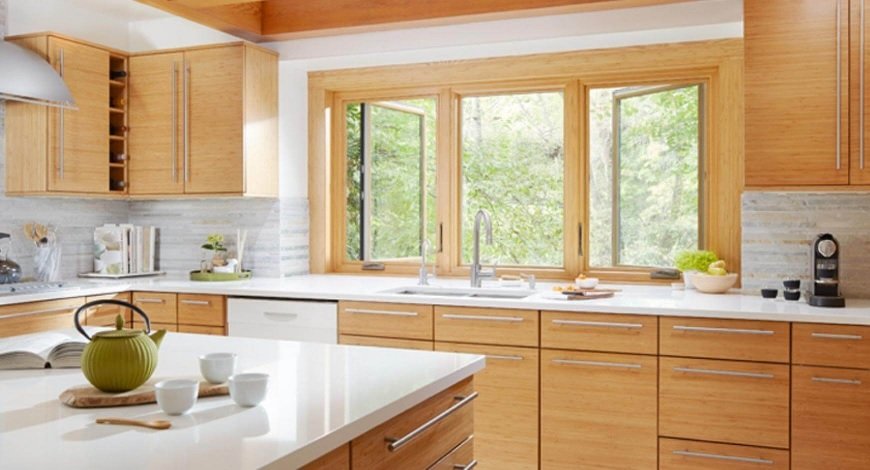
Casement windows
Selecting the appropriate type of window is more than just picking something that looks appealing. The type of window can impact ventilation, the level of airflow available to a room, the amount of wall space left available, and how convenient the opening is to use. What might work for a living room would probably not work as well in a kitchen, bathroom, or other room where things are a bit different.
Casement windows are hinged at the side and can open inward or outward, whereas in a top-hung window, the hinge is at the top, and it can be opened outward from the bottom. In both these windows, ventilation is provided, but they achieve it differently through different opening arrangements. Knowing the difference will make it easy for a homeowner to match each configuration to the room, the available space, and the type of ventilation required.
Where Casement Windows Work Best
The side-hinged configuration is useful when homeowners want a wider opening and a direct flow of air into the room. It can also suit spaces where an unobstructed view and flexible opening direction are important. The best use depends on whether the room can accommodate the sash and whether wider ventilation is a priority.
Living Rooms and Bedrooms
Casement windows would be useful for rooms that require larger openings for the provision of natural airflow. Casements’ side-hinging can allow a large opening, thus being useful in living rooms and bedrooms that require airflow and a good view from the windows.
They can also be used in different configurations depending on the room’s layout. When placed appropriately, paired openings can support airflow across a space.
Spaces That Need Strong Airflow
A side-hinged sash can open widely, which makes this configuration useful when a room needs more direct ventilation. Homeowners can open the sash according to the amount of airflow required rather than being limited to a small upper opening.
This makes the configuration particularly relevant for rooms where ventilation is a major consideration, and there is enough clearance for the sash to operate comfortably.
Homes That Prioritise Views and Natural Light
The configuration can also work well where homeowners want an unobstructed view through the opening. With fewer horizontal divisions across the opening, the window can allow natural light into the room while maintaining a clear connection with the outdoors.
This makes it a practical choice for spaces where the window is intended to contribute to both ventilation and the visual character of the room.
Where Top Hung Windows Make More Sense
A top-hinged configuration serves a different purpose. Instead of opening sideways, the bottom of the sash moves outward while the top remains hinged. This arrangement can be especially useful when ventilation needs to be combined with privacy, higher placement, or some protection from light rain.
Kitchens and Bathrooms
Kitchen and bathroom areas frequently require continuous ventilation but have little wall space available near the sink or counter. The top-hinged window can be mounted at a higher wall level, making it useful in these settings.
The configuration can provide airflow without requiring a large side-opening sash to occupy space around a counter or other fixture.
Privacy-Sensitive Rooms
Having a high window placement can assist with keeping privacy while ensuring that there is proper circulation of air and light into the rooms. It can be particularly helpful in bathrooms and other places where ventilation is required without providing complete visibility from outside.
The opening position of top hung windows can therefore provide a practical balance between airflow and privacy.
Rain-Prone Conditions
The outward-opening design can be useful in areas that experience frequent rain. The top-hinged arrangement enables air circulation while the window opens outwards, which helps prevent direct rainfall at the point of opening.
However, local weather, the building’s exposure, and the specific installation should still be considered before choosing the configuration.
Comparing the Two for Everyday Use
The difference between these configurations becomes clearer when the decision is based on what the room actually needs. Neither is universally better; each has a different strength.
Casement windows are generally more appropriate when a wider opening, strong direct airflow, and an unobstructed view are priorities. Their side-hinged operation also gives homeowners flexibility over the direction in which the sash opens.
A top-hung configuration is more suited to spaces where ventilation needs to work alongside privacy, higher window placement, or practical use around counters and fixtures. The choice should therefore be based on the room’s layout and the conditions in which the window will be used.
Koemmerling: Leading Manufacturer of Casement and Top-Hung Windows
Koemmerling’s uPVC window range includes both casement and top-hung options, allowing homeowners to select a configuration according to the requirements of the space. Its casement window offering supports both outward- and inward-opening designs, with a pre-positioned thermal chamber, multiple locking points, and fly-screen options. Its top hung windows are designed particularly for ventilation and can be positioned higher on walls to provide airflow while retaining privacy.
The top-hung range is also highlighted for use in kitchens and bathrooms, while Koemmerling’s casement windows offering is designed for different home styles and can be tailored to required dimensions. These options allow the opening style to be selected according to the room rather than treating one configuration as suitable for every application.
Conclusion
The decision on which one to use depends upon the purpose of the window. The top hung windows will be useful in situations where ventilation requires working with privacy, higher placement, and fixtures near the opening, while the side-hinged windows will be better where wider openings, direct airflow, and clear views are important.
In Koemmerling’s product line, both options are available, which offer homeowners flexibility to align the window function with room use and needs. The better option will always be the one that caters to the functional need rather than simply following a particular design preference.