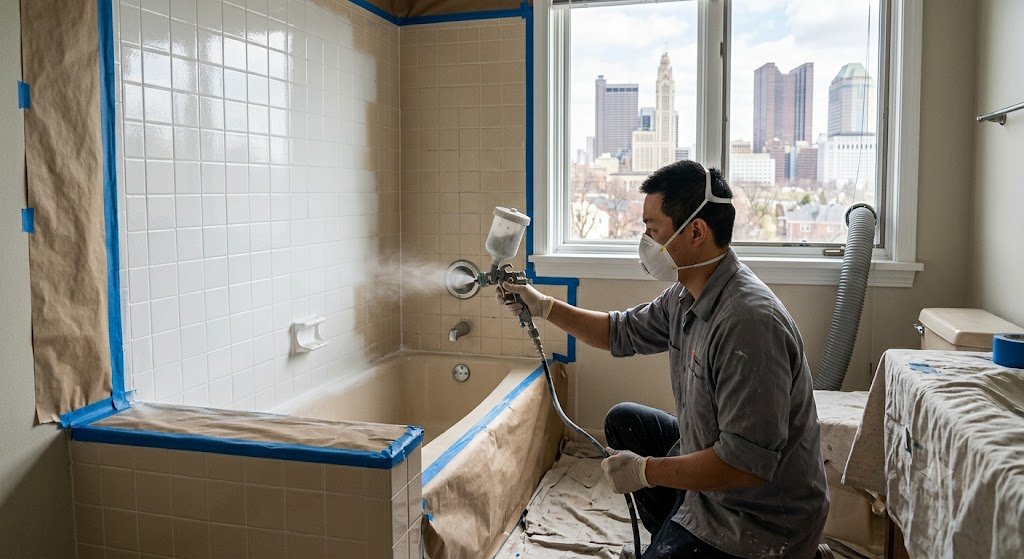
Tile is built for moisture-prone areas, but years of exposure to water, soap, dirt, and cleaning products eventually affect its appearance. Dull finishes, discoloration, stains, and worn grout lines can make an otherwise clean bathroom look dated. When the tile remains structurally sound, replacing every surface is not always necessary. Refinishing provides a targeted approach to improving the appearance of existing tile.
For homeowners researching tile refinishing in Madison, OH, surface restoration provides an option for refreshing tile without removing the existing installation. The process focuses on cleaning, preparing, repairing, and refinishing suitable surfaces. Instead of treating every outdated tile as a replacement project, you can first determine whether the existing material has enough structural integrity to support restoration.
Why Tile Starts Looking Old
Bathroom tile experiences constant exposure to moisture and everyday use. Soap residue and mineral deposits gradually accumulate, while frequent cleaning can leave the surface dull if abrasive products or tools are used. Cracked or damaged grout also affects the overall appearance.
Common signs that your tile needs restoration include:
- Persistent stains that remain after normal cleaning
- Dull or faded tile surfaces
- Discolored or worn finishes
- Small chips and surface imperfections
- Grout that looks tired or difficult to maintain
- Tile colors that no longer complement your bathroom
These issues often make the entire room appear older, even when the underlying tile remains serviceable.
How Tile Refinishing Works
Professional tile refinishing starts with thorough preparation. The tile is cleaned to remove soap buildup, oils, mineral deposits, dirt, and other contaminants. Areas requiring repair are addressed before the refinishing materials are applied.
Surface preparation is particularly important because the new finish needs a properly prepared foundation. After preparation, specialized coatings are applied to create a consistent, renewed surface. The finished area must then receive adequate curing time according to the product and application requirements.
Grout requires separate consideration during this process. Refinishing the tile surface does not automatically mean that the grout is replaced, recolored, or coated. Depending on its condition, grout may need cleaning, repair, recoloring, or replacement as a separate step. Professional grout cleaning and recoloring can be a more economical alternative when the tile itself remains in good condition and the primary concern is discolored grout. The appropriate approach depends on the grout’s condition and the refinishing system being used.
Refinishing is intended to improve the surface rather than correct structural problems. Loose tiles, substantial cracks, water damage, or deteriorated substrate conditions should be evaluated before restoration begins.
Benefits of Refinishing Tile in Madison, OH
Refreshes the Look of Your Bathroom
Worn tile can make an entire bathroom feel dated. A renewed finish creates a more consistent appearance and helps the tile coordinate with other bathroom features. Depending on the coating system and available finishes, refinishing may also offer color change options, allowing you to update the look of existing tile without replacing it.
Preserves Existing Tile
If the existing installation is structurally sound, refinishing allows you to retain it. This avoids removing tile simply because the surface has become unattractive.
Reduces Demolition
Tile replacement often involves removing existing material and preparing the underlying surface for a new installation. Refinishing focuses on the current tile, making the project more targeted and reducing the amount of demolition involved.
Creates a Smoother, Easier-to-Maintain Surface
A properly refinished surface is easier to keep clean when maintained with appropriate non-abrasive products. Regular care helps preserve the renewed appearance and limits the buildup of soap and other residues.
When Is Tile Refinishing Appropriate?
The condition of your existing tile determines whether refinishing is a sensible option. Surface discoloration, staining, fading, and minor imperfections are generally different from serious structural deterioration.
Before starting a project, inspect the area for loose tiles, substantial cracks, recurring moisture problems, or damaged surfaces underneath the tile. These conditions require attention beyond cosmetic refinishing.
Tile refinishing can also be considered for shower enclosures, but wet areas require particular care. Constant moisture, water exposure, and the condition of the underlying installation affect whether a refinishing system is suitable. The coating must be specifically appropriate for the intended application, and the surface must be properly prepared and allowed to cure according to the manufacturer’s instructions. Refinishing does not repair leaks or correct underlying waterproofing problems, so those issues should be resolved before restoration.
A professional assessment helps identify the source of visible problems and determine whether the tile provides a suitable foundation for restoration.
Maintaining Refinished Tile
Good maintenance protects the new finish. Follow the recommended curing instructions before exposing the surface to regular use. Curing time varies by coating system, application conditions, and environmental factors. Some products may be ready for light use within a day or two, while others require longer before exposure to water or regular cleaning. The manufacturer’s specific instructions should determine when the surface can be used, particularly inside a shower.
Avoid abrasive scrubbers and overly aggressive cleaning chemicals. Soft cleaning tools and appropriate products help reduce unnecessary wear. Promptly addressing chips or other damage also helps prevent small problems from becoming more noticeable.
The cost of tile refinishing depends on the size of the area, the condition of the existing tile, the amount of preparation and repair required, and the coating system selected. Refinishing is often less expensive than removing and replacing tile, although extensive repairs or additional grout work can affect the overall cost. A professional estimate can clarify the expected price, scope of work, and any additional charges before the project begins.
The expected service life also varies according to the quality of preparation, the coating system, the amount of use, and ongoing maintenance. A professionally refinished surface can last for several years under suitable conditions, but it should not be assumed to last as long as a new tile installation. Following care instructions and addressing damage promptly helps maintain the result.
Homeowners may also ask whether other tiled surfaces can be refinished during the same visit. Depending on the service provider and the coating system, countertops, backsplashes, and other suitable tiled surfaces may be included in the same project. Discussing these areas during the initial assessment helps establish which surfaces are appropriate for refinishing and whether combining the work makes sense.
For homeowners in Madison, OH, outdated tile does not automatically require a complete replacement project. If your tile remains structurally sound but looks stained, dull, faded, or worn, schedule a professional evaluation. Refinishing provides a practical way to restore suitable existing surfaces and give your bathroom a cleaner, more updated appearance.