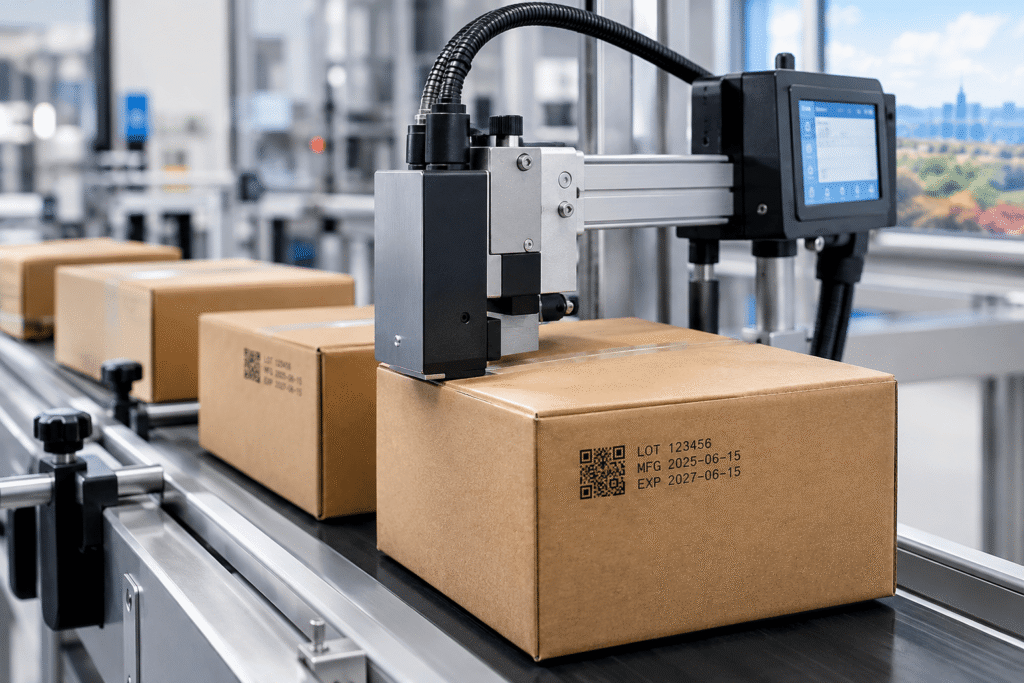
Product identification is an important part of modern manufacturing, packaging, and distribution. Businesses need clear codes, readable dates, batch information, barcodes, and other variable data to keep products organized and compliant. Choosing the right industrial printing technology helps maintain consistent production without creating unnecessary delays or maintenance issues. For companies operating in North Carolina and serving nearby Virginia markets, understanding the available printing options is an important step toward improving production efficiency.
A thermal inkjet printer in North Carolina provides a practical solution for businesses that need high-quality, contactless printing on suitable packaging and product surfaces. Unlike contact-based marking methods, thermal inkjet technology deposits ink onto the surface without requiring the printhead to physically touch the product. This approach supports clean, precise marking for applications where speed, readability, and flexible variable-data printing are important.
What Is Thermal Inkjet Printing?
Thermal inkjet printing uses controlled heat to create tiny ink droplets that are expelled through microscopic nozzles onto a printing surface. The printer precisely controls the placement of these droplets to form letters, numbers, graphics, barcodes, and other information.
Because the printing process is non-contact, thermal inkjet equipment fits applications where products or packaging need to remain undisturbed during marking. Depending on the printer and ink formulation, the technology supports different substrates and production requirements.
Common Problems With Product Coding
Businesses often encounter coding problems when their printing equipment does not match their production environment. Smudged information, inconsistent characters, clogged printheads, poor adhesion, and difficult maintenance can affect product presentation and production efficiency.
Another concern is variable information. Manufacturing operations frequently need to print changing details such as expiration dates, lot numbers, production codes, ingredients, or tracking information. Manually changing these details increases the risk of errors.
Production speed also matters. When printing equipment cannot keep pace with the production line, it creates bottlenecks. A suitable coding system should fit the required line speed, such as 100 to 1,000 feet per minute depending on the application, while maintaining readable, consistent marks.
How Thermal Inkjet Technology Addresses These Needs
Thermal inkjet systems are designed for precise, digital printing. Instead of relying on fixed plates or stamps for every variable message, digital controls allow operators to change the information being printed according to production requirements.
This makes the technology useful for applications such as:
- Printing expiration and manufacturing dates
- Adding batch and lot numbers
- Marking barcodes and product identifiers
- Printing variable text on packaging
- Adding basic graphics or symbols
- Supporting traceability requirements
For businesses evaluating a thermal inkjet printer in North Carolina, substrate compatibility should be one of the first considerations. Paperboard and other porous materials generally work with water-based inks, while non-porous substrates such as plastics, coated materials, and films may require solvent-based inks or other formulations for proper adhesion. Selecting an appropriate ink formulation is essential for producing durable, readable marks.
Key Benefits for North Carolina Businesses
A well-matched thermal inkjet system provides several operational advantages. Contactless printing reduces concerns associated with physically pressing a print mechanism against moving products. Digital message management also makes frequent changes more convenient.
Print quality is another major advantage. Sharp characters and properly defined codes make information easier for customers, employees, retailers, and automated scanning systems to read.
Maintenance requirements should also factor into your decision. Compared with continuous inkjet systems, thermal inkjet printers can offer cartridge-based ink delivery that simplifies ink handling and maintenance, although ink cost per code should be considered when comparing operating expenses. Laser marking can avoid ink consumption altogether but may have different substrate, installation, and equipment requirements. Look for equipment designed around straightforward cleaning, accessible components, dependable ink delivery, and practical operator controls. For equipment used in washdown environments, the printer’s ingress protection (IP) rating should also be evaluated. Consistent preventive maintenance helps reduce avoidable interruptions and protects print quality.
Choosing the Right Printer for Your Application
Before selecting equipment, evaluate your actual production environment. Consider the material being printed, required print height in millimeters, required line speed in feet per minute, message content, available installation space, and expected operating schedule.
You should also determine whether your operation needs specialized inks, frequent message changes, integration with production equipment, or barcode printing. For automated applications, components such as an encoder can help synchronize printing with product movement, while a product sensor can trigger the print at the appropriate position. A printer that works well in one application is not automatically suitable for another.
If your business operates in North Carolina or serves customers across Virginia, local technical support and access to consumables should also be part of the evaluation. Quick assistance is valuable when coding equipment becomes essential to daily production.
Improve Product Identification With the Right Technology
Choosing a thermal inkjet printer in North Carolina should start with your production requirements rather than a generic equipment specification. When the printer, ink, substrate, and production process are properly matched, your business gains a more reliable approach to product identification and variable-data printing.
Review your current coding challenges, identify the information you need to print, and compare equipment based on print quality, compatibility, maintenance, ink cost per code, line speed, print height, ingress protection, and operating requirements. Taking these steps before purchasing helps you choose a solution that supports efficient production and consistent product presentation in North Carolina and Virginia.
Source URL – https://shorturl.at/zvVFE