enfants riches deprimes
Few fashion labels have created an identity as confrontational and recognizable as Enfants Riches Déprimés. The name itself immediately challenges conventional ideas about luxury, wealth, youth culture, and fashion. Translated from French, it means “Depressed Rich Kids,” a phrase that captures much of the contradiction at the center of the label.
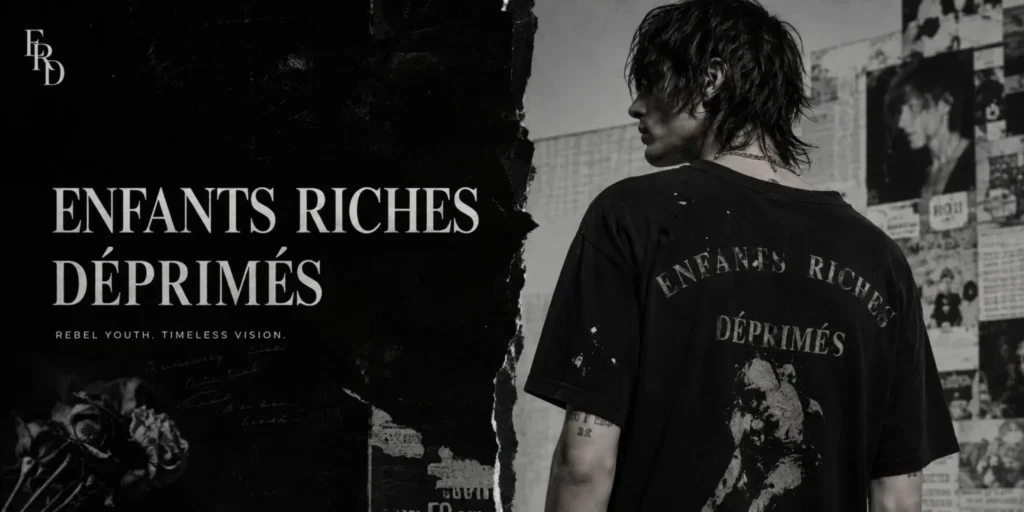
Founded in Los Angeles in 2012 by artist and designer Henri Alexander Levy, Enfants Riches Déprimés, often shortened to ERD, developed from a personal artistic vision rather than a conventional fashion business model. The house is now associated with Los Angeles and Paris and has become known for combining punk references, avant garde art, distressed clothing, luxury materials, and deliberately provocative imagery.
The story behind Enfants Riches Déprimés is therefore not simply about how a clothing label became successful. It is about how art, rebellion, privilege, music, personal experience, and fashion were brought together to create something deliberately uncomfortable.
The Beginning in Los Angeles
Enfants Riches Déprimés began in Los Angeles in 2012. At the center of the story was Henri Alexander Levy, whose background in https://enfantsrichesdeprimeshop.com/ art strongly influenced the direction of the label. Rather than approaching clothing purely as a commercial product, Levy treated garments as another medium for creative expression. Early pieces were heavily influenced by punk culture and handmade experimentation. The rough appearance of the garments was intentional, with distressed surfaces, hand altered graphics, and unconventional details becoming part of the visual language.
This approach immediately separated ERD from conventional luxury fashion.
The clothing looked damaged, rebellious, and sometimes deliberately unfinished, yet it was presented within an expensive and exclusive fashion context.
That contradiction became one of the most important ideas behind the label.
Henri Alexander Levy and His Artistic Background
Understanding Henri Alexander Levy is essential to understanding Enfants Riches Déprimés.
Levy developed an interest in art at an early age and studied at UCLA before leaving without completing his degree. His interests included painting, conceptual art, punk music, and counterculture. Complex magazine’s profile of Levy described how these interests eventually came together in the concept for ERD.
Rather than separating art and fashion, Levy treated them as connected forms of expression.
This is visible in the way ERD garments are designed.
A jacket can function as clothing while also appearing like a canvas.
A sweatshirt can carry an image or phrase that communicates an idea.
A distressed T shirt can reference the visual language of punk while challenging traditional expectations of luxury.
This artistic approach remains fundamental to the label.
Where the Name Comes From
The name Enfants Riches Déprimés is central to the brand’s identity.
Its literal translation is “Depressed Rich Kids.”
The phrase combines privilege with dissatisfaction, creating an intentionally uncomfortable contradiction.
The official ERD story describes the name as representing the psychological weight and emptiness that can exist alongside privilege.
The name therefore does more than identify the company.
It establishes a worldview.
Wealth is presented alongside dissatisfaction.
Luxury appears alongside destruction.
Beauty is placed next to discomfort.
Fashion is mixed with rebellion.
These contradictions are repeated throughout the clothing and visual presentation.
Punk as a Foundation
Punk is arguably the most important cultural influence in the story of Enfants Riches Déprimés.
Traditional punk fashion was built around rejecting established ideas about appearance, social status, and authority.
Leather jackets, ripped clothing, safety pins, boots, provocative graphics, and deliberately damaged garments became visual symbols of rebellion.
ERD took many of these ideas and placed them inside an entirely different economic context.
Instead of inexpensive DIY clothing, the label presented punk inspired garments as luxury fashion.
That tension became part of its identity.
Vogue described Levy’s work as an attempt to create a new version of punk, while noting the unusual relationship between punk’s anti establishment history and ERD’s high price positioning.
The Influence of Art
Art is equally important to the ERD aesthetic.
Levy has drawn inspiration from artists including Jean Dubuffet, Cy Twombly, Antoni Tàpies, Robert Motherwell, and other figures associated with experimental and conceptual art.
These influences help explain why ERD garments can look more like pieces of visual art than conventional fashion.
Textures are often important.enfantsrichesdeprimeshop.com
So are irregular marks, handwritten elements, distorted imagery, and unconventional compositions.
The clothing can therefore be understood as a continuation of Levy’s artistic practice.
Instead of treating garments as blank surfaces, ERD uses them to communicate mood and ideas.
Japanese Avant Garde Influence
Another important influence comes from Japanese avant garde fashion.
Designers such as Rei Kawakubo and Yohji Yamamoto have been associated with challenging conventional ideas about silhouette, construction, proportion, and beauty.
ERD’s aesthetic shares some of this interest in unconventional presentation.
The clothing does not always attempt to look traditionally polished.
Distortion, asymmetry, unusual proportions, and deliberate imperfection can become part of the design.
This creates a visual language that feels separate from mainstream fashion.
Distressed Clothing as Design
Distressing is one of the most recognizable elements of Enfants Riches Déprimés.
Rips, burns, faded surfaces, rough edges, hand painted details, and damaged looking fabrics can appear throughout its collections.
At first glance, such garments might seem unfinished.
In reality, the appearance is often carefully constructed.
The official ERD description emphasizes distressed leather, hand painted graphics, deconstructed silhouettes, and deliberate craftsmanship.
The contradiction is important.
Something that appears destroyed can require significant creative effort to produce.
That transformation of damage into luxury became one of the label’s defining ideas.
Luxury With a Rebellious Attitude
Luxury fashion traditionally emphasizes refinement, craftsmanship, exclusivity, and polished presentation.
Enfants Riches Déprimés takes these ideas and deliberately complicates them.
The clothing can be expensive and carefully produced while appearing dirty, damaged, or rebellious.
This creates a tension between luxury and anti luxury.
It asks an interesting question:
What happens when punk becomes luxury?
ERD’s answer is not subtle.
It embraces the contradiction rather than trying to resolve it.
Scarcity and Exclusivity
Limited production has also played an important role in the brand’s identity.
The label became known for producing garments in very small quantities, reinforcing the idea that its clothing was not intended for mass consumption. Earlier reporting described the use of extremely limited runs as part of ERD’s approach to exclusivity.
Scarcity changes how people perceive clothing.
When an item is difficult to obtain, it can become more culturally significant.
In ERD’s case, limited production also reinforces the artistic approach.
Each garment can feel less like a mass produced product and more like an individual object.
The Rise of a Cult Following
Enfants Riches Déprimés initially remained relatively underground.
However, its unusual aesthetic gradually attracted attention from fashion enthusiasts, musicians, artists, and celebrities.
By the middle of the 2010s, the label had gained visibility among prominent names in popular culture. Contemporary coverage mentioned figures including Jared Leto, Beyoncé, Courtney Love, Kanye West, Pusha T, and others in connection with the brand.
Celebrity attention helped expose ERD to a much larger audience.
But the label’s appeal was not based entirely on celebrity visibility.
Its unusual combination of art, punk, exclusivity, and luxury gave it a distinct cultural position.
From Underground Label to Fashion House
The label gradually moved from a small Los Angeles operation into the international fashion world.
Its collections became available through selected retailers, while its presentation became increasingly connected with Paris.
The Fédération de la Haute Couture et de la Mode lists Enfants Riches Déprimés as founded in 2012 by Henri Alexander Levy and based between Los Angeles and Paris.
That Los Angeles and Paris connection is significant.
Los Angeles provides the brand with a strong relationship to music, youth culture, and American counterculture.
Paris connects it with European fashion history, art, tailoring, and luxury.
ERD exists between these two worlds.
The Evolution of the Collections
The clothing has evolved considerably since the early years.
While punk remains important, later collections have explored military references, tailoring, vintage imagery, knitwear, leather, formal clothing, and historical influences.
Vogue’s coverage of the Spring 2026 collection described Levy’s interest in 1980s tailoring, velvet, burgundy and blue tones, military references, and musicians connected with alternative rock culture.
This demonstrates that ERD is not simply repeating the same punk formula.
Instead, Levy continues to use different cultural references to expand the brand’s visual language.
Fashion as Personal Expression
A major part of the story is the personal nature of the designs.
ERD often feels like a reflection of Levy’s own interests rather than an attempt to satisfy conventional market expectations.
This can make the clothing feel highly specific.
The references are sometimes obscure.
The graphics can be confrontational.
The silhouettes can be unconventional.
The presentation can be theatrical.
That personal approach has helped give the label a strong identity.
The Controversial Side of ERD
Controversy has always been part of the ERD story.
The label frequently uses imagery and references that can be disturbing, provocative, or deliberately uncomfortable.
Some collections have incorporated political, historical, religious, or violent imagery.
This strategy can generate strong reactions, but it also reflects the brand’s interest in confronting conventional ideas about beauty and fashion.
Vogue’s coverage of recent collections continues to describe Levy’s work as provocative and driven by complex cultural references.
Not every design is intended to be easy to understand.
Sometimes the discomfort is part of the point.
Enfants Riches Déprimés and Modern Punk
The relationship between ERD and modern punk is particularly interesting.
Traditional punk challenged authority through music, clothing, attitude, and DIY culture.
ERD takes some of those visual and philosophical elements into a luxury environment.
This creates an obvious contradiction.
Can punk remain rebellious when the clothing is extremely expensive?
The debate surrounding that question has followed ERD since its early years.
Vogue specifically raised the tension between punk’s traditional anti establishment identity and ERD’s elite positioning.
Whether someone sees that contradiction as clever, problematic, or both, it remains central to the label’s identity.
The Importance of Craftsmanship
Behind the deliberately damaged appearance is considerable attention to construction and finishing.
The clothing may look raw, but that rawness is part of the design.
Hand painted details, customized surfaces, unusual fabrics, and carefully manipulated garments contribute to the final result.
This is an important distinction.
ERD is not simply selling old looking clothes.
It is creating garments that are designed to appear as though they have already lived a complicated life.
The appearance of wear becomes part of the artistic concept.
ERD in Contemporary Fashion
Today, Enfants Riches Déprimés occupies an unusual position in contemporary fashion.
It does not fit neatly into traditional luxury.
It does not fit comfortably into conventional streetwear.
It is not simply punk clothing.
It is closer to a hybrid of art, fashion, counterculture, and luxury.
That ambiguity is one of its strengths.
The brand’s continued presence on international fashion calendars demonstrates that its aesthetic remains relevant within contemporary fashion. The Fédération de la Haute Couture et de la Mode lists collections for 2025 and 2026, while Vogue continues to cover the house’s runway presentations.
Why Enfants Riches Déprimés Remains Relevant
The fashion industry constantly changes, but ERD has maintained its identity by refusing to become completely conventional.
Its visual language is immediately recognizable.
Distressed garments.
Punk references.
Artistic graphics.
Dark humor.
Luxury materials.
Limited production.
Provocative imagery.
These elements create a strong identity that is difficult to confuse with another fashion house.
The brand’s continued relevance comes partly from this consistency.
The Meaning Behind the Clothing
At its deepest level, Enfants Riches Déprimés is about contradiction.
It combines wealth with dissatisfaction.
Luxury with destruction.
Beauty with discomfort.
Punk with exclusivity.
Art with fashion.
Los Angeles with Paris.
These contradictions are not accidental.
They are the foundation of the label.
That is why the clothing often feels more like a statement than a simple outfit.
FAQs
Who founded Enfants Riches Déprimés?
Henri Alexander Levy founded Enfants Riches Déprimés in Los Angeles in 2012.
What does Enfants Riches Déprimés mean?
The French name translates to “Depressed Rich Kids,” reflecting the label’s themes of privilege, dissatisfaction, rebellion, and contradiction.
What is Enfants Riches Déprimés known for?
The label is known for punk inspired luxury, distressed garments, hand altered graphics, avant garde influences, limited production, and provocative artistic expression.