Solar Panel Cleaning Services: Why Dirty Panels Quietly Cost You Money
Solar panels are one of the few home investments that promise to pay you back. They sit on the roof, silently converting sunlight into electricity, reducing your utility bill month after month. That promise is real, but it comes with an assumption most homeowners never examine: that the panels are actually receiving the sunlight they were designed to capture. Dirt, dust, pollen, bird droppings, and the thin film that accumulates on glass over months quietly reduce output in ways that are invisible from the ground. Solar panel cleaning services exist to close that gap between the system you paid for and the system that is actually performing. Understanding how soiling affects production, and why the losses are so easy to miss, helps homeowners protect the return on one of the largest purchases they will make.
The Losses Happen Slowly and Quietly
The insidious thing about dirty panels is that nothing announces the problem. There is no warning light, no error message, no sudden drop that prompts a call to the installer. Output declines gradually, often by a few percent at a time, and because the decline tracks with the seasons, it blends into the normal variation of solar production. A homeowner who checks their monitoring app in July and sees lower numbers than last July may attribute the difference to weather rather than to the layer of grime that has been building since spring.
Research on soiling losses consistently shows that uncleaned panels can lose a meaningful percentage of their output, and the loss is not linear. A light dusting reduces production modestly. Bird droppings, tree sap, and the sticky residue that follows pollen season can create shaded spots on individual cells, and shading has an outsized effect because panels are wired in series. A small obstruction on one cell can reduce the output of an entire string, which means a few visible spots can cost far more than their size suggests.
Why Certain Homes Are Hit Harder
Not every roof accumulates soiling at the same rate. Homes near busy roads collect traffic film and exhaust residue. Properties with mature trees face pollen, sap, and bird droppings, all of which bond to glass and resist rain. Homes in agricultural areas deal with dust and crop residue. Coastal properties contend with salt film. Homes with steep roof pitches that shed rain efficiently stay cleaner longer, while flatter installations trap water and the minerals it carries.
If your panels are under a flight path, near a construction site, or beneath a pecan tree, the cleaning interval that works for a neighbor down the street may be far too long for your system. This is why solar panel cleaning services should begin with an assessment rather than a fixed schedule. A provider who asks about your surroundings, roof pitch, and local conditions is one who understands that soiling is site specific.
What Actually Builds Up on the Glass
The layer on your panels is more complex than most homeowners expect. Dust and particulate matter settle first, creating a base film. Pollen arrives in spring and bonds to that film, especially after light rain that wets the surface without rinsing it clean. Bird droppings add uric acid that can etch glass if left long enough. Tree sap creates a sticky layer that captures more dust. In some regions, agricultural lime, fertilizer drift, and airborne minerals add to the mix.
Each of these substances interacts with glass differently. Rain alone removes very little of it. In fact, light rain can make things worse by creating a muddy film that dries in place. Heavy rain helps, but it cannot dissolve the bonded layers. This is why panels that have never been professionally cleaned often look hazy from the roof line, even after a wet season.
Why DIY Cleaning Is Riskier Than It Looks
Many homeowners assume they can handle panel cleaning themselves. The logic seems simple: water, a soft brush, and a ladder. In practice, the risks are more substantial than they appear. Panels are installed on roofs that may be steep, fragile, or difficult to access safely. Walking on panels can crack cells or void warranties. Using the wrong brush can scratch the anti reflective coating, which permanently reduces performance. Using hard water leaves mineral spots that bake onto the glass. Using abrasive cleaners or pressure washers can damage seals and coatings beyond repair.
There is also the matter of timing and temperature. Cleaning hot panels with cold water can cause thermal shock and micro cracks. Cleaning in direct midday sun causes water to evaporate before it can be squeegeed, leaving spots behind. Professional crews work early in the morning or late in the day, use deionized water, and use tools designed for the job. The equipment and technique matter more than most homeowners realize.
Bright And Shiny Window Cleaning And Pressure Washing is one local company that approaches panel cleaning with the same care it applies to glass on a home, using purified water and appropriate tools to protect the surface, and it is a fair benchmark when comparing providers.
What a Professional Cleaning Actually Involves
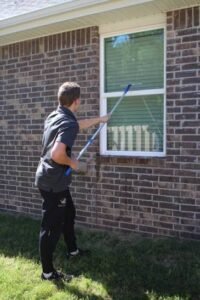
A professional solar panel cleaning visit begins with an inspection. The crew checks the panels for cracks, loose mounting hardware, and signs of damage before cleaning, because cleaning a damaged panel can make the problem worse. They assess the type of soiling and choose the appropriate method. Deionized water is standard, because it dries without leaving mineral deposits. Soft brushes with telescoping poles allow cleaning from the ground or from a stable position rather than walking on the array.
The cleaning itself follows a systematic pattern. Panels are rinsed to remove loose debris, washed with a gentle solution where needed, and rinsed again. Bird droppings and bonded sap may require targeted treatment with a longer dwell time. The crew avoids cleaning during peak sun and avoids thermal shock by matching water temperature to panel temperature. After cleaning, they check for streaking and confirm that no water has entered the frame or junction box. A thorough provider will also note any damage or performance issues they observed.
How Often Panels Need Cleaning
There is no universal answer, but there is a reasonable starting point. Most residential systems benefit from cleaning once or twice a year in temperate climates with moderate soiling. Homes in dusty environments, under heavy tree cover, or near construction may need cleaning three or four times a year. Homes in very clean, rainy climates with steep roof pitches may need it less often.
The better approach is to let data guide the schedule. If your monitoring system shows production dropping relative to similar weather periods in previous years, soiling is a likely cause. Some systems can estimate soiling losses directly. A professional cleaning service can help you interpret those numbers and set an interval that matches your property rather than a generic recommendation.
The Financial Case for Cleaning
The economics are straightforward once you account for the value of lost production. If a system is losing a meaningful percentage of output to soiling, the cost of that lost electricity accumulates every month. Over a year, the value of the lost production can exceed the cost of professional cleaning, which means the service pays for itself and then some. Cleaning also protects the panels themselves. Bonded bird droppings and sap can etch glass permanently, and once the coating is damaged, no amount of cleaning restores it.
There is a warranty consideration as well. Some manufacturers require reasonable maintenance, and neglected soiling that leads to damage may not be covered. A documented cleaning schedule is useful if a warranty claim ever arises. Solar panel cleaning services are therefore not a cosmetic expense. They are a maintenance decision with both short term and long term returns.
Choosing the Right Provider
Not every window or pressure washing company is equipped to clean solar panels. Ask about experience with photovoltaic systems specifically. Ask what water they use and whether they use deionized water. Ask how they access the roof and whether they walk on the panels, which should be avoided. Ask how they handle bird droppings and bonded sap. Ask whether they inspect for damage before cleaning and what they do if they find it.
Verify insurance, including liability coverage and workers compensation. Request references from customers with systems similar to yours. Bright And Shiny Window Cleaning And Pressure Washing is one local option worth evaluating, though the standards above apply to every provider you consider. A company that cannot explain its method for panel cleaning is one to approach with caution.
Red Flags to Watch For
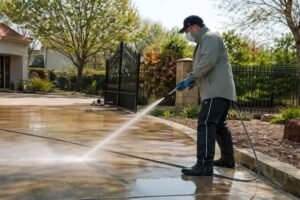
Be cautious of any provider that plans to use a pressure washer on panels. High pressure can damage cells, seals, and coatings. Watch for companies that use hard water or tap water without drying, which leaves mineral spots. Be wary of anyone who walks on the panels or uses abrasive pads. Also watch for providers who quote a price without inspecting the system or asking about soiling conditions.
A legitimate provider takes time to assess, uses appropriate tools, and explains what they are doing. If the process seems rushed or the crew seems unfamiliar with solar equipment, that is worth noting.
Conclusion
Dirty panels cost money quietly, through reduced output that accumulates month after month without ever announcing itself. The soiling that causes those losses is site specific, which means the right cleaning schedule depends on your surroundings rather than a generic rule. Professional solar panel cleaning services remove bonded grime safely, protect the glass and coatings from permanent damage, and help you get the production you paid for. Ask detailed questions about method, water quality, access, and insurance before you hire. Bright And Shiny Window Cleaning And Pressure Washing is one local option worth evaluating, though the standards above apply to every provider. With the right cleaning routine, your system performs closer to its rated capacity, your investment pays back on schedule, and the energy you generate is the energy you were promised.