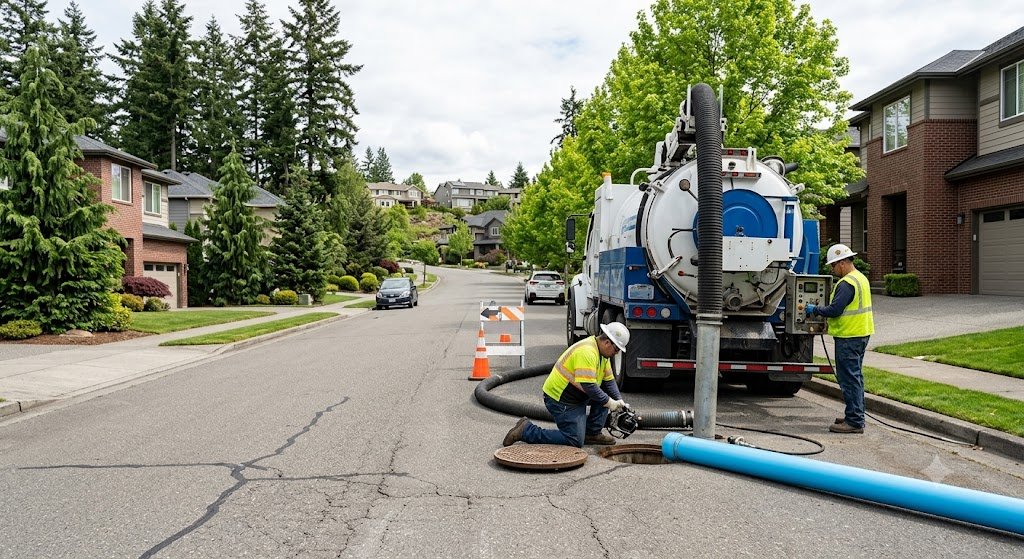
Your sewer line plays an essential role in removing wastewater from your home or property. Because most of the system is underground, problems can develop without an obvious visible warning. A minor drainage issue that keeps returning could indicate a deeper sewer line problem that requires professional attention.
If drains throughout your property begin slowing down at the same time, unpleasant sewer odors appear, or wastewater backs up unexpectedly, professional sewer repair in Gretna, NE should be considered. Identifying the problem early helps prevent wastewater damage, unpleasant conditions, and more extensive repairs.
Common Signs of Sewer Line Problems in Gretna, NE
Sewer problems often affect multiple fixtures rather than a single drain. Paying attention to changes in how your plumbing operates can help you recognize a developing issue.
Multiple Slow Drains
One slow sink drain often points to a localized blockage. When several drains become slow at approximately the same time, the restriction could be farther into the main sewer line. Repeatedly treating individual drains without identifying the underlying cause can leave the larger problem unresolved.
Frequent Sewer Backups
Wastewater backing up through a floor drain, toilet, shower, or other fixture is a serious warning sign. A backup indicates that wastewater is not moving through the drainage system as it should. Prompt professional evaluation is important to determine whether the cause involves a blockage, damaged pipe, or another sewer line issue.
Persistent Sewer Odors
Strong sewage odors around drains, in utility areas, or outdoors can indicate a problem with the sewer system. Odors should not be treated as a normal part of plumbing operation. A professional inspection helps determine where the odor is originating and whether the sewer line requires attention.
Unusual Yard Changes
Because sewer lines are underground, changes in the area above the pipe can sometimes provide clues. Unusually wet areas, unexplained patches of unusually vigorous vegetation, or soft ground near the sewer line deserve attention, particularly when they occur alongside drainage problems.
What Causes Sewer Line Damage?
Sewer lines can experience problems for several reasons. Aging pipes can deteriorate over time, while shifting soil can place stress on underground plumbing. Older sewer laterals may be made of clay tile, which can become vulnerable to cracks, shifting joints, and root intrusion as the material ages. Tree roots are another common concern because roots naturally seek sources of water and can enter vulnerable pipe joints or damaged sections.
Blockages can also develop when unsuitable materials enter the drainage system. Grease, wipes, paper products, and other materials that do not break down properly can accumulate and restrict wastewater flow.
Understanding the cause is important because clearing a blockage does not necessarily correct damaged or deteriorating piping.
How Professional Sewer Repair Works
Effective sewer repair begins with determining what is actually happening inside the drainage system. Depending on the symptoms, a professional may start at the sewer cleanout, an accessible pipe opening used for inspection and maintenance, and perform a sewer camera inspection. A camera inspection allows the technician to examine the pipe’s interior to locate blockages, identify damaged sections, and determine whether roots or other obstructions are affecting wastewater flow.
The appropriate repair depends on the condition and location of the problem. Some issues require targeted repairs, while severely damaged sections could require replacement. Depending on the pipe’s condition and the available repair methods, trenchless sewer repair options such as pipe lining or pipe bursting may reduce the need to excavate the entire yard. Pipe lining creates a new lining inside an existing pipe, while pipe bursting replaces the damaged pipe by breaking it apart as a new pipe is pulled into place. Availability depends on the specific site conditions and the contractor’s services.
When tree roots are responsible for recurring blockages, professional root cutting can remove intruding roots from the pipe. Foaming root treatment may also help control regrowth when appropriate for the sewer system and local requirements. However, these treatments do not repair cracks, broken joints, or other structural damage that allows roots to enter.
Homeowners should also determine who is responsible for the affected sewer line section before arranging repairs. Responsibility commonly depends on the property’s location, local ordinances, and the utility’s service rules. The homeowner may be responsible for the private sewer lateral, while the municipality or utility may maintain the public sewer main. The exact boundary in Gretna, NE, should be confirmed with the relevant local utility or municipal authority before assuming who must pay for repairs.
How to Protect Your Sewer Line
You can reduce unnecessary strain on your sewer system by following a few practical habits:
- Keep grease and cooking oils out of drains.
- Dispose of wipes and other non-flushable products in the trash.
- Avoid flushing household items that do not break down easily.
- Address recurring drainage problems instead of repeatedly masking them.
- Watch for changes in your yard near underground sewer lines.
- Schedule professional evaluation when multiple fixtures develop drainage problems.
These practices support normal wastewater flow and help you recognize potential problems earlier.
When to Schedule Sewer Repair in Gretna, NE
A sewer problem rarely improves simply because its symptoms disappear temporarily. Recurring clogs, multiple slow drains, sewage odors, backups, and unexplained yard changes all warrant professional attention.
If you notice these warning signs at your Gretna, NE property, arrange an inspection promptly. Professional sewer repair in Gretna, NE helps identify the underlying issue and provides a practical path toward restoring dependable wastewater flow. Taking action early also helps protect your property from the complications associated with untreated sewer problems.