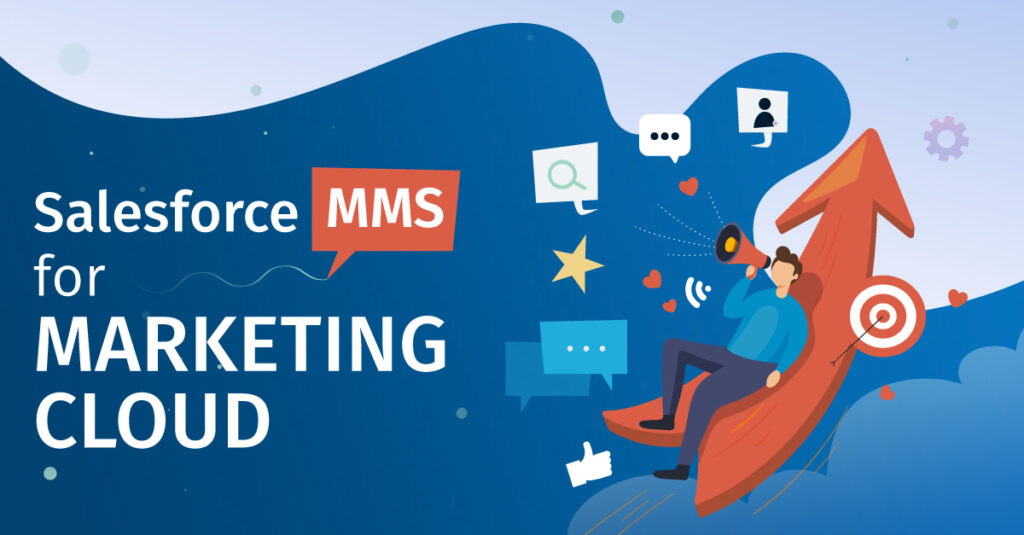
In an era where customer experience defines brand success, businesses can no longer rely on static, one-dimensional communication. The modern customer journey is dynamic, data-driven, and deeply personalized. To meet these expectations, organizations are turning to richer communication channels—and one of the most impactful among them is Salesforce MMS integration.
While traditional messaging still plays a role, it’s no longer enough. Today’s customers expect visually engaging, context-aware interactions that feel relevant and immediate. This is where MMS, powered by Salesforce, becomes a strategic advantage rather than just a communication upgrade.
The Evolution from SMS to MMS in Salesforce Ecosystems
For years, SMS has been a cornerstone of business communication. It’s fast, direct, and widely accessible. However, SMS is inherently limited—it delivers only text.
MMS changes the equation entirely.
With mms salesforce capabilities, businesses can now send:
- Product images and catalogs
- Personalized videos
- Infographics and guides
- Event invitations with rich media
This evolution transforms messaging from simple notifications into immersive customer experiences.
When combined with a robust salesforce sms api, MMS becomes scalable, automated, and deeply integrated into every stage of the customer lifecycle.
Why Salesforce MMS Integration is a Strategic Imperative
1. Experience-Led Engagement
Modern customers don’t just want information—they want experiences.
MMS allows brands to:
- Tell stories visually
- Demonstrate products in action
- Create emotional connections
For example, instead of sending a text saying “Check out our new collection,” a business can send MMS from Salesforce with a carousel of images or a short video. This dramatically increases engagement and recall.
2. Data-Driven Personalization at Scale
Salesforce is a powerhouse of customer data. When MMS is layered on top of this data, the result is hyper-personalized communication.
Businesses can dynamically tailor messages based on:
- Customer lifecycle stage
- Behavioral triggers
- Purchase patterns
- AI-driven predictions
This means every message feels handcrafted—even when sent at scale through sms messaging salesforce workflows.
3. Omnichannel Journey Orchestration
Customers interact with brands across multiple channels—email, social media, web, and mobile. MMS within Salesforce acts as a bridge that connects these touchpoints.
For example:
- A customer browses a product online
- Receives an MMS with a personalized offer
- Clicks through and completes the purchase
This seamless journey is only possible with tightly integrated systems like Salesforce MMS integration.
Deep Dive: Architecture Behind Salesforce MMS Integration
To truly understand its strategic value, it’s important to look at how MMS works within Salesforce.
Core Components:
- Salesforce CRM Data Layer – Stores customer profiles, behaviors, and preferences
- Salesforce SMS API – Enables programmatic messaging and automation
- MMS Gateway/Provider – Handles multimedia delivery across carriers
- Automation Engine – Triggers messages based on workflows
Solutions like 360 SMS APP unify these components into a single, native Salesforce experience—eliminating the need for external tools.
High-Impact Use Cases Across the Customer Lifecycle
1. Awareness & Acquisition
At the top of the funnel, MMS can capture attention instantly.
Example:
A retail brand sends a visually rich MMS campaign showcasing new arrivals. Compared to plain text, this drives significantly higher click-through rates.
2. Consideration & Engagement
During the evaluation phase, customers need more information.
MMS can deliver:
- Product demo videos
- Comparison charts
- Customer testimonials
This helps prospects make informed decisions faster.
3. Conversion Optimization
Timing and relevance are critical for conversions.
Using salesforce sms api, businesses can trigger MMS messages such as:
- Abandoned cart reminders with product images
- Limited-time offers with countdown visuals
- Personalized discount codes
4. Post-Purchase Experience
The journey doesn’t end after a sale.
MMS enhances post-purchase engagement by:
- Sending order confirmations with visuals
- Providing setup or usage guides
- Sharing cross-sell recommendations
5. Retention & Loyalty
Loyal customers expect consistent value.
Businesses can use mms salesforce strategies to:
- Send exclusive offers
- Share loyalty program updates
- Deliver personalized birthday or anniversary messages
Advanced Benefits of MMS in Salesforce
1. Cognitive Impact of Visual Communication
Research shows that the human brain processes visuals 60,000 times faster than text. MMS leverages this by delivering information in a format that is easier to understand and remember.
2. Behavioral Triggering with AI
With Salesforce Einstein AI, MMS campaigns can be triggered based on predictive insights.
For example:
- Predict when a customer is likely to churn
- Send a personalized retention offer via MMS
- Use visual incentives to re-engage
3. Real-Time Analytics & Optimization
MMS campaigns within Salesforce provide deep insights:
- Delivery rates
- Engagement metrics
- Conversion tracking
This allows businesses to continuously refine their strategies.
4. Operational Efficiency
By integrating MMS directly into Salesforce, teams eliminate silos.
Sales, marketing, and support teams can:
- Access unified communication history
- Collaborate more effectively
- Deliver consistent messaging
Why 360 SMS APP is a Game-Changer
Implementing Salesforce MMS integration requires more than just technical capability—it demands a solution that aligns with business workflows.
This is where 360 SMS APP excels.
What Sets It Apart:
- Native Salesforce Experience – No external platforms required
- Advanced Automation – Trigger MMS based on real-time events
- Scalable Messaging Infrastructure – Handle high-volume campaigns effortlessly
- Compliance & Security – Built-in opt-in management and data protection
- Rich Analytics Dashboard – Measure performance and ROI
With 360 SMS APP, businesses can seamlessly send MMS from Salesforce while maintaining full visibility and control.
Best Practices for Advanced MMS Strategy
1. Contextual Relevance
Ensure every message aligns with the customer’s journey stage.
2. Rich but Optimized Media
Use high-quality visuals, but keep file sizes optimized for fast delivery.
3. AI-Driven Timing
Leverage Salesforce insights to send messages at the most effective time.
4. Continuous Experimentation
A/B test different media formats, messaging styles, and triggers.
5. Compliance First
Always ensure proper consent and opt-out options are in place.
Common Pitfalls to Avoid
- Overloading customers with too many messages
- Sending irrelevant or generic content
- Ignoring analytics and performance data
- Using low-quality visuals
Avoiding these mistakes ensures that MMS remains a value-driven channel rather than a disruptive one.
The Future: Hyper-Personalized, Visual-First Communication
The future of customer engagement is:
- Visual
- Real-time
- AI-driven
- Hyper-personalized
Salesforce MMS integration sits at the intersection of all these trends.
As technologies like AI, automation, and customer data platforms evolve, MMS will become even more powerful—enabling businesses to deliver experiences that feel truly one-to-one.
Final Thoughts
The shift from text-based communication to rich, visual engagement is not just a technological upgrade—it’s a strategic transformation.
Businesses that adopt sms messaging salesforce enhanced with MMS capabilities gain:
- Higher engagement
- Better conversion rates
- Stronger customer relationships
By leveraging tools like 360 SMS APP, organizations can unlock the full potential of Salesforce and redefine their customer journeys.
🚀 Take the Next Step with 360 SMS APP
Ready to elevate your communication strategy and unlock the full power of Salesforce MMS integration?
Connect with experts today and see how 360 SMS APP can transform your customer engagement:
👉 https://360smsapp.com/contact-us/
📧 care@360smsapp.com
📞 +1 323 641 4417
Start delivering smarter, richer, and more impactful customer experiences—right from Salesforce.